
Stamp Mill Gold Mining Supplier Datasheet
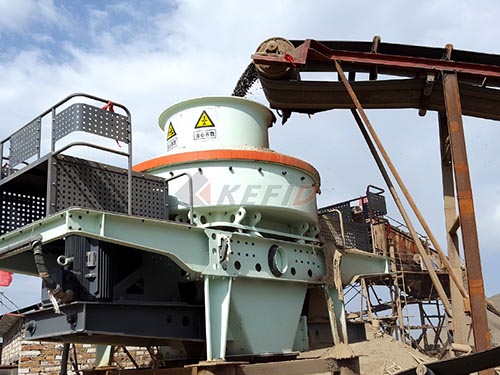

Stamp Mill Gold Mining Supplier: HeavyDuty Comminution Solutions for Hard Rock Processing
The Operational Challenge: When Traditional Crushing Falls Short
For gold mining operations processing hard rock ores, the comminution circuit represents your single largest energy expenditure—typically consuming 3050% of your plant's total power draw. Yet many operations still rely on conventional jaw crushers and cone crushers that struggle with:
- High clay content ores causing blinding and packing in conventional crushers, leading to 1525% unscheduled downtime during rainy seasons
- Feed size variability from underground or openpit sources that forces operators to reduce throughput by 2030% to protect downstream equipment
- Liberation inefficiency where conventional crushing produces excessive fines that consume cyanide without contributing to gold recovery, adding $25 per tonne in reagent costs
- Maintenanceintensive wear parts requiring weekly replacement of liners and mantles, with each changeout costing 812 hours of lost production
- Capital expenditure overruns when modular crushing plants require extensive civil works and structural steel that extends project timelines by 36 months
- Freemilling gold ores with specific gravity differential suitable for gravity concentration
- Ores with high clay content that cause packing in conventional crushers
- Small to mediumscale operations processing 5100 tonnes per day
- Artisanal and smallscale mining (ASM) formalization projects requiring proven technology
- Underground mining operations where headroom constraints limit crusher installation
- Not suitable for abrasive ores exceeding 12% silica content without specialized wear liners
- Higher specific energy consumption (1218 kWh/tonne) compared to HPGR or SAG milling
- Requires consistent water supply for slurry processing
- Higher noise levels (95105 dBA) requiring hearing protection protocols
- Diesel Engine Drive: 7590 HP diesel engine for remote sites without grid power
- Double Battery Arrangement: 10stamp configuration for 80100 TPD capacity
- Wet Discharge Only: Eliminates dry discharge option for simplified operation
- Custom Screen Frames: Available for specific product size requirements
- Preventive Maintenance Program: $3,500/month includes quarterly inspections, wear measurement, and scheduled maintenance planning
- Operator Training Certification: $8,500 includes 5day onsite training for up to 6 operators covering operation, maintenance, and safety procedures
- Performance Optimization Audit: $12,000 includes comprehensive process review with recommendations for throughput and recovery improvements
- Equipment Lease: 3660 month terms with $0 down payment and purchase option at end of term
- Deferred Payment Plan: 20% down payment, balance due in 6 equal quarterly installments
- Mining Equipment Loan: Competitive rates through partner financial institutions with mining industry expertise
- TradeIn Program: Credit available for existing crushing equipment toward stamp mill purchase
Your processing team needs a comminution solution that handles variable feed conditions, delivers consistent product size distribution, and reduces total cost per tonne processed. A properly engineered stamp mill system addresses these challenges through gravityassisted impact crushing that has been refined over 150 years of hard rock mining application.
Product Overview: The Modern Stamp Mill System
A stamp mill is a purposebuilt impact crushing machine that processes goldbearing ore through repeated gravitydriven stamping action. Unlike rotary crushers that rely on compression, stamp mills deliver highenergy impact forces that fracture ore along grain boundaries, improving mineral liberation while reducing overgrinding of valuable particles.
Operational Workflow
1. Feed Preparation: Runofmine ore is reduced to minus 75mm (3 inches) through a primary jaw crusher or grizzly screen, with feed rate controlled by a vibrating feeder to maintain optimal bed depth in the mortar box.
2. Stamp Battery Operation: Ore enters the mortar box where a rotating cam shaft lifts each stamp (weighing 400800 kg) to a height of 200500mm before releasing it. The stamp falls under gravity at 3040 impacts per minute, crushing ore against the die block.
3. Size Classification: Crushed material passes through a screen mesh (typically 630 mesh) mounted on the discharge side of the mortar box. Oversize material remains in the mortar for continued stamping while undersize material flows out with water.
4. Slurry Handling: Water is introduced at 24 parts water to 1 part ore, creating a slurry that carries fine material through the screen and into downstream concentration or leaching circuits.
5. Mercury Amalgamation (Optional): For freemilling ores, copper plates coated with mercury can be positioned in the discharge stream to capture liberated gold particles before further processing.
Application Scope
Suitable For:
Limitations:
Core Features
HeavyDuty Cast Steel Stamps | Technical Basis: Dropforged alloy steel with hardened impact face (5258 HRC) | Operational Benefit: Extended service life of 8,00012,000 operating hours between rebuilds | ROI Impact: Reduces replacement parts cost by $0.150.25 per tonne processed
Adjustable Cam Shaft Timing | Technical Basis: Precisionmachined cams with variable lift adjustment (200500mm) | Operational Benefit: Operators can optimize drop height for specific ore hardness without changing components | ROI Impact: Improves throughput by 812% when ore characteristics change seasonally
Modular Mortar Box Design | Technical Basis: Fabricated steel plate construction with replaceable die blocks and liners | Operational Benefit: Complete liner changeout in 46 hours versus 1216 hours for traditional cast designs | ROI Impact: Reduces maintenance downtime by 60%, recovering 4060 production hours annually
Integrated Water Injection System | Technical Basis: Multiple spray nozzles with flow control valves (adjustable 50150 L/min) | Operational Benefit: Optimizes slurry density for maximum screening efficiency and gold recovery | ROI Impact: Improves gold recovery by 37% through better size classification
Automatic Feed Control | Technical Basis: Loadsensing controller that adjusts feeder speed based on motor amperage draw | Operational Benefit: Prevents overloading and maintains consistent throughput without operator intervention | ROI Impact: Reduces energy consumption by 1015% through optimized load management
Enclosed Drive System | Technical Basis: Oilbath lubricated gearbox with torquelimiting coupling | Operational Benefit: Eliminates daily greasing requirements and protects against dust ingress | ROI Impact: Cuts maintenance labor by 23 hours per day and extends gearbox life to 5+ years
SkidMounted Installation | Technical Basis: Fabricated structural steel base with predrilled anchor points | Operational Benefit: Installation completed in 35 days versus 34 weeks for concrete foundations | ROI Impact: Reduces project capital cost by $40,00080,000 and accelerates commissioning
Competitive Advantages
| Performance Metric | Industry Standard (Jaw/Cone Crusher) | Stamp Mill Solution | Advantage |
|||||
| Feed Size Acceptance | 150300mm (with primary crusher) | 75mm (with primary crusher) | 5075% smaller feed requirement reduces primary crushing cost |
| Product Size Distribution | P80 of 1015mm (typical) | P80 of 0.52.0mm (with screen control) | 8595% finer product improves downstream liberation |
| Clay Content Tolerance | 58% maximum (before packing) | 1520% (with water injection) | 23x higher tolerance reduces downtime |
| Maintenance Interval | Weekly liner inspection | Monthly wear plate inspection | 75% reduction in maintenance frequency |
| Water Consumption | 0.30.5 m³/tonne (dust suppression) | 1.52.5 m³/tonne (slurry processing) | Higher water use but eliminates dust collection system cost |
| Capital Cost (100 TPD) | $450,000650,000 (complete crushing circuit) | $280,000420,000 (complete stamp mill system) | 3035% lower initial investment |
| Installation Time | 610 weeks (civil works + erection) | 24 weeks (skidmounted) | 6070% faster commissioning |
Technical Specifications
Model SM5 (Standard Production Unit)
| Parameter | Specification |
|||
| Capacity | 2050 tonnes per day (depending on ore hardness and feed size) |
| Number of Stamps | 5 (arranged in single battery) |
| Stamp Weight | 450 kg per stamp |
| Drop Height | 200400mm (adjustable) |
| Impacts per Minute | 3035 |
| Power Requirement | 3755 kW (electric motor drive) |
| Motor Speed | 1,470 RPM (4pole, 415V/50Hz or 460V/60Hz) |
| Water Consumption | 60120 L/min (at 23 bar pressure) |
| Screen Mesh Range | 630 mesh (interchangeable) |
| Feed Size (Maximum) | 75mm |
| Product Size (P80) | 0.52.0mm (dependent on screen selection) |
| Machine Weight | 18,500 kg (complete with base frame) |
| Dimensions (L×W×H) | 4.8m × 2.4m × 3.2m |
| Noise Level | 95105 dBA at 1 meter (hearing protection required) |
| Operating Temperature | 10°C to +50°C (standard configuration) |
| Materials of Construction | ASTM A36 structural steel frame, 4140 alloy steel cam shaft, 1214% manganese steel liners |
Optional Configurations
Application Scenarios
SmallScale Hard Rock Gold Mine (20 TPD) | Challenge: Existing jaw crusher producing 15mm product required excessive cyanide consumption (4.5 kg/tonne) due to poor liberation, with recovery rates below 65% | Solution: Installed SM5 stamp mill with 20mesh screen, processing ore at 22 TPD with 2.5:1 watertoore ratio | Results: Gold recovery increased to 87% through improved liberation, cyanide consumption reduced to 2.1 kg/tonne, and payback period achieved in 11 months based on increased gold production
Alluvial Operation Transitioning to Hard Rock (50 TPD) | Challenge: Operation had existing gravity concentration equipment but no suitable comminution circuit; conventional crushers rejected due to high clay content (1218%) in oxidized ore | Solution: Deployed SM5 stamp mill with water injection system and 12mesh screen, integrated with existing Knelson concentrator | Results: Processed 48 TPD consistently through wet season with zero packingrelated downtime, achieved 92% recovery through combined gravity and leaching circuit, and reduced operator training time to 2 weeks
Contract Milling Service Provider (100 TPD) | Challenge: Multiple client ores with varying hardness and clay content required flexible processing solution; fixed crushing plant could not adapt to changing feed conditions | Solution: Installed dual SM5 stamp mill batteries with independent feed controls and quickchange screen frames | Results: Increased processing flexibility to handle 15 different ore types without equipment modification, achieved 95% equipment availability over 18 months, and expanded client base by 40% due to reliable processing capability
Commercial Considerations
Equipment Pricing Tiers
| Configuration | Price Range (USD) | Includes |
||||
| Basic Package | $280,000320,000 | Stamp mill complete, 37kW motor, starter panel, basic tool kit |
| Standard Package | $350,000400,000 | Basic package plus water injection system, automatic feed control, spare wear parts kit (500 hours) |
| Complete System | $420,000480,000 | Standard package plus vibrating feeder, discharge conveyor, control room, operator training (5 days onsite) |
| Turnkey Installation | $550,000650,000 | Complete system plus civil works, piping, electrical installation, commissioning support (2 weeks) |
Optional Features and Pricing
| Optional Feature | Price (USD) | Benefit |
||||
| Diesel engine drive | $45,00055,000 | Operation without grid power |
| Double battery configuration | $180,000220,000 | Doubles capacity to 80100 TPD |
| Mercury amalgamation plates | $8,00012,000 | Additional gold recovery for freemilling ores |
| Remote monitoring system | $15,00020,000 | Realtime operational data via cellular network |
| Extended warranty (2 years) | $25,00030,000 | Covers all wear parts except screens and liners |
Service Packages
Financing Options

FAQ
Q1: How does a stamp mill compare to a ball mill for gold ore processing?
A stamp mill performs primary and secondary crushing in a single step, producing a product suitable for direct leaching or gravity concentration. A ball mill requires feed of 1020mm and produces finer product (P80 of 75150 microns). For operations processing less than 100 TPD, a stamp mill eliminates the need for a separate secondary crusher and reduces capital cost by 3040%. For larger operations or those requiring very fine grinding, a stamp mill can serve as a pregrinding stage ahead of a ball mill.
Q2: What is the expected wear life of consumable components?
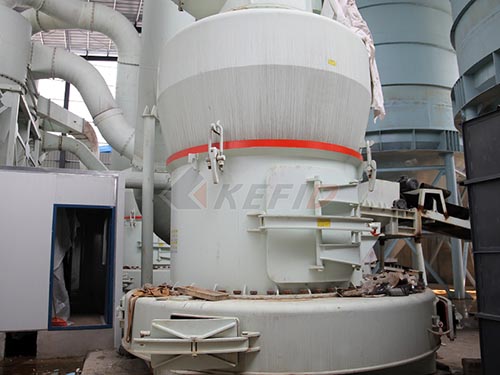
Field data from operations processing ores with 510% silica content shows: stamp heads last 8,00012,000 hours, die blocks last 4,0006,000 hours, and screen panels last 5001,500 hours depending on mesh size. Higher silica ores will reduce these intervals by 3050%. Our wear parts are stocked for immediate shipment, and we provide a recommended spare parts inventory with every system.
Q3: Can the stamp mill handle ores with high moisture content?
Yes. The stamp mill is specifically designed to process ores with up to 20% moisture content when equipped with the water injection system. The continuous water flow prevents material buildup and maintains efficient screening. Operations in tropical climates with seasonal rainfall have reported zero downtime related to ore moisture when using the water injection system.
Q4: What are the specific power requirements for installation?
The SM5 requires a 3755 kW, 415V/50Hz or 460V/60Hz threephase power supply. The complete system including feeder and conveyors requires approximately 6575 kW total connected load. For dieseldriven configurations, a 7590 HP engine is specified. Our engineering team will provide a detailed electrical load schedule during the proposal stage.
Q5: How long does delivery and installation take?
Standard delivery is 1216 weeks from order confirmation for the Basic and Standard packages. Complete and Turnkey systems require 1620 weeks due to additional engineering and procurement. Installation takes 35 days for skidmounted units, with commissioning completed within 12 weeks. Turnkey installations typically require 46 weeks from site mobilization to handover.
Q6: What safety features are included as standard?
All stamp mills include: emergency stop system with pullcord along the entire length, interlocked access doors on the cam shaft housing, automatic shutdown on bearing temperature (set at 80°C), and a torquelimiting coupling that disengages the drive on overload. Additional safety options include sound enclosures (reducing noise to 85 dBA) and dust collection connections for dry discharge configurations.
Q7: Can existing crushing circuits be retrofitted with a stamp mill?
Yes. The skidmounted design allows installation adjacent to existing equipment. Common retrofit scenarios include: replacing a secondary cone crusher to improve product size, adding a pregrinding stage ahead of a ball mill, or replacing an outdated stamp mill with a highercapacity modern unit. Our engineering team can assess your existing circuit and provide a retrofit feasibility study at no cost.
Q8: What aftersales support is available?
We provide telephone and email technical support 24/7, with response within 2 hours during business hours and 12 hours for afterhours emergencies. A field service technician is available for onsite support within 48 hours for most mining regions. We maintain a comprehensive spare parts inventory and can arrange emergency parts shipment with 24hour delivery to major mining centers.