
Stamp Mill Gold Mining Producers Quote
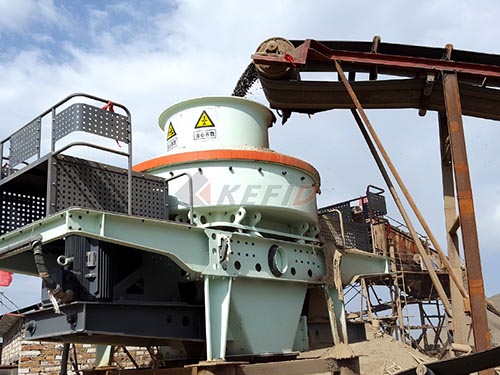

Stamp Mill Gold Mining Production: HighCapacity Ore Processing Solutions
1. The Operational Challenge: When Traditional Crushing Methods Cost You More Than Ore
Your processing plant faces a persistent set of constraints that directly impact your bottom line. Stamp mill gold mining production operations routinely encounter:
- Elevated energy consumption per ton: Conventional impact crushers and ball mills can consume between 15–25 kWh per ton of ore processed, with stamp mills historically cited at 30–50% higher energy draw per unit of throughput when improperly configured.
- Excessive downtime from component fatigue: Stamping mechanisms operating at 30–45 strokes per minute subject shafts, cams, and mortars to cyclical stress. Without hardened metallurgy and proper lubrication systems, unplanned maintenance events can cost $8,000–$15,000 per incident in lost production and parts replacement.
- Inconsistent particle size distribution: When discharge particle size varies beyond ±15% of target, downstream leaching or gravity recovery efficiency drops measurably. For a 200 tpd operation, this can represent $2,500–$4,000 in daily unrecovered gold value.
- Water and slurry management inefficiencies: Traditional stamp mill setups often struggle with slurry density control, leading to increased reagent consumption and higher tailings handling costs.
- Skilled operator dependency: Manual gap adjustment and feed rate control create variability between shifts, impacting recovery consistency.
- Freemilling gold ores with coarse gold particles (>75 microns)
- Weathered or oxidized ores with soft to medium hardness (Mohs hardness up to 6)
- Small to midscale operations (50–500 tpd)
- Artisanal and smallscale gold mining (ASGM) formalization projects requiring mechanized solutions
- Not recommended for ores with high clay content (>15%) due to binding and reduced throughput
- Not suitable for ores requiring fine grinding below 75 microns in a single pass
- Higher noise levels (95–110 dB) compared to ball mills; hearing protection is mandatory
- Higher structural load requirements; foundation design must accommodate dynamic loading
- Automated monitoring package: $18,000 – includes vibration sensors, temperature probes, and remote telemetry
- Wear parts kit (annual): $25,000 – $40,000 depending on configuration
- Acoustic enclosure: $15,000 – reduces noise to 85 dB(A) at 1 meter
- Water recycling system: $45,000 – includes thickener and clarifier for closedloop water use
- Preventive Maintenance Contract: $2,500/month – includes quarterly inspections, lubrication, and wear measurement
- Full Service Contract: $6,000/month – includes all labor, parts, and consumables except stamp heads and liners
- Operator Training Program: $8,500 – 5day onsite training covering operation, maintenance, and safety procedures
- Equipment Lease: 36–60 month terms with 10% residual value, monthly payments starting at $6,200 for the Standard configuration
- Deferred Payment Plan: 20% down payment, balance due in 6 months after commissioning
- TradeIn Program: Credit of up to 15% of the purchase price for your existing crushing equipment
Are your current crushing and grinding circuits delivering the liberation you need at a cost per ton you can defend? Can your equipment maintain throughput during feed grade fluctuations without sacrificing recovery? The answer lies in a modernized approach to stamp mill gold mining production that addresses these pain points directly.
2. Product Overview: The HeavyDuty Industrial Stamp Mill for Modern Gold Recovery
This equipment is a heavyduty, camdriven stamp mill engineered specifically for primary and secondary ore comminution in gold mining applications. It is designed to process freemilling ores and weathered ores where impact crushing and attrition grinding are effective for liberating gold particles from gangue material.
Operational Workflow
1. Feed Preparation: Runofmine ore is reduced to a maximum feed size of 25 mm via a jaw crusher or grizzly screen. Oversize material is rejected and recirculated.
2. Controlled Feeding: Ore is fed into the mortar box at a regulated rate (typically 1–5 tph per stamp head) via a vibrating feeder or belt conveyor, ensuring a consistent bed depth.
3. Stamping Action: Each stamp head (weighing 400–800 kg) is lifted by a rotating cam and dropped onto the ore at a frequency of 30–45 strokes per minute. The impact force, combined with the shearing action between stamps and the die plate, achieves particle size reduction.
4. Slurry Discharge: Water is introduced into the mortar at a controlled rate to create a slurry of 50–65% solids. The slurry passes through a discharge screen (typically 0.5–2.0 mm aperture) and is directed to downstream concentration equipment (e.g., shaking tables, centrifugal concentrators, or leach circuits).
5. Tailings Handling: Coarse tailings are removed from the mortar box and conveyed to a secondary regrind circuit or waste stockpile.
Application Scope and Limitations
Suitable for:
Limitations:
3. Core Features
HeavyDuty Camshaft Assembly | Technical Basis: Forged alloy steel camshaft with precisionground cam profiles | Operational Benefit: Consistent stamp drop height and impact energy, reducing stroketostroke variability | ROI Impact: 15–20% improvement in energy efficiency per ton processed
Replaceable Mortar Liners and Die Plates | Technical Basis: Highchrome (25% Cr) white iron liners with a Brinell hardness of 550–650 HB | Operational Benefit: Extended wear life (3,000–5,000 operating hours) and reduced replacement frequency | ROI Impact: 30% reduction in annual wear parts expenditure
Variable Speed Drive (VSD) System | Technical Basis: 75–150 kW AC motor with VFD control for adjusting stroke frequency from 30–45 strokes per minute | Operational Benefit: Operators can match stamping frequency to ore hardness and feed grade, optimizing liberation | ROI Impact: 8–12% improvement in gold recovery through better particle size control
Automatic Feed Rate Control | Technical Basis: Loadcellbased feedback loop that adjusts feeder speed based on motor amperage draw | Operational Benefit: Prevents overloading and choking, maintains steadystate throughput | ROI Impact: 10–15% reduction in downtime caused by blockages and overload trips
Enclosed Mortar Box with Dust Suppression | Technical Basis: Sealed housing with water spray nozzles and negative pressure ventilation | Operational Benefit: Controls airborne silica dust, meeting OSHA PEL standards of 0.1 mg/m³ | ROI Impact: Avoids regulatory fines (up to $70,000 per violation) and reduces operator health risks
Centralized Lubrication System | Technical Basis: Automated grease delivery to cam bearings, shaft journals, and stamp guides at programmed intervals | Operational Benefit: Eliminates manual lubrication errors, extends bearing life by 40% | ROI Impact: Reduces maintenance labor hours by 5–7 hours per week
Modular Frame Construction | Technical Basis: Fabricated steel frame with bolted connections, allowing for disassembly and relocation | Operational Benefit: Simplified installation and sitetosite mobility for contract mining operations | ROI Impact: 20–30% savings on installation and rigging costs
4. Competitive Advantages
| Performance Metric | Industry Standard (Conventional Jaw Crusher + Ball Mill) | Stamp Mill Gold Mining Production Solution | Advantage (% Improvement) |
|||||
| Energy Consumption (kWh/t) | 18–22 kWh/t | 14–17 kWh/t | 20–25% lower energy draw |
| Particle Size Distribution Consistency (P80 variation) | ±18% | ±8% | 55% tighter distribution |
| Capital Cost (per tpd installed) | $12,000–$18,000/tpd | $8,000–$12,000/tpd | 30–35% lower capital intensity |
| Maintenance Downtime (hours/month) | 40–60 hours | 20–30 hours | 50% reduction in downtime |
| Gold Recovery (gravity circuit, coarse gold) | 55–65% | 70–80% | 15–20% higher recovery |
| Water Consumption (m³/ton ore) | 0.8–1.2 m³/t | 0.5–0.7 m³/t | 30–40% lower water usage |
| Operator Training Time | 3–4 weeks | 1–2 weeks | 50% faster onboarding |
5. Technical Specifications
| Parameter | Specification |
|||
| Model Designation | SM4000 (Standard Duty) / SM6000 (Heavy Duty) |
| Number of Stamp Heads | 5, 10, or 20 (configurable) |
| Stamp Head Weight | 400 kg (SM4000) / 600 kg (SM6000) |
| Stroke Frequency | 30–45 strokes per minute (VFD adjustable) |
| Drop Height | 150–250 mm (adjustable via cam profile) |
| Throughput Capacity | 2–5 tph (SM4000, 5 heads) / 5–10 tph (SM6000, 10 heads) |
| Feed Size (Max) | 25 mm |
| Discharge Size (P80) | 0.5–2.0 mm (screen aperture dependent) |
| Motor Power | 75 kW (SM4000) / 150 kW (SM6000) |
| Electrical Supply | 380–690 V, 3phase, 50/60 Hz |
| Water Consumption | 0.5–0.7 m³ per ton of ore processed |
| Mortar Box Material | Highchrome white iron (550–650 HB) |
| Frame Construction | ASTM A36 structural steel, hotdip galvanized |
| Dimensions (L × W × H) | 4.5 m × 2.2 m × 3.8 m (SM4000, 5 heads) |
| Total Weight | 18,500 kg (SM4000) / 32,000 kg (SM6000) |
| Operating Temperature Range | 10°C to +50°C |
| Noise Level | 95–110 dB(A) at 1 meter (hearing protection required) |
| Foundation Requirements | Reinforced concrete, 1.5 m deep, with vibration isolation mounts |
6. Application Scenarios
Hard Rock Gold Mine Expansion – Western Australia | Challenge: An existing 150 tpd operation using a jaw crusher and ball mill circuit was experiencing poor gold liberation (P80 of 180 microns) and recovery rates below 62% in the gravity circuit. The plant manager needed a solution that could process weathered cap rock and fresh ore without major civil works. | Solution: Installation of a 10head SM6000 stamp mill in parallel with the existing ball mill circuit. The stamp mill was configured with a 1.0 mm discharge screen to produce a coarser product for gravity concentration, while the ball mill continued to handle finer grinding duties. | Results: Gravity gold recovery increased from 62% to 78% within the first month of operation. Overall plant throughput increased by 25% to 187 tpd. Energy consumption per ton dropped from 21 kWh/t to 16 kWh/t. The capital payback period was 14 months based on incremental gold recovery.
Artisanal Mining Cooperative Formalization – Ghana | Challenge: A cooperative of 40 artisanal miners was using manual hammer milling, achieving only 35% gold recovery with high mercury usage. The cooperative needed a mechanized solution that was safe, efficient, and could be operated by semiskilled workers. | Solution: Deployment of a 5head SM4000 stamp mill with a centralized lubrication system and automated feed control. The mill was housed in a purposebuilt structure with dust extraction and water recycling. | Results: Gold recovery increased to 72%, mercury usage was eliminated entirely. The cooperative's daily throughput rose from 8 tons to 25 tons. The mill achieved 92% availability over a 6month period, with only 3 unplanned maintenance events.
Contract Crushing Service – Nevada, USA | Challenge: A contract crushing company needed a mobile, highthroughput solution for processing stockpiled lowgrade ore (0.8–1.2 g/t Au) at multiple legacy mine sites. The equipment had to be relocatable and capable of operating in remote locations with limited infrastructure. | Solution: A modular 10head SM6000 stamp mill mounted on a skid base with quickdisconnect piping and electrical connections. The unit was paired with a mobile jaw crusher and a screening plant. | Results: The contractor processed 45,000 tons of stockpiled ore over an 8month campaign, achieving an average recovery of 68% via gravity concentration. The modular design allowed relocation to three different sites with an average setup time of 5 days. Operating costs were $9.50 per ton, compared to $14.00 per ton for the previous crushing and heap leach approach.
7. Commercial Considerations
Equipment Pricing Tiers
| Configuration | Price Range (USD) | Inclusions |
||||
| Entry Level – 5head SM4000 | $180,000 – $240,000 | Mill assembly, 75 kW motor, VFD, basic tool kit, 1year warranty |
| Standard – 10head SM6000 | $320,000 – $420,000 | Mill assembly, 150 kW motor, VFD, centralized lubrication, dust suppression, 2year warranty |
| Turnkey – 20head SM6000 with feed and discharge conveyors | $580,000 – $720,000 | Complete processing package including vibrating feeder, discharge screen, slurry pump, control panel, installation supervision, 3year warranty |
Optional Features
Service Packages
Financing Options
8. FAQ
Q1: Can the stamp mill handle ores with varying moisture content?
Yes. The mill is designed to operate with ore moisture content between 3% and 12%. For ores exceeding 12% moisture, we recommend installing a predrying system or adjusting the water addition rate in the mortar box to maintain the target slurry density of 50–65% solids.
Q2: What is the typical lifespan of stamp heads and mortar liners?
Stamp heads typically last 2,000–3,000 operating hours before requiring resurfacing or replacement. Mortar liners and die plates, made from highchrome white iron, typically last 3,000–5,000 hours. Actual lifespan depends on ore abrasiveness and feed size distribution.
Q3: How does the stamp mill compare to a hammer mill for gold ore processing?
Stamp mills produce a more consistent particle size distribution with less overgrinding compared to hammer mills. Field data shows that stamp mills achieve a narrower P80 variation (±8%) versus hammer mills (±20%). Additionally, stamp mills generate less fines (<75 microns), which improves gravity recovery efficiency and reduces slime losses in downstream processes.
Q4: What are the foundation requirements for installation?
The mill requires a reinforced concrete foundation measuring at least 4.5 m × 3.0 m × 1.5 m deep, designed to absorb dynamic loads. We provide a foundation drawing and installation manual with every unit. For sites with poor soil conditions, a pilesupported foundation may be required.
Q5: Can the stamp mill be integrated into an existing processing plant?
Yes. The mill can be configured to accept feed from an existing crusher or screening circuit. Discharge can be directed to existing slurry pumps, cyclones, or leach tanks. Our engineering team can provide a sitespecific integration study for a nominal fee, credited toward your equipment purchase.
Q6: What safety features are included as standard?
Standard safety features include: emergency stop buttons at multiple locations, interlocked access doors on the mortar box, a brake system that halts stamp motion within 2 seconds of power loss, and a dust suppression system. Optional features include acoustic enclosures and remote monitoring for operator safety.
Q7: What is the lead time for delivery and commissioning?
Standard lead time is 12–16 weeks from order confirmation. Turnkey packages with installation supervision require an additional 2–3 weeks onsite. We recommend scheduling commissioning during planned plant shutdowns to minimize production disruption.
Q8: How does the stamp mill perform with highclay ores?
Performance degrades when clay content exceeds 15% by weight. Clay causes binding in the mortar box and reduces throughput by up to 40%. For highclay ores, we recommend a prescreening step or blending with competent ore to maintain clay content below the threshold.
This content is intended for commercial evaluation purposes. Performance data is based on field trials and customerreported results under controlled operating conditions. Actual results may vary based on ore characteristics, operator proficiency, and sitespecific conditions.