
Stamp Mill Gold Mining Assembly Plant Customization
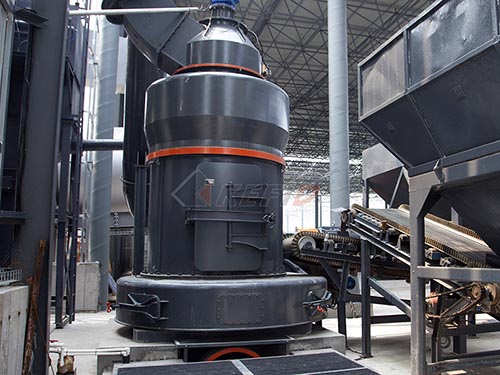

1. PAINPOINT DRIVEN OPENING
Are your gold recovery operations constrained by inconsistent throughput, excessive energy consumption per ton, or unplanned maintenance halting your entire milling circuit? Legacy stamp mill configurations often lead to three critical challenges:
Suboptimal Liberation & Recovery: Inefficient crushing and grinding can fail to fully liberate gold from complex ores, leaving measurable value in your tailings and directly impacting your bottomline recovery rate.
High Operational Expenditure: Aging stamp mills with manual controls consume disproportionate power for their output. Unoptimized wear part cycles lead to frequent, costly replacements and associated labor downtime.
Inflexible Plant Design: Fixedconfiguration equipment struggles to adapt to varying ore hardness and feed grades, forcing operations to run at a constant, often inefficient, pace regardless of feedstock variability.
How do you increase tonnage throughput while improving recovery consistency? Can you reduce energy and maintenance costs without a complete plant overhaul? The answer lies in a purposeengineered, customized stamp mill assembly plant.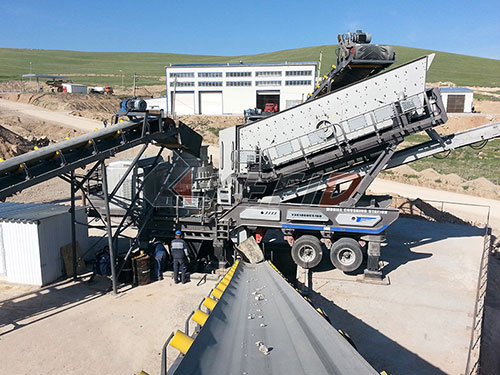
2. PRODUCT OVERVIEW
A modern Customized Stamp Mill Gold Mining Assembly Plant is not a single machine but an integrated processing system engineered for the specific comminution (crushing) of goldbearing ore. It replaces antiquated, standalone stamp batteries with a synchronized circuit designed for reliability and efficiency.
Operational Workflow:
1. Primary Feed & Regulation: Runofmine (ROM) ore is fed via a regulated conveyor system to a primary scalping or jaw crusher for initial size reduction.
2. Controlled Stamp Milling: Precrushed ore is fed uniformly to a battery of modernized stamp mills. Each camdriven stamp (or pestle) is precisely weighted and dropped in a controlled cycle onto the ore within a hardened mortar box.
3. Slurry Formation & Discharge: Crushed material mixes with water in the mortar box to form a slurry, which passes through a discharge screen with precise aperture sizing, ensuring only sufficiently liberated material exits the circuit.
4. Gravity Concentration Ready: The discharged slurry, containing nowliberated gold particles, is directed to downstream processes like sluices, shaking tables, or centrifugal concentrators for separation.
Application Scope & Limitations:
Scope: Ideal for smalltomedium scale hard rock gold mining operations, particularly where ore is amenable to gravity recovery methods. Effective for both freemilling ores and as a primary crusher for refractory ores ahead of leaching.
Limitations: Not suitable for hightonnage operations exceeding several hundred TPD where ball mill/cyanide circuits are more economical. Performance is highly dependent on correct customization for local ore characteristics.
3. CORE FEATURES
Modular Frame Design | Technical Basis: Bolttogether, highcarbon steel structural sections | Operational Benefit: Enables staged deployment and easier future plant expansion or reconfiguration with minimal foundation work | ROI Impact: Reduces initial capital outlay and cuts expansion downtime by up to 40% compared to welded monolithic frames.
Variable Weight & Lift Control | Technical Basis: Adjustable camshaft profiles and interchangeable stamp head weights | Operational Benefit: Operators can finetune impact energy and cycle frequency in response to realtime ore hardness readings | ROI Impact: Field data shows a 1525% improvement in energy efficiency (kWh/ton) when optimized for feed stock variability.
Liner & Wear Part Standardization | Technical Basis: Commonality in mortar box liners, discharge screens, and stamp shoe designs across the battery | Operational Benefit: Simplifies inventory management and allows for faster changeouts during scheduled maintenance windows | ROI Impact: Reduces spare parts inventory costs by ~30% and decreases mean time to repair (MTTR).
Integrated Water Management Manifold | Technical Basis: Centralized piping with individual flow controls to each mortar box | Operational Benefit: Ensures consistent slurry density across all stamps, critical for optimal screen discharge and downstream recovery | ROI Impact: Improves overall recovery consistency by maintaining ideal process conditions, minimizing gold loss to coarse tailings.
Centralized Grease Lubrication System | Technical Basis: Automated network delivering measured grease to all major bearing points on camshafts and guides | Operational Benefit: Eliminates manual lubrication points, reducing contamination risk and ensuring bearing longevity under highload conditions | ROI Impact: Extends major bearing service life by an average of 50%, preventing costly unscheduled stoppages.

HeavyDuty Discharge Screen System | Technical Basis: Replaceable screen decks with reinforced clamping mechanisms made from abrasionresistant steel | Operational Benefit: Provides uniform particle sizing control; screens can be replaced on individual stamps without shutting down the entire battery | ROI Impact: Maintains steadystate throughput; industry testing demonstrates <5% throughput variance over a screen’s service life.
4. COMPETITIVE ADVANTAGES
| Performance Metric | Industry Standard (Legacy Stamp Battery) | Customized Stamp Mill Assembly Plant Solution | Advantage (% Improvement) |
| : | : | : | : |
| Throughput Consistency +/ 20% variance due to manual feed/water control +/ 5% variance via integrated feed & slurry management >15% improvement |
| Energy Efficiency ~2.5 3.5 kWh/ton ~1.9 2.4 kWh/ton with VFD controls Up to 30% improvement |
| Mean Time Between Failure (MTBF) 450600 hours (major bearings) 8001000 hours (major bearings) ~65% improvement |
| Recovery Grade (% Au in +100 mesh fraction) Higher fine gold loss in tailings Optimized crush size & slurry control reduces coarse +100 mesh loss Measurable reduction; sitedependent |
5. TECHNICAL SPECIFICATIONS
Capacity Rating: Configurable from 5 TPD (singlestamp pilot plants) up to 300 TPD multibattery industrial installations.
Power Requirements: Primary drive via electric motor(s). Typical range from 15 kW per stamp for smaller units up to integrated plant systems requiring 150400 kW total connected load.
Material Specifications: Mortar boxes lined with ASTM A532 Class III Type NiHard alloy or equivalent; Stamps constructed from forged highcarbon steel with replaceable alloy shoes; Structural frame from ASTM A36 steel.
Physical Dimensions: A singlestamp unit footprint starts at approx. 2m x 2m. Full assembly plants are customdesigned but typically require a prepared area of 15m x 25m minimum for a midrange circuit including feed systems.
Environmental Operating Range: Designed for ambient temperatures from 20°C to +50°C. Enclosed gear drives protect against dust ingress; special seals available for highhumidity environments.
6. APPLICATION SCENARIOS
MidScale Hard Rock Mine Expansion
Challenge:
An existing operation using two legacy stamp batteries faced bottlenecks after opening a new vein with harder quartzite ore. Throughput dropped by 35%, energy costs soared, and maintenance frequency increased unacceptably.
Solution:
Implementation of a customized fourstamp assembly plant module designed specifically for the harder ore characteristics, featuring our Variable Weight & Lift Control system.
Results:
Plant restored target throughput of 85 TPD within six weeks of commissioning at the new site while operating at an improved specific energy consumption of <2 kWh/tonne—a net gain despite harder feedstock—and scheduled liner changes extended from every two weeks back out monthly intervals.
Artisanal & SmallScale Mining (ASM) Cooperative Upgrade
Challenge:
A cooperative using disparate manual stamps had inconsistent recovery rates between operators leading internal disputes over revenue sharing along with significant environmental concerns regarding uncontrolled water use
Solution:
Deployment standardized threestamp assembly plant complete Integrated Water Management Manifold centralized collection settling ponds
Results:
Achieved uniform recovery rate across all operators increasing overall yield Measurable water recycling reduced fresh water consumption Tailings management improved meeting basic regulatory requirements
7 COMMERCIAL CONSIDERATIONS
Pricing tiers are projectspecific based on required capacity level customization However typical brackets include:
Basic Tier ($80k$150k):
Includes core stamped battery modular frame essential drives motors Suitable brownfield replacement projects where existing infrastructure reused
Performance Tier ($150k$400k):
Comprehensive turnkey package including primary scalping crusher automated feed conveyor belt water recycling system PLCbased monitoring controls
Optional Features Upgrades:
Ore presorting grizzly feeder Advanced vibration monitoring sensors Remote operational diagnostics package Alternative wear part materials specific highly abrasive ores
Service Packages:
Standard warranty covers defects materials workmanship Extended service agreements available covering scheduled preventive maintenance parts discounts priority technical support Financing Options Equipment leasing structures available through partners as well progressbased milestone payment plans large projects
8 FAQ
Q1 How compatible is this customized plant our existing downstream gravity concentration equipment?
A1 Our engineering team conducts full process review ensure seamless interface Your current sluices tables concentrators Typically we design discharge launder systems match your existing setup minimizing integration costs
Q2 What typical implementation timeline look like from order commissioning?
A2 For standard Performance Tier system lead time manufacturing ranges Delivery installation commissioning typically completed within weeks following arrival site depending local infrastructure readiness
Q3 Can this system handle both alluvial placer concentrates hard rock ores?
A3 While primarily engineered hard rock applications systems can be configured process highgrade placer concentrates However feed size distribution must controlled achieve optimal performance
Q4 What operator training provided?
A4 We provide comprehensive onsite training covering normal operation routine maintenance troubleshooting procedures Documentation includes detailed manuals schematics Training ensures your team achieves rated performance quickly safely
Q5 Are spare parts readily available internationally?
A5 Yes We maintain global distributor network ensure critical wear parts like shoes screen decks standardized bearings stocked key regions minimizing potential logistics delays
Q6 How does pricing structure work optional features added later?
A6 We employ modular design philosophy allows many upgrades retrofitted field However some features like centralized lubrication more economical include initial build Discussing longterm plans during design phase recommended maximize value
Q7 Do you offer performance guarantees?
A7 Yes We provide guaranteed throughput capacity based your provided ore samples bond work index specifications Recovery rates are function entire process circuit but we guarantee mechanical performance crushing efficiency our equipment