
Parimi i funksionimit të thërrmuesit të ndikimit Vsi

The Operating Principle of VSI Impact Crushers: Harnessing Velocity for Size Reduction
Ndikimi vertikal i boshtit (TË GJITHË) crushers stand as a cornerstone technology in modern aggregate processing and mineral comminution. Ndryshe nga dërrmuesit tradicionalë me kompresim (si thërrmuesit e nofullës ose konit), VSI crushers operate on a fundamentally different principle: utilizing high velocity to induce particle-on-particle or particle-on-surface impact breakage. This method yields distinct advantages, particularly in producing well-shaped, cubical aggregates and efficient fine grinding. Understanding their core operating principle is key to optimizing their application.
The Core Mechanism: Acceleration and Impact
The operation of a VSI crusher can be distilled into three primary stages:
1. Material Feed and Distribution: Materiali i papërpunuar për ushqim (shkëmb, zhavorr, xeherore) enters the top of the crusher through a feed tube or hopper assembly. A critical component within the rotor assembly, often called the feed distributor or feed eye, ensures that the incoming material is evenly distributed around the circumference of the rotor. This uniform distribution is essential for balanced operation and consistent product gradation.
2. High-Velocity Acceleration by the Rotor: The heart of the VSI is its high-speed rotating rotor. Mounted vertically on a central shaft driven by an external power source (typically an electric motor via belts or a direct drive), the rotor spins at very high peripheral speeds – commonly ranging from 45 m/s (150 ft/s) deri në 85 m/s (280 ft/s) depending on the model and application.
Attached radially to this rotor are impeller shoes, tips, or table anvils. These replaceable wear parts are strategically positioned around the rotor's periphery.
As material falls into the spinning rotor from the distributor, it lands onto these impeller shoes/tips.
The centrifugal force generated by the rapid rotation violently accelerates the material particles radially outward along the curved path of the shoe/tip.
This acceleration imparts tremendous kinetic energy (`KE = 1/2 mv²`) to each particle. Në mënyrë vendimtare, because kinetic energy increases with the square of velocity (`v²`), achieving high rotational speeds is paramount for effective breakage.
3. Impact Breakage: The accelerated particles exit the rotor at high tangential velocity through openings between adjacent impeller shoes/tips.
Shkëmb mbi shkëmb (ROR / Particle-on-Particle): In many
Lini Mesazhin Tuaj
Kategoritë e produkteve
-
Thërrmues koni për projekte afatshkurtra me qira në Emiratet e Bashkuara Arabe
-
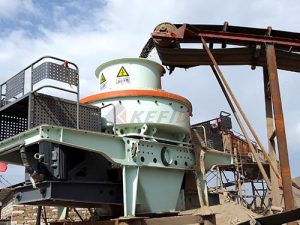
Shërbimi i projektimit të pajisjeve për dërrmues të çakëllit të guroreve me etiketë private
-
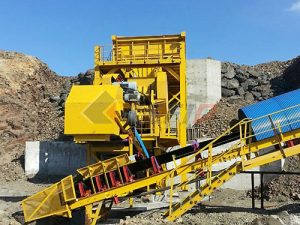
Polic çekiç për çmimin dërrmues gëlqeror në Algjeri
-

Kostoja e prodhimit të pajisjeve të fabrikës së çimentos
-
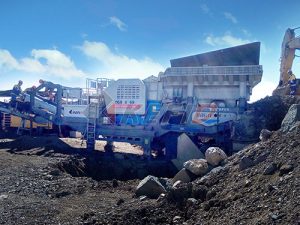
Jci Kodiak 400 Manuali i Thërrmuesit
-
Thërrmues guri me qira