
Slag Crusher Plant Vendor Supply Chain


1. PAINPOINT DRIVEN OPENING
Managing slag is a persistent bottleneck with tangible costs. Are you facing these operational challenges?
Unreliable Throughput: Inconsistent feed size and hard, abrasive slag cause frequent jams and unplanned stoppages, crippling your downstream processing schedule.
Excessive Wear & Maintenance Costs: Standard crushers deteriorate rapidly under continuous slag processing, leading to costly component replacement and significant labor hours for repairs.
Inefficient Liberation of Valuable Metals: Incomplete crushing leaves metals trapped within the slag matrix, directly reducing your material recovery rates and revenue.
High Operational Downtime: The cumulative effect of breakdowns, liner changes, and clearing blockages results in low overall equipment effectiveness (OEE), failing to meet production targets.
Dust and Noise Compliance Risks: Inadequate containment systems create environmental hazards, risking regulatory noncompliance and worker safety.
Is your current solution equipped to handle the specific abrasiveness and variability of metallurgical slag? Can you quantify the true cost of your crusher’s downtime on your plant’s bottom line?
2. PRODUCT OVERVIEW: SLAG CRUSHER PLANT
A Slag Crusher Plant is a purposebuilt, stationary or semimobile material processing system designed specifically for the size reduction and liberation of metals from blast furnace, steel furnace, or nonferrous slag. It transforms large, irregular slag feed into a calibrated aggregate for sale or further processing while maximizing ferrous and nonferrous metal recovery.
Operational Workflow:
1. Primary Crushing: Large slag lumps (up to 1.5m) are reduced to a manageable size (approx. 200mm) using a robust jaw crusher or impact breaker.
2. Secondary Crushing & Screening: Material is further reduced via a cone crusher or impactor and screened to separate sized aggregate from smaller debris and liberated metal.
3. Metal Separation: Oversize material containing trapped metal may be recirculated, while magnetic separators (overband or drum) extract ferrous content. Eddy current separators can be integrated for nonferrous recovery.
4. Final Sizing & Stockpiling: Crushed aggregate is conveyed to final screening decks for precise product grading before stockpiling.
Application Scope: Integrated crushing circuits for steel plants, smelters, recycling yards, and independent slag processing contractors handling ferrous and nonferrous slags.
Key Limitations: Not designed for primary rock mining operations or extremely highmoisture materials without preprocessing. Feed size must be controlled within the plant's designed intake dimensions.
3. CORE FEATURES
HeavyDuty Jaw Crusher | Technical Basis: Reinforced manganese steel jaws & oversized eccentric shaft | Operational Benefit: Consistently processes large, irregular slag lumps without flexing or premature failure | ROI Impact: Reduces primary stage blockages by over 70%, ensuring continuous feed to downstream circuits
Labyrinth Seal & Grease Purge System | Technical Basis: Multistage sealing barriers with positivepressure grease purging | Operational Benefit: Prevents abrasive dust ingress into crusher bearings and lubrication lines | ROI Impact: Extends bearing service life by 23x, eliminating a major source of catastrophic failure and unplanned downtime
Hydraulic Gap Adjustment & Clearing | Technical Basis: Integrated hydraulic cylinders for CSS adjustment and uncrushable material release | Operational Benefit: Allows operators to adjust product size or clear a chamber jam in minutes without manual intervention | ROI Impact: Cuts downtime for adjustments/clearing from hours to under 30 minutes, directly increasing plant availability

AbrasionResistant Liners & Conveying | Technical Basis: AR400/500 steel plate liners in hoppers, chutes, and skirting; reinforced belt scrapers | Operational Benefit: Protects structural components from wear, maintains material flow integrity, reduces belt wear | ROI Impact: Lowers longterm structural maintenance costs by up to 60% compared to mild steel setups
Integrated Metal Separation Circuitry | Technical Basis: Strategically placed selfcleaning overband magnets and optional eddy current separators | Operational Benefit: Maximizes recovery of valuable ferrous and nonferrous metals directly within the crushing process flow | ROI Impact: Adds a direct revenue stream; field data shows metal recovery rates improving by 1525% over standalone crushing.
Centralized PLC Control & Monitoring | Technical Basis: Automated process control with amp draw monitoring, emergency stops, and fault diagnostics | Operational Benefit: Enables singleoperator oversight of the entire plant from a protected cabin; provides early warning of mechanical stress | ROI Impact: Optimizes power consumption (kW/ton) and reduces required personnel in highdust areas.
4. COMPETITIVE ADVANTAGES
| Performance Metric | Industry Standard Solution | Slag Crusher Plant Solution | Advantage (% Improvement) |
| : | : | : | : |
| Uptime Availability| 7582% (due to wear/jams)| >92% (dedicated design) | +1220% Increased Production |
| Liner Life (Primary)| 80,000 120,000 MTon| 180,000 220,000 MTon| +80% Longer Service Life |
| Metal Recovery Rate| Passive separation postcrushing| Active inline separation during crushing| +1525% More Metal Captured |
| Tons per Maintenance Hour| 810 Tons/Hour of labor| 1822 Tons/Hour of labor| +100% Maintenance Efficiency |
| Power Consumption| Fixed speed drives across circuit| PLCoptimized VFDs on conveyors/fans| 1015% Energy Use per Ton |
5. TECHNICAL SPECIFICATIONS
Processing Capacity: Configurable from 50 TPH to over 300 TPH.
Feed Size Maximum: Up to 1500mm (subject to model configuration).
Final Product Size: Adjustable from 40mm to 150mm aggregates.
Power Requirements: Total installed power typically ranges from 250 kW to 800 kW based on plant scale; supplied for 400V/50Hz or other industrial standards.
Key Material Specifications: Primary crusher jaws manufactured from Mn18Cr2/Mn22Cr2 steel; structural wear areas lined with AR450 steel; conveyor idlers rated C5/EP400/5.
Physical Dimensions (Typical Setup): Footprint approximately 40m L x 22m W x 15m H (varies significantly with layout).
Environmental Operating Range: Designed for ambient temperatures from 20°C to +45°C; dust emission levels at transfer points maintained below <20 mg/Nm³ with integrated suppression/bag filter systems.
6. APPLICATION SCENARIOS
Integrated Steel Plant Slag Yard Recycling
Challenge A major steel producer faced escalating landfill costs for BOF slag and needed to recover contained metallics while producing saleable aggregate. Their repurposed quarry crusher suffered daily jams and monthly bearing failures.
Solution Implementation of a dedicated Slag Crusher Plant featuring an impact breaker for slabby feed,a cone crusher for cubical aggregate shaping,and two stages of magnetic separation.
Results The plant achieved stable throughput of 160 TPH.Metallic recovery increased by 22%,creating new revenue.Aggregate quality met roadbase specifications,directly displacing landfill costs.Downtime decreased from approximately 15%to under 8%.
Independent Slag Processing Contractor
Challenge A contractor processing varied feeds from multiple foundries experienced high operational variability.Manual metal picking was inefficient,and changing feed hardness caused unpredictable wear rates on their single crusher setup.
Solution A modular Slag Crusher Plant with a heavyduty jaw crusher,a secondary impactor for better liberating metals,and an enlarged vibrating prescreen.The system included both magneticand eddy current separators.
Results The contractor could accept more varied feedstock.Contractual throughput guarantees were consistently met.Metal recovery became automated,labor costs dropped by 30%,and overall profitability per ton increased despite higher initial capex due toreduced operating expenses.
7. COMMERCIAL CONSIDERATIONS
Our Slag Crusher Plants are offered in three primary tiers:
1. Standard Configuration: Core crushing,screening,and basic magnetic separation.Ideal for consistent feed with known characteristics.Pricing typically ranges based on capacity scale.
2. Enhanced Recovery Configuration: Adds advanced separation technology(eddy current,dense media),automated metal handling,and enhanced dust control.Recommendedfor highvalue nonferrous slags or strict environmental sites.Priced as Standard+ defined modules.
3.
4.Turnkey Modular Configuration: Fully containerized or skidmounted modulesfor faster installation,mobility between sites,and reduced civil works.Includes comprehensive automation.Priced as an integrated project package.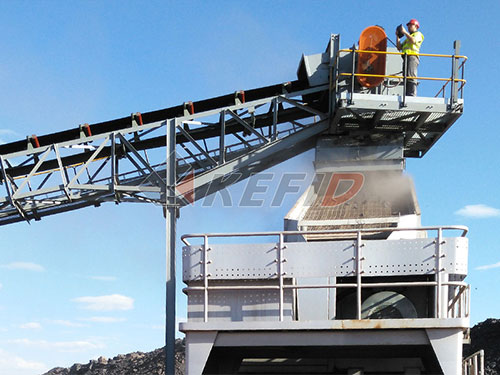
Optional features include dust filtration systems,coldclimate enclosures,belt weighing instrumentation,and remote telematicsfor performance monitoring.Service packages rangefrom annual inspection plans tooffsite component refurbishment programsand guaranteed spare parts availability.Financing options including equipment leasingand projectbased financing solutions are availableto help manage capital expenditure.
8.FAQ
Q:What if ourslagfeed composition changes frequently?
A:The hydraulic adjustmentand robust cavity designs allow quick compensationfor changes in hardnessor feed size.The control system can store settings fordifferent feedstock profilesfor operator recall.
Q:What isthe typical installation timeframe?
A.Fora modularplantonaprepared base,major mechanical erection canbe completedin46 weeks.Full commissioning dependsonsite services(civil,electric).Traditional builtinplace plants requirea longer timelinebasedonfoundation work.
Q.How doyou ensurewear partavailability?
A.We maintainacritical spares inventoryfor standardplants.Customers receiveabillof materialsanda recommendedspares list.Longterm supply agreementsare availabletoguarantee parts availabilityforthe expectedlifespan oftheplant.
Q.Canwe integrate thisplantwithourexistingconveyorsandscreens?
A.Technical assessmentis required.Theplantis designedasacomplete circuit,butitcanbe interfacedwithexistingupstreamor downstream equipmentprovided capacityandtransferpointsare correctly engineered.Control integrationis typically feasible.
Q.What trainingis providedforouroperatorsandmaintenance staff?
A.Comprehensive trainingis partof commissioning.This includesclassroom instructiononoperationandtheory,practical handson trainingattheplant,andmaintenanceworkshopsfocusedonkey wear components.Documentationincludesfullmanualsandschematics