
Slag Crusher Plant ODM Manufacturer Sourcing

1. PAINPOINT DRIVEN OPENING
Managing slag is a persistent bottleneck with tangible costs. Are you facing these operational challenges?
Unreliable Throughput: Inconsistent feed size and hardness cause frequent jams in your primary crusher, halting downstream processing and costing hours of lost production per month.
Excessive Wear & Maintenance Costs: The abrasive nature of slag rapidly degrades standard manganese steel components, leading to unscheduled downtime and high spare part expenditures.
Inefficient Liberation of Metallics: Incomplete crushing leaves valuable metal trapped within slag aggregates, resulting in direct revenue loss from unrecovered material.
High Operational Labor Costs: Manual clearing, constant monitoring, and reactive maintenance tie up skilled personnel on lowvalue tasks.
Dust & Noise Compliance Risks: Open crushing processes generate significant fugitive dust and noise, creating environmental hazards and potential regulatory noncompliance.
Is your current slag processing solution addressing these issues effectively, or is it contributing to them? A purposeengineered slag crusher plant is designed as a systematic response.
2. PRODUCT OVERVIEW
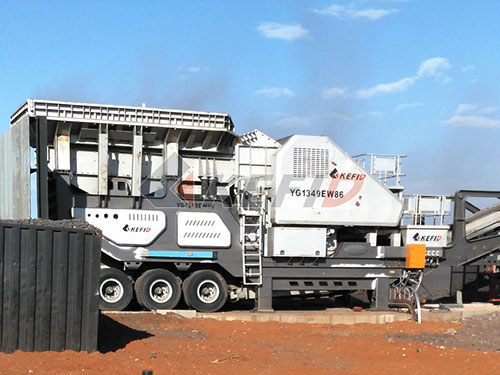
A modern slag crusher plant is a stationary or semimobile integrated system engineered specifically for the size reduction and liberation of metallics from steel slag, blast furnace slag, and other industrial byproducts. It transforms irregular, abrasive slag feed into precisely graded aggregate for sale or further processing.
Operational Workflow:
1. Primary Crushing & Screening: Large slag feed (up to 800mm) is reduced by a heavyduty jaw crusher. An integrated scalping screen removes fine material (<30mm) to bypass secondary crushing, enhancing efficiency.
2. Secondary Crushing & Liberation: Oversize material proceeds to a cone or impact crusher for further reduction, effectively liberating embedded metal pieces from the mineral matrix.
3. Metal Separation & Final Sizing: Crushed material passes over magnetic separators (suspended and drum types) to extract ferrous metal. A final screening deck classifies the clean aggregate into commercial sizes (e.g., 05mm, 510mm, 1020mm).
Application Scope: Integrated steel plants, standalone slag processing yards, construction aggregate producers handling industrial byproducts.
Key Limitations: Not designed for primary rock mining operations or processing highly cohesive, wet clay materials without preprocessing.
3. CORE FEATURES
HeavyDuty Primary Crusher | Technical Basis: Deep crushing chamber with reinforced manganese steel jaws | Operational Benefit: Handles large, irregular slab slag without bridging; reduces need for prebreaking | ROI Impact: Lower primary reduction costs by minimizing hydraulic hammer use and associated labor.
Integrated Scalping & Bypass System | Technical Basis: Grizzly feeder with adjustable grizzly bars precedes primary crusher | Operational Benefit: Removes sub30mm fines prior to primary crushing, increasing throughput and reducing wear on crusher liners | ROI Impact: Increases overall plant capacity by up to 25% while cutting liner replacement costs.
HighStrength Magnetic Separation Circuit | Technical Basis: Multistage magnetic separation including overband and drum magnets | Operational Benefit: Recovers >98% of liberated ferrous metal with high purity (>95%), creating a direct revenue stream | ROI Impact: Turns waste into profit; payback often achieved through metal recovery alone within an estimated operational period.
Centralized Dust Suppression System | Technical Basis: Encapsulated transfer points with strategically placed fog cannons or bag filters | Operational Benefit: Controls respirable dust at source, ensuring operator safety and environmental compliance | ROI Impact: Mitigates risk of regulatory fines and reduces longterm site remediation liabilities.
PLCBased Control & Monitoring Panel | Technical Basis: Automated sequencing with load monitoring on all major drives | Operational Benefit: Enables singleoperator control; provides early warning for abnormal conditions like tramp metal or overloads | ROI Impact: Reduces labor requirements by approximately 60% for plant operation and prevents catastrophic damage from uncrushables.
Modular SkidMounted Design (Optional) | Technical Basis: Preassembled modules on heavyduty Ibeam skids | Operational Benefit: Significantly reduces civil work and installation time on site; facilitates future relocation | ROI Impact: Cuts total project commissioning time by up to 40%, accelerating return on investment.
4. COMPETITIVE ADVANTAGES
| Performance Metric | Industry Standard Solution (Basic Jaw Crusher Setup) | Our Slag Crusher Plant Solution | Advantage (% Improvement) |
| : | : | : | : |
| Metallic Recovery Rate| Singlestage magnet postcrushing (~8590%)| Multistage magnetic separation circuit (>98%)| +8% to +13% recovery |
| Liner Life (Primary)| Standard Manganese Steel (approx. 80k tons)| Reinforced Alloy / Composite Liners (approx. 120k tons)| +50% operational life |
| System Uptime| Reactive maintenance model (~85% availability)| Predictive monitoring + easyaccess design (~93% availability)| +8% availability |
| Tons per ManHour| Manual feeding & multiple operators (~1520 TPH/man)| Automated feeding & centralized control (~4050 TPH/man)| +100% to +150% efficiency |
| Fines Production Control| Uncontrolled generation (35%)| Scalping bypass system (<30mm limited to ~20%)| 15% unwanted fines |
5. TECHNICAL SPECIFICATIONS
Processing Capacity: Configurable from 50 TPH to 300 TPH based on feed characteristics.
Feed Size: Accepts input up to 800mm x 1200mm slab form.
Power Requirement: Total connected load ranges from 250 kW (for 50 TPH plant) to 800 kW (for 300 TPH plant). Voltage as per local industrial standards (415V/3/50Hz or equivalent).
Material Specifications: Primary wear parts manufactured from modified Hadfield Manganese Steel or proprietary chromium carbide overlays. Structural frames use S355JR grade steel.
Physical Dimensions (Typical for 150 TPH Plant): Length ~35m, Width ~12m, Height ~8m. Skidmounted design available.
Environmental Operating Range: Designed for ambient temperatures from 20°C to +45°C. Dust emission levels maintained below local statutory limits (typically <10 mg/Nm³ at point of generation).
6. APPLICATION SCENARIOS
Integrated Steel Plant Slag Yard | Challenge: Legacy setup used separate excavatormounted breaker and crusher with low magnet efficiency, recovering only ~82% metallics while generating excessive dust.| Solution: Installation of a turnkey 200 TPH slag crusher plant with scalping grizzly, dual crushing stages, and threestage magnetic separation.| Results: Metallic recovery increased to 98.5%, generating an additional $180k annual revenue from scrap sales. Dust complaints ceased, and total operating manpower was reduced from 6 shifts/day to 2 shifts/day.
Construction Aggregate Producer Processing Imported Slag | Challenge: Processing variable feedstock from multiple sources caused frequent jamming in existing impactor crusher and inconsistent final aggregate gradation.| Solution: Deployment of a modular jawcone configuration slag crusher plant with PLCcontrolled feeder regulation.| Results: Plant throughput stabilized at target 120 TPH regardless of feed variation; final product met EN aggregate standards consistently (>95% of batches). Crusher jamrelated downtime fell from an average of 15 hours/month to under 2 hours/month.

7. COMMERCIAL CONSIDERATIONS
Our slag crusher plants are offered in three primary tiers:
1. Standard Configuration: Includes core crushing circuit with basic magnets and starterlevel controls.
2.
3
4
5
6
7
8
9
10
11
12
2
3
4
5
6
7
8
9
10
11
12