
Slag Crusher Plant Distributor Sourcing


Targeting Plant Managers, Procurement Specialists, and Engineering Contractors: A Technical & Commercial Analysis of Modern Slag Crusher Plant Solutions
1. PAINPOINT DRIVEN OPENING
Managing slag byproduct is a persistent operational and financial challenge. Inefficient processing directly impacts your bottom line through excessive equipment wear, unplanned downtime, and lost revenue from unrecovered metallics. Are you currently facing:
High Operational Costs: Frequent replacement of crusher wear parts due to slag’s abrasive nature, coupled with high energy consumption from inefficient crushing circuits?
Production Bottlenecks: Inconsistent feed size or moisture content causing blockages, reducing overall plant throughput and creating scheduling delays for downstream processes?
Metallic Recovery Inefficiency: Inadequate liberation of trapped metal from slag matrix, leading to significant value loss in scrap sales and increased waste handling costs?
Dust and Noise Compliance: Difficulty meeting stringent environmental and workplace safety standards, risking fines and operational shutdowns?
The core issue often lies not in the need to crush slag, but in deploying a system engineered for its specific abrasiveness, variability, and economic potential. An optimized slag crusher plant is a strategic capital investment designed to convert these challenges into measurable returns.
2. PRODUCT OVERVIEW: INTEGRATED SLAG CRUSHER PLANT
A modern slag crusher plant is a coordinated material processing system designed specifically for the size reduction and liberation of metallics from aircooled or granulated blast furnace (BF) or steel furnace slag. It transforms raw, variablesized slag into a calibrated aggregate product while maximizing ferrous recovery.
Operational Workflow:
1. Primary Size Reduction: Dumpfed or conveyorfed raw slag (up to 8001000mm) is reduced by a primary jaw or impact crusher.
2. Screening & Separation: Crushed material is screened; oversize is recirculated, while sized material passes over magnetic separators (typically drum or overhead magnets) to extract liberated ferrous metal.
3. Secondary/Tertiary Crushing: For finer aggregate specification or enhanced liberation, secondary cone or impact crushers further process the material.
4. Final Sizing & Stockpiling: The crushed, cleaned slag aggregate is conveyed to designated stockpiles based on grade size.
Application Scope & Limitations:
Scope: Ideal for integrated steel plants, standalone slag processing yards, and aggregate producers handling BF slag, steel slag, and ferroalloy slag. Capable of producing highquality construction aggregates (e.g., for road base, cement additive).
Limitations: Not designed for molten slag handling. Performance on excessively wet or claycontaminated feed may require preprocessing (e.g., scalping). Maximum feed size and final product gradation are determined by the specific plant configuration.
3. CORE FEATURES
HeavyDuty Primary Crusher | Technical Basis: High Manganese Steel Jaws & Robust Eccentric Drive | Operational Benefit: Sustained performance under extreme shock loads and abrasion from large, irregular slag chunks | ROI Impact: Extended service intervals reduce part replacement costs by an estimated 3050% versus standard crushers
Integrated Magnetic Separation Circuit | Technical Basis: HighGauss Permanent or Electromagnetic Drums Strategically Placed | Operational Benefit: Continuous extraction of liberated ferrous metals directly within the crushing flow | ROI Impact: Direct revenue generation from clean scrap; protects downstream conveyors and crushers from tramp metal damage
Centralized PLC Control System | Technical Basis: Automated Process Monitoring with Load & Level Sensors | Operational Benefit: Enables singleoperator control of entire circuit; automatic adjustments prevent chokefeeding and optimize power draw | ROI Impact: Labor efficiency gains; prevents costly overload events and associated downtime
Modular SkidMounted Design | Technical Basis: Preassembled structural steel frames with integrated walkways | Operational Benefit: Significantly reduces civil works and onsite assembly time during installation or relocation | ROI Impact: Faster commissioning (weeks vs. months); lowers total installed cost by up to 25%
Deduced Dust Suppression System | Technical Basis: Nozzle Arrays at Transfer Points with Particle Size Analysis | Operational Benefit: Effective dust control at source without overwetting material | ROI Impact: Ensures compliance with environmental regulations; maintains saleable product quality
AbrasionResistant Conveying System | Technical Basis: HardFaced Pulleys, Impact Beds & CeramicLagged Drives | Operational Benefit: Dramatically reduces wear on belts and components from sharpedged slag | ROI Impact: Lowers maintenance part costs and extends conveyor belt life by multiple cycles
4. COMPETITIVE ADVANTAGES
| Performance Metric | Industry Standard Solution | Advanced Slag Crusher Plant Solution | Advantage |
| : | : | : | : |
| Metallic Recovery Rate| ~9295% liberation efficiency| >98% liberation efficiency via optimized crushing stages & magnet placement| +36% more recovered metal revenue |
| Wear Part Life (Primary)| 6090 days in severe service| 120180 days via alloy analysis & chamber design optimization| +50100% longer service life |
| Specific Energy Consumption| Baseline (1.0x) per ton processed| 0.85x baseline via efficient drive systems & load management| ~15% reduction in operating cost |
| Plant Availability / Uptime| ~85%, factoring in maintenance stops| >92% via accessible design & predictive monitoring points| +7% more productive operating hours annually |
5. TECHNICAL SPECIFICATIONS (TYPICAL MIDRANGE PLANT)
Processing Capacity: 50 150 Tons Per Hour (configurable based on feed gradation).
Feed Size: Up to 800mm lump size.
Final Product Sizes: Configurable from 040mm across multiple graded aggregates.
Power Requirement: Total connected load typically between 200 450 kW, dependent on configuration.
Key Material Specifications: Primary crusher jaws/liners in Mn18Cr2 or equivalent; chute liners in AR400 steel; conveyor skirting in durable urethane.
Physical Dimensions (Modular): Individual modules range from 8m L x 3m W to 15m L x 5m W.
Environmental Operating Range: Designed for 20°C to +45°C ambient temperature; dust emission control to <20 mg/Nm³.
6. APPLICATION SCENARIOS
Integrated Steel Complex Challenge:
A major steel producer faced rising dump costs for processed slag aggregate due to high residual metal content (>5%), rendering it unsaleable.
Solution:
Implementation of a twostage crushing circuit with primary jaw crusher followed by a secondary cone crusher for improved liberation. Highintensity magnetic separators were installed after each crushing stage.
Results:
Residual iron content reduced to <1%. The nowspecification aggregate generated new revenue stream covering plant operating costs within 18 months.
Slag Processing Contractor Challenge:
A contractor needed mobility between multiple shortterm site licenses but could not justify multiple fixed installations.
Solution:
Supply of a fully skidmounted semimobile slag crusher plant with quickdisconnect electrical/feed/discharge connections.
Results:
Plant relocation time reduced from months to weeks between sites. The single asset secured three consecutive contracts due to rapid deployment capability.
7. COMMERCIAL CONSIDERATIONS
Pricing Tiers: Capital cost varies significantly with capacity and complexity.
Basic Liberation Circuit: Primary crushing + magnets – suitable for coarse recovery.
Standard Aggregate Plant: Twostage crushing with screening – produces sized construction materials.
Turnkey Processing Facility: Includes feeding systems,dust suppression,and automated controls – maximum efficiency.
Optional Features / Upgrades: Vibrating grizzly feeder for fines removal; metal detector safeguarding secondary crusher; automated lubrication systems; remote monitoring telematics.
Service Packages: Tiered offerings typically include scheduled preventive maintenance inspections,virtual technical support,and guaranteed wear part supply agreements with performancebased pricing.
Financing Options: Available through manufactureraffiliated partners can include conventional equipment loans,fixedrate leases,and tollprocessing agreements where the provider installs and operates the plant for a perton fee.
8.FAQ
1.Q:What are the main factors determining whether we need a twostage versus threestage crushing setup?
A:The decision is primarily driven by your required final product size gradation,the initial feed size,and the desired level of metallic liberation.Field data shows that two stages are sufficient for producing 40mm aggregate.For 20mm or finer spec products with maximum metal recovery,a tertiary stage often becomes necessary.
2.Q.How does this system handle variations in slag moisture content?
A.Plant design incorporates specific features like cascading material flow,grizzly screening decks,and nonchoke fed crushers to manage moderate moisture.Field testing demonstrates that sustained moisture above ~8% may require prescreening adjustments.Casespecific analysis during quotation is recommended.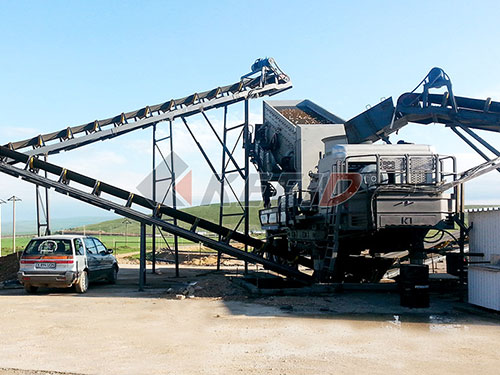
3.Q.What is the typical implementation timeline from order to commissioning?
A.For a standard skidmounted plant,civil works can proceed concurrently with offsite fabrication.Delivery typically occurs within 1416 weeks.Onsite mechanical erection,pinning,and electrical connection usually require an additional 34 weeks,followed by commissioning trials.This timeline contrasts favorably with traditional builtinplace plants which can take over eight months
4.Q.Are these plants compatible with existing mobile equipment like wheel loaders?
A Yes.The design includes standard feed hoppers compatible with wheel loader operations.Conveyor discharge heights are specified during engineering ensure compatibility your existing stockpiling methods mobile stackers fixed conveyors
5.Q.What commercial models are available beyond outright purchase?
A.In addition direct capital purchase we offer finance lease structures spread cost over asset life For operations seeking minimize upfront investment toll processing agreements available where we install operate maintain plant charge per ton processed material