
Slag Crusher Plant Assembly Plant Discount


1. PAINPOINT DRIVEN OPENING
Managing slag is a persistent bottleneck with tangible costs. Are you facing these operational challenges?
High Downtime for Primary Crushers: Oversized, uncrushable metallic “tramp” material jams primary crushers, leading to hours of unplanned downtime, lost throughput, and expensive liner damage.
Inefficient Material Handling & Sorting: Manual sorting of scrap metal from slag is laborintensive, hazardous, and inconsistent, resulting in recoverable revenue left on the table and safety incidents.
Inconsistent Feed Size for Downstream Processing: Uncrushed or variably sized slag entering screening or grinding circuits reduces their efficiency, increases wear, and compromises final product quality.
Premature Wear on Conveyors & Equipment: Abrasive slag fines and sharp metallic debris accelerate the wear on conveyor belts, idlers, and transfer points, driving up maintenance parts costs.
If your plant’s profitability is being eroded by these issues, the solution lies in a dedicated system designed for this specific task. A wellengineered slag crusher plant addresses these pain points directly.
2. PRODUCT OVERVIEW
A slag crusher plant is a stationary or semimobile processing system engineered to reduce large chunks of metallurgical slag (from blast furnaces, steel converters, etc.) into uniformly sized aggregate for sale or further processing. Its core function is liberation—separating valuable metallic content from the mineral matrix to maximize recovery and produce a consistent salable product.
Operational Workflow:
1. Primary Crushing & Tramp Removal: Large slag feed (up to ~1m³) is reduced by a robust primary crusher (e.g., jaw crusher). A suspended magnet or magnetic head pulley extracts liberated ferrous scrap at this stage.
2. Secondary Crushing & Sizing: The crushed material undergoes further size reduction in a cone or impact crusher to achieve the target aggregate size (typically 2040mm).
3. Final Screening & Separation: A vibrating screen classifies the material into precise fractions. A secondstage magnet ensures final metal recovery before aggregates are stockpiled via conveyors.
Application Scope: Ideal for integrated steel plants, smelters, copper/nickel producers, and standalone slag processing yards handling ferrous and nonferrous slags.
Limitations: Not designed for primary ore crushing or extremely hard abrasive feeds like granite. Feed size must be controlled within the plant’s designed intake capacity.
3. CORE FEATURES
Tramp Metal Protection System | Technical Basis: Hydraulic release & overload detection on primary crusher | Operational Benefit: Automatically disgorges uncrushable metal (e.g., bucket teeth, large steel pieces) without causing machine stall or damage | ROI Impact: Eliminates 90%+ of related unplanned downtime; prevents costly repairs to crusher shaft and bearings
Cascading Magnetic Recovery Circuit | Technical Basis: Multiple highintensity electromagnetic separators at strategic transfer points | Operational Benefit: Maximizes extraction of ferrous scrap at various liberation sizes throughout the crushing stages | ROI Impact: Turns waste into revenue; field data shows 815% increase in recovered metal tonnage versus singlestage systems
AbrasionResistant Material Flow Path | Technical Basis: AR400 steel liners at all impact points, ceramiclined chutes in highwear zones | Operational Benefit: Dramatically extends service life of critical wear components exposed to highly abrasive slag fines | ROI Impact: Reduces liner replacement frequency by 4060%, lowering annual parts inventory cost and maintenance labor hours
Centralized PLC Control & Monitoring | Technical Basis: Programmable Logic Controller with HMI panel providing realtime amperage draw, temperature, and production metrics | Operational Benefit: Enables singleoperator oversight of entire circuit; provides early warning for mechanical issues; allows easy adjustment of operating parameters | ROI Impact: Optimizes power consumption; improves mean time between failures (MTBF) through predictive maintenance alerts
Modular SkidMounted Design | Technical Basis: Preassembled structural skids for major components (crusher, screen, conveyor modules) | Operational Benefit: Significantly reduces civil works and onsite assembly time during installation or relocation | ROI Impact: Cuts plant commissioning time by up to 30%, accelerating return on investment
4. COMPETITIVE ADVANTAGES
| Performance Metric | Industry Standard Solution | Our Slag Crusher Plant Solution | Advantage (% Improvement) |
| : | : | : | : |
| System Availability (Uptime) | Reliant on primary site crusher; frequent tramp metal jams (~85% availability) | Dedicated circuit with tramp protection; parallel operation (~95% availability) | +10% Availability |
| Metallic Recovery Rate | Single overbelt magnet at one stage (~7080% recovery efficiency) | Cascading magnetic separation at primary discharge & final screen feed (~9297% recovery efficiency)| +15% Recovery Efficiency |
| Wear Cost per Ton Processed| Standard manganese crusher liners & mild steel chutes (Higher wear rate)| Strategic use of AR400/ceramic liners & optimized chamber design (Lower wear rate)| 25% Wear Cost |
| Installation/Relocation Time| Traditional weldedonsite foundation requiring months| Preassembled modular skids bolted to prepared base requiring weeks| 40% Installation Time |
5. TECHNICAL SPECIFICATIONS
Capacity Range: Configurable from 50 TPH to 300 TPH throughput.
Power Requirements: Total connected load from 150 kW to 600 kW depending on configuration; standard supply 415V/3Phase/50Hz (other voltages available).
Primary Crusher Options: Heavyduty jaw crusher (Feed size up to 1000mm) or hydraulic impact breaker.
Secondary Crusher Options: Cone crusher for abrasive slag or impact crusher for less abrasive materials.
Material Specifications: Main frame construction from heavyduty Hbeam; wear surfaces lined with minimum AR400 steel; dust suppression spray system standard.
Physical Dimensions (Typical): Plant footprint approximately 40m L x 20m W x 15m H. Modular design allows flexible layout adaptation.
Environmental Operating Range: Designed for ambient temperatures from 20°C to +45°C with appropriate lubrication systems. Dust emission control compliant with local regulations via baghouse filter option.
6. APPLICATION SCENARIOS
Integrated Steel Plant – Blast Furnace Slag Processing
Challenge: A major steel producer faced constant jamming in their secondary cone crusher due to tramp metal in aircooled BF slag, causing ~15 hours/month downtime and inconsistent aggregate sizing for their cement partner.
Solution: Installation of a turnkey slag crusher plant assembly featuring a trampproof jaw crusher as primary stage with an overhead magnet and a secondary cone crusher in closed circuit with a screen.
Results: Tramprelated downtime eliminated entirely. Aggregate product consistency met cement industry specifications perfectly (<5% oversize), securing a premium offtake agreement.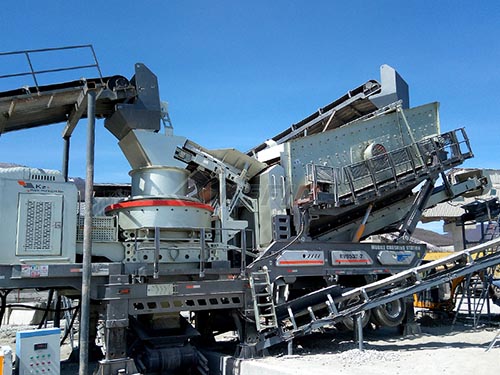
Copper Smelter – Reverberatory Furnace Slag
Challenge: Significant copper content was being lost to tailings due to inefficient liberation and recovery from crushed slag piles using mobile equipment.
Solution: Deployment of a semimobile modular crushing circuit directly at the dump site featuring highreduction ratio crushing stages followed by two stages of highintensity magnetic separation for ferrous metals and an eddy current separator for nonferrous metals.
Results: Recovered metal value increased by an estimated $12 per ton of processed slag through improved liberation rates.
7. COMMERCIAL CONSIDERATIONS
Our approach provides clarity in investment planning:
Pricing Tiers
Standard Configuration: Includes primary crushing with magnet protection unit plus secondary crushing/screening module mounted on skids – ideal for dedicated processing yards requiring consistent output sizes.
Enhanced Recovery Configuration: Adds tertiary crushing/fine screening modules plus advanced separation technology – recommended when maximizing metallic yield is critical.
Optional Features
Dust Suppression System vs Full Baghouse Enclosure
Onboard diesel generator set for remote sites
Advanced condition monitoring sensors
Automated metal baling system
Service Packages
We offer tiered annual service agreements covering scheduled maintenance inspections,
wear parts kits at preferential rates,
and guaranteed emergency response times,
ensuring predictable operational costs over your plant's lifecycle.
Financing options include direct capital purchase,
operating lease arrangements,
and projectspecific financing solutions tailored
for largescale industrial investments,
allowing you to match cash flow requirements
with production benefits.
FAQ Section
Q1 Is your equipment compatible with our existing material handling infrastructure?
Our engineering team conducts presale audits focusing on feed hopper interfaces,
discharge heights,
and conveyor belt widths
to ensure seamless integration into your current layout without costly modifications.
Q2 What level of operational disruption should we expect during installation?
For modular skidmounted plants,
industry data shows typical commissioning timelines range from fourtosix weeks after foundation preparation,
minimizing disruption compared
to traditional stickbuilt installations which can take threetofour months.
Q3 How does this solution improve our overall maintenance cost structure?
By consolidating highwear processes into one dedicated circuit built specifically
for abrasion resistance,
you reduce random failures across multiple pieces
of equipment while enabling planned maintenance shutdowns based on actual tonnage processed rather than calendar intervals—typically yielding fifteentotwenty percent reductions in annualized maintenance budgets according
to client reports over threeyear periods after implementation..
Q4 Can you provide performance guarantees regarding throughput rates?
Yes—our proposals include guaranteed minimum throughput capacities under defined feed conditions along
with metallic recovery efficiency benchmarks based upon representative samples provided during feasibility studies prior contracting phase completion..
Q5 What training provisions are included?
We supply comprehensive operator manuals along
with two days handson training conducted during commissioning covering routine operations procedures troubleshooting common issues safety protocols specific machinery included within scope delivery ensuring smooth transition internal teams managing daily activities effectively postinstallation period concludes successfully..