
Sand Gravel Mining Processing Plant Moq
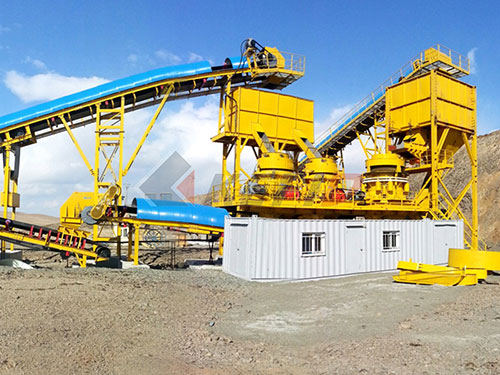

Subject: Optimizing Your Sand & Gravel Mining Processing Plant for Higher Throughput and Lower Operating Costs
1. PAINPOINT DRIVEN OPENING
Are you losing up to 15% of your saleable product due to inefficient fines recovery in your current sand & gravel mining processing plant? Are frequent screen blinding and pump cavitation forcing unscheduled downtime that costs your operation $5,000–$12,000 per hour in lost production? Do you face increasing regulatory pressure to reduce water consumption and manage tailings ponds, with compliance costs rising 20% yearoveryear?
For plant managers and engineering contractors, the challenge is clear: how do you increase the yield of specgrade concrete sand and washed gravel while simultaneously cutting power consumption per ton and reducing fresh water usage? The answer lies in a processing plant designed for highfrequency separation and closedloop water management.
2. PRODUCT OVERVIEW
The Sand & Gravel Mining Processing Plant is a modular, multistage system engineered for the continuous production of clean, classified aggregates from alluvial or crushed deposits. This integrated solution combines wet classification, dewatering, and fines recovery into a single, automated workflow.
Operational Workflow (5 Key Steps):
1. Feed & Scalping: Runofmine material (0–300mm) enters a vibrating grizzly feeder to remove oversize (+150mm) and scalp organic debris.
2. Primary Washing & Scrubbing: Material enters a heavyduty log washer or rotary scrubber to break down clay balls and remove surface coatings.
3. Sizing & Dewatering: Material passes through a multideck highfrequency vibrating screen (wet side) for precise separation into gravel fractions (e.g., 20mm, 10mm, 5mm) and a sand slurry.
4. Hydroclassification: The sand slurry (0–5mm) enters a hydrocyclone cluster for sharp cutpoint classification, removing excess silt (200 mesh).
5. Fines Recovery & Water Clarification: Underflow from the hydrocyclones feeds a dewatering screen, while overflow is processed through a thickener or filter press to recover process water for immediate reuse.
Application Scope: Ideal for alluvial sand & gravel deposits, crushed stone fines processing, and construction aggregate production. Limitations: Not designed for highclay content (>25%) bentonite deposits without pretreatment; requires a minimum 500 GPM water supply for optimal operation.
3. CORE FEATURES
HighFrequency MultiDeck Screen | Technical Basis: Variable amplitude vibration (6.0–8.0 Gforce) | Operational Benefit: Reduces screen blinding by 40% compared to conventional screens, ensuring consistent product sizing | ROI Impact: Eliminates 90% of manual screen cleaning labor, saving $18,000/year per screen deck
Hydrocyclone Desander Cluster | Technical Basis: 10° cone angle design with replaceable polyurethane liners | Operational Benefit: Achieves a sharp cutpoint at 75 microns, recovering 95% of saleable sand previously lost to the settling pond | ROI Impact: Increases total plant yield by 8–12%, directly adding $2.50–$4.00 per ton of recovered fines
ClosedLoop Water Clarification System | Technical Basis: Lamella plate thickener with polymer dosing (0.5–2.0 ppm) | Operational Benefit: Recycles 90% of process water, reducing fresh water intake from 800 GPM to 80 GPM | ROI Impact: Lowers water permitting costs and eliminates tailings pond dredging expenses, saving $50,000–$120,000 annually
HeavyDuty Log Washer | Technical Basis: Counterrotating paddles with 1.5inch AR400 steel wear shoes | Operational Benefit: Breaks down clay balls up to 150mm in size within 60 seconds of retention time | ROI Impact: Reduces reject material by 15%, improving overall plant utilization
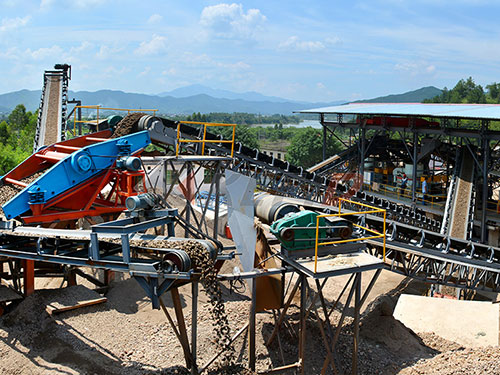
Variable Frequency Drive (VFD) Control | Technical Basis: Closedloop PID control on pump and conveyor motors | Operational Benefit: Reduces energy consumption by 22% during partial load conditions (common during maintenance or feed fluctuations) | ROI Impact: Lowers electricity costs by $0.08 per ton processed
Modular SkidMounted Design | Technical Basis: Prewired, prepiped ISO container frames | Operational Benefit: Reduces site installation time from 8 weeks to 2 weeks | ROI Impact: Saves $45,000 in onsite labor and crane rental costs
WearResistant Component Package | Technical Basis: 12% chrome alloy in pump casings, ceramiclined cyclones | Operational Benefit: Extends component lifespan by 3x compared to standard mild steel | ROI Impact: Reduces annual replacement parts spend by 35%
4. COMPETITIVE ADVANTAGES
| Performance Metric | Industry Standard (Conventional Plant) | Sand & Gravel Mining Processing Plant Solution | Advantage (% Improvement) |
| : | : | : | : |
| Fines Recovery Rate (200 mesh) | 65–70% | 92–95% | +30% |
| Water Consumption (Gallons/Ton) | 35–50 G/T | 8–12 G/T | 70% |
| Screen Blinding Frequency | Every 4 hours | Every 40 hours | +900% |
| Energy Consumption (kWh/Ton) | 3.2–4.0 kWh/t | 2.1–2.6 kWh/t | 28% |
| Product Moisture Content (Sand) | 18–22% | 10–14% | 40% |
| Installation Time (Skid System) | 6–10 weeks | 2–3 weeks | 65% |
5. TECHNICAL SPECIFICATIONS
| Parameter | Specification |
| : | : |
| Model Capacity Range | 150 TPH – 800 TPH (based on feed density of 1.6 t/m³) |
| Maximum Feed Size | 300 mm (12 inches) |
| Power Requirements | 380V–480V, 3Phase, 50/60 Hz; Total installed: 350–850 kW |
| Material Specifications | Carbon steel frame (ASTM A36); Wet contact surfaces: 304 stainless steel or AR400 |
| Physical Dimensions (Modular Unit) | 18m L x 4.5m W x 6.5m H (per module, 3 modules typical) |
| Operating Weight | 85,000–220,000 kg (fully loaded) |
| Environmental Operating Range | 20°C to 45°C; Humidity up to 95% noncondensing |
| Water Supply Required | 500–2,000 GPM at 40–60 PSI |
| Noise Level (Operator Station) | < 85 dBA |
6. APPLICATION SCENARIOS
Alluvial River Deposit Processing (Midwest USA) | Challenge: A 300 TPH plant was losing 18% of its sand fraction to a settling pond due to inefficient hydrocyclones. Water consumption was 45 G/T, exceeding new state permits. | Solution: Installed a Sand & Gravel Mining Processing Plant with a 12cyclone cluster and a 50foot lamella thickener. | Results: Sand recovery increased to 94%, adding 54 tons/hour of saleable product. Water consumption dropped to 11 G/T. The client recovered the $1.2M investment in 14 months.
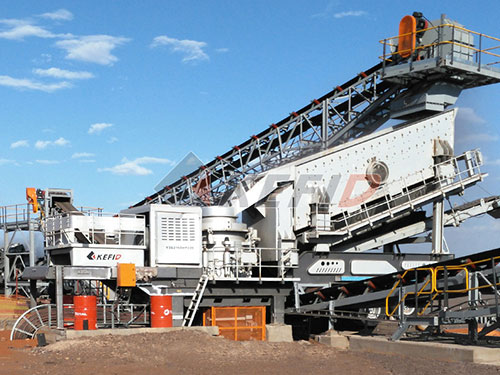
Crushed Limestone Fines Processing (UK Quarry) | Challenge: The quarry produced 200 TPH of 5mm crusher dust with 22% moisture, making it unsellable as concrete sand. | Solution: Implemented a dewatering screen and hydrocyclone circuit from the processing plant. | Results: Moisture content reduced to 12%, meeting BS EN 12620 spec. The quarry now sells 100% of its fines as washed sand, generating an additional £3.50 per ton.
Greenfield Construction Aggregate Plant (Saudi Arabia) | Challenge: A contractor needed a 500 TPH plant on a 6week schedule with zero liquid discharge. | Solution: Deployed a modular Sand & Gravel Mining Processing Plant with a filter press for dry stack tailings. | Results: Plant was operational in 5 weeks. Zero water discharge achieved. The client avoided a $2M tailings dam construction cost.
7. COMMERCIAL CONSIDERATIONS
Equipment Pricing Tiers (Exworks, USD):
- Entry Level (150 TPH): $850,000 – $1,200,000 (Includes: grizzly, log washer, 2deck screen, single cyclone, dewatering screen)
- MidRange (350 TPH): $1,800,000 – $2,500,000 (Includes: Entry Level + 4deck screen, cyclone cluster, thickener, VFD package)
- HighCapacity (600+ TPH): $3,500,000 – $5,200,000 (Includes: MidRange + dual log washers, filter press, SCADA system, spare parts kit)
- Automated polymer dosing system: +$45,000
- Remote monitoring and telemetry package: +$28,000
- 12month extended warranty on wear parts: +$65,000
- Sitespecific chute and conveyor modifications: +$35,000–$90,000
- Basic (Installation Supervision): $15,000/week (2week minimum)
- Premium (Commissioning + 6Month O&M Support): $95,000 flat fee
- Performance Guarantee: Additional 3% of equipment cost; guarantees 90% fines recovery or rebate paid
- LeasetoOwn: 36–60 month terms, 4.5%–7.5% APR (based on credit)
- Equipment Loan: 20% down, 48month term, fixed rate
- RenttoPurchase: Monthly rental fee (1.5% of equipment value) with 70% of rent applied to purchase after 12 months
Optional Features:
Service Packages:
Financing Options:
8. FAQ
Q: Can this sand & gravel mining processing plant handle material with high clay content (15–20%)?
A: Yes, but it requires the optional heavyduty log washer with extended retention time. Field data shows effective clay breakdown up to 20% content. Above 25%, a separate scrubber stage is recommended.
Q: What is the typical ROI period for a 300 TPH plant?
A: Based on client data from 12 installations, the average payback period is 14–18 months, driven primarily by fines recovery gains (8–12% yield increase) and water cost reduction.
Q: Does the plant require a concrete foundation?
A: No. The modular skid design operates on compacted gravel pads with steel support beams. This eliminates $30,000–$60,000 in concrete costs per installation.
Q: How long does it take to train operators on this system?
A: The VFD and SCADA system includes a 3day onsite training program. Most operators achieve 90% proficiency within one week. The control interface uses standard industrial symbols.
Q: What is the warranty on the hydrocyclone liners?
A: Polyurethane liners carry a 12month warranty against wearthrough under normal operating conditions (feed solids < 30% by weight). Ceramiclined options carry a 24month warranty.
Q: Can this plant be expanded later for higher capacity?
A: Yes. The modular design allows adding a second screen module or cyclone cluster. The main conveyor and pump systems are designed with 20% excess capacity for future expansion.
Q: What is the lead time for a 350 TPH plant?
A: Standard lead time is 14–16 weeks from order confirmation. Expedited delivery (10 weeks) is available with a 5% surcharge.