
Sand Gravel Mining Maker Datasheet
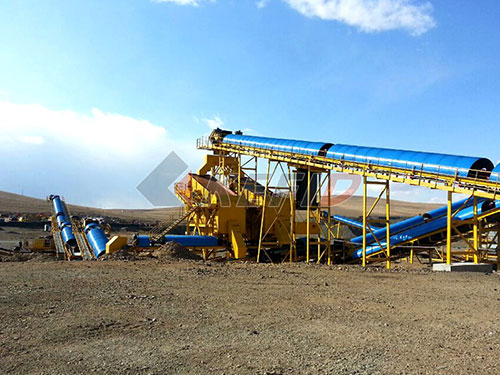

1. PAINPOINT DRIVEN OPENING
Are escalating operational costs and unpredictable downtime eroding your sand and gravel profit margins? Common industry challenges include:
High Wear & Maintenance Costs: Abrasive materials rapidly degrade crusher liners, screens, and pump components, leading to frequent part replacement and unplanned stoppages.
Inefficient Material Classification: Inconsistent particle size separation results in offspec product, costly reprocessing, and lost revenue from premium aggregate grades.
Excessive Fines Generation: Overcrushing in primary and secondary stages creates an oversupply of lowvalue fines, diminishing the yield of highvalue concrete and asphalt sand.
High Energy Consumption & Labor: Inefficient plant layout and manually intensive processes, like feeder regulation and belt monitoring, drive up power costs and require constant operator intervention.
Water Management Complexity: Ineffective slurry handling and dewatering systems lead to water recycling issues, sediment pond overflows, and potential environmental compliance risks.
Is your operation equipped to transform these cost centers into controlled, predictable processes? The right core processing equipment is not an expense but a direct lever for profitability.
2. PRODUCT OVERVIEW: SAND CLASSIFICATION AND DEWATERING SYSTEM
This sand classification and dewatering system is engineered for the precise washing, sizing, and moisture reduction of sand products in sand gravel mining operations. It is a closedloop solution designed to maximize product value and minimize water consumption.
Operational Workflow:
1. Feed & Distribution: Slurry from a wash screen or attritioner is evenly distributed into the system’s feed box.
2. Hydraulic Classification: Material enters a rising current cyclone or hydraulic classifier, separating sand particles by size and specific gravity.
3. Deck Dewatering: Classified sand is discharged onto a highfrequency dewatering screen, where vibration forces remove surface moisture.
4. Stockpiling & Water Recycling: Onspec dewatered sand is conveyed to stockpile, while effluent water is channeled to a clarifier for recycling.
Application Scope & Limitations:
Scope: Ideal for producing concrete sand, masonry sand, specialty sands, and glass sand from natural deposits or crushed rock. Effective for operations processing 50 to 500 tons per hour of sand feed.
Limitations: Not a substitute for primary washing or scrubbing of heavily claybound material. Feed slurry consistency must be controlled for optimal classification. Requires a consistent water supply and complementary settling pond or clarifier system.
3. CORE FEATURES
Precision Hydraulic Classifier | Technical Basis: Controlled rising current water velocity | Operational Benefit: Achieves accurate cut points for consistent product gradation meeting ASTM C33 or other specifications | ROI Impact: Reduces product rejection by up to 15% and increases premium product yield
HighFrequency Dewatering Screen | Technical Basis: Linear vibratory motion with steep discharge angle | Operational Benefit: Reduces moisture content in finished sand to 812%, minimizing hauling costs and preventing stockpile freezing | ROI Impact: Lowers drying fuel costs if thermal drying is required; improves customer satisfaction with dripfree loads
Polyurethane Wear Components | Technical Basis: Abrasionresistant cast polyurethane liners, nozzles, and screen panels | Operational Benefit: Provides 35x longer service life than standard rubber or steel in highwash environments | ROI Impact: Cuts component replacement costs by over 60% annually and reduces changeout downtime
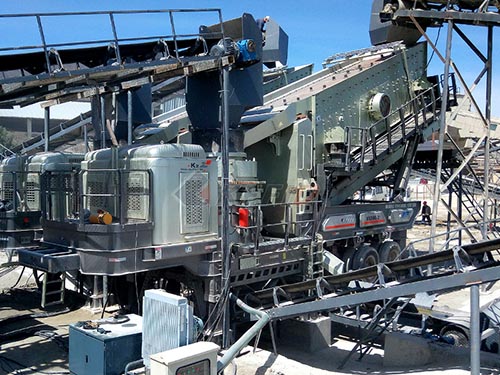
Variable Speed Drive System | Technical Basis: Integrated VFDs on feed pumps and screen vibrators | Operational Benefit: Allows operators to finetune classification cut point and dewatering intensity based on feed material changes in realtime | ROI Impact: Optimizes efficiency across varying deposit strata without manual component swaps
Modular Construction | Technical Basis: Bolttogether subassemblies with prefitted piping | Operational Benefit: Enables rapid onsite assembly with minimal welding; simplifies future plant reconfiguration or relocation | ROI Impact: Reduces installation time by up to 40%, lowering contractor costs and accelerating timetoproduction
Integrated Flocculant Dosing Ports | Technical Basis: Preplumbed injection manifolds at key slurry points | Operational Benefit: Facilitates optimal chemical mixing for enhanced fines capture in closedwater circuits | ROI Impact: Improves water clarity for recycling, reduces pond cleaning frequency by an estimated 30%
4. COMPETITIVE ADVANTAGES
| Performance Metric | Industry Standard (Conventional Cyclone & Screen) | This Sand Classification System | Advantage (% Improvement) |
| : | : | : | : |
| Product Moisture Content (Concrete Sand) | 1520% typical discharge moisture| Consistent 912% discharge moisture| Up to 40% reduction in free water weight |
| Fines Recovery Efficiency (200 mesh)~7080% recovery rate~Consistent >92% recovery rate~Up to ~22% more saleable material retained |
| Wear Life on Primary Liners~Rubber liners lasting ~4 months~Polyurethane liners lasting ~14 months~250% longer service life |
| Power Consumption per Ton~Fixed speed drives at constant load~Variable speed drives optimizing load~Field data shows 1018% lower kWh/ton |
| Footprint Requirement (for equal capacity)~Multiple units with separate supports~Single integrated structure with shared supports~Approximately 25% less floor space |
5. TECHNICAL SPECIFICATIONS
Capacity Range: Models available from 50 TPH to 400 TPH of dry solids feed (slurrydependent).
Power Requirements: Total connected power ranges from 45 kW (for smaller models) to 150 kW (for largest models), utilizing standard industrial voltages (460V/3Ph/60Hz).
Material Specifications: Contact surfaces utilize ASTM A36 structural steel with abrasionresistant AR400 steel at highimpact points. Classification chambers feature cast polyurethane. Screen decks are polyurethane modular panels.
Physical Dimensions (Model SC200): Overall length: ~9m; Width: ~4m; Height (to top of feed box): ~5m; Approximate shipping weight: ~14,000 kg.
Environmental Operating Range: Designed for ambient temperatures from 29°C to +45°C (20°F to +113°F). Electrical components rated for NEMA 4X (hosedown, corrosion resistant) environments.
6. APPLICATION SCENARIOS
Concrete Sand Production Plant
Challenge A Midwest producer struggled with inconsistent gradation yielding only ~65% ASTM C33compliant concrete sand from their deposit; the remainder was downgraded as fill material at significant revenue loss.
Solution Implementation of a Model SC150 Sand Classification System with precision hydraulic classifiers replaced their outdated rake classifier system.
Results Within one month of commissioning:
Production of spec concrete sand increased to over 92%.
Fines loss was reduced by twothirds.
Annualized revenue increase exceeded $280k based on increased premium product volume.
DredgeFed Mining Operation
Challenge A river dredging operation faced high pumping costs due to transporting excess water long distances from the dredge pond to the processing plant.
Solution Installation of a compact Sand Classification System directly on the dredge discharge allowed for primary dewatering at the pit face.
Results The system delivered:
A reduction in slurry volume pumped by over 35%, significantly lowering fuel consumption per ton produced.
Direct loading of dewatered sand onto haul trucks at the pit site versus pumping it miles away.
7. COMMERCIAL CONSIDERATIONS
Equipment Pricing Tiers
Tier pricing is based on capacity (TPH). Entrylevel systems (250 TPH) are quoted on project specifications.
Optional Features
Advanced features include remote monitoring PLC packages with gradation trend tracking , automated flocculant dosing systems , stainless steel construction for corrosive environments ,and sound attenuation enclosures .
Service Packages
Threetier service plans are available:
1.Basic Warranty covering parts .
2.Platinum Plan extending warranty coverage .
3.Platinum Plus Plan adding annual inspections .
Financing Options
Flexible commercial terms include capital lease , operating lease ,and loan structures through partner financial institutions . Renttoown programs may be available .
8. FAQ
What upstream equipment is required?
The system requires a consistent slurry feed typically provided by a wash screen log washer or attrition scrubber . Feed pumps can be included as part of the package .
How does this system integrate with our existing clarifier or settling pond?
It is designed as a complementary component . By removing most solids it significantly reduces the load on your clarifier improving its efficiency . Standard discharge flanges connect directly .
What is the typical installation timeframe?
For modular units installation typically requires days not weeks assuming prepared foundations are ready . Our project managers provide detailed site preparation guidelines .
Are performance guarantees offered?
Yes performance guarantees based on achieving specified product gradation bands are included in commercial contracts subject .
What spare parts inventory should we maintain?
We provide recommended critical spares list which typically includes polyurethane wear parts specific screen panel modules .
Can this handle very coarse material like pea gravel?
No this system is optimized specifically for sandsized particles . For coarse aggregate rinsing separate solutions are recommended .
What ongoing operator training do you provide?
Comprehensive training during commissioning covers operation maintenance troubleshooting procedures . Training manuals digital resources are provided