
Sand Gravel Mining Factories Catalog

1. PAINPOINT DRIVEN OPENING
Managing a sand and gravel operation means contending with persistent, costly inefficiencies. Are you facing these common challenges?
High Downtime from Wear: Constant abrasion from silica and aggregate leads to frequent component failure in processing equipment, halting production for unplanned maintenance.
Inconsistent Product Gradation: Variations in feed material or inefficient separation result in offspec product, leading to waste, rejected loads, and diminished profitability.
Excessive Water and Energy Consumption: Inefficient washing and classifying systems use disproportionate volumes of water and high horsepower, directly impacting utility costs and environmental compliance.
LaborIntensive Material Handling: Reliance on manual sorting, cleaning, or conveyor transfer points increases labor costs and introduces safety risks.
Rapid Fines Loss and Slurry Management Issues: Poorly designed systems fail to capture valuable fine aggregates, creating profit loss and complex slurry pond management headaches.
The central question for plant managers is clear: how can you increase throughput tonnage while systematically reducing cost per ton? The solution lies in specifying equipment engineered not just for capacity, but for durability and precision in the harsh sand and gravel mining environment.
2. PRODUCT OVERVIEW: HighCapacity Sand Classification Tank
A Sand Classification Tank is a hydraulic sizing device designed to separate sand particles by size and remove deleterious clays and slimes. Its operational workflow is a continuous, mechanical process:
1. Slurry Feed: A sandwater slurry is introduced uniformly across the full width of the tank inlet.
2. Settling & Classification: As material flows through the elongated tank, heavier coarser sands settle rapidly into collection hoppers. Lighter fine sands remain in suspension longer, traveling further down the tank.
3. Selective Discharge: Multiple discharge gates along the tank length allow operators to draw off specific grades of sand (e.g., coarse concrete sand, mason sand) from different hoppers.
4. Fines Overflow: Ultrafine silts and clays report to the overflow weir at the tank's end, reporting to a settling pond or further processing.
Application Scope & Limitations:
Scope: Ideal for primary classification of natural sand or crushed fines from 3mm down to 150 mesh (100 micron). Highly effective for producing multiple spec products from a single feed source.
Limitations: Not a dewatering device; discharged sand products typically have high moisture content requiring further dewatering on vibratory screens or cyclones. Performance is dependent on consistent feed density and flow rate.
3. CORE FEATURES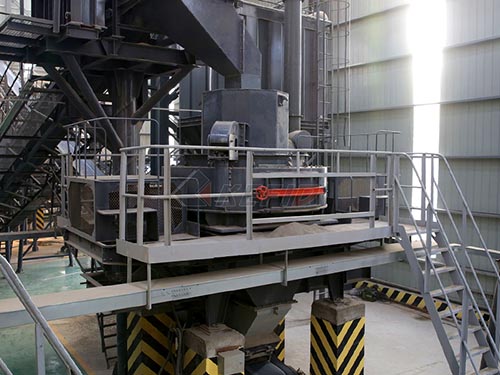
CorrosionResistant Tank Construction | Technical Basis: Heavygauge AR400 steel liners in highwear zones | Operational Benefit: Resist abrasion from silica sand, extending structural service life by years | ROI Impact: Reduces replacement costs and major rebuild downtime by an estimated 4060%
Manifolded Slurry Inlet System | Technical Basis: Equalflow distribution manifold with adjustable baffles | Operational Benefit: Provides even feed distribution across entire tank width for precise particle settlement | ROI Impact: Improves product consistency; field data shows a 1525% reduction in offspec material.
Independent Discharge Gates | Technical Basis: Manually or hydraulically actuated knifegate valves on each collection hopper | Operational Benefit: Operators isolate or blend products from specific hoppers to meet realtime spec demands | ROI Impact: Increases plant flexibility to serve multiple market segments without reconfiguring equipment.
LowPower Consumption Design | Technical Basis: Hydraulic classification requires no motors beyond feed pumps; system leverages gravity settlement | Operational Benefit: Eliminates the high horsepower draw of multiple mechanical classifiers or screw washers | ROI Impact: Direct reduction in energy cost per ton; industry testing demonstrates up to 70% lower power use versus mechanical alternatives.
HighFines Capture Efficiency | Technical Basis: Optimized tank lengthtowidth ratio and overflow weir design | Operational Benefit: Maximizes recovery of profitable 100mesh to 200mesh fine sand often lost to ponds | ROI Impact: Captures an additional 515% of saleable product volume from your reserve.
4. COMPETITIVE ADVANTAGES
| Performance Metric | Industry Standard (Mechanical Screw Washer) | Sand Classification Tank Solution | Advantage (% improvement) |
| : | : | : | : |
| Power Consumption (per 100 TPH) | ~75100 HP motor drive per unit | Uses only feed pump power (~20 HP) | Up to 75% reduction |
| Wear Component Replacement Cost (Annual Estimate) High due to screws, liners, bearings| Primarily limited to valve seals & liner abrasion patches| Up to 60% lower |
| Product Consistency (Gradation Variation) Moderate; can be impacted by feed surges| High; gravity settling provides stable classification despite feed variance| Improved consistency by ~30% |
| Fines Retention (200 mesh) Typically low; fines often report directly to overflow| High; controlled flow allows finer sands to settle before overflow| Up to 20% more fines captured |
5. TECHNICAL SPECIFICATIONS
Capacity Range: Models available from 50 TPH to over 600 TPH slurry processing capacity.
Power Requirements: No internal drive motors required. Dependent on feed pump system (typically 1560 HP).
Material Specifications: Main tank fabricated from ASTM A36 steel with abrasionresistant AR400 steel liners (10mm minimum) at all highwear points. Discharge gates feature polyurethane seals.
Physical Dimensions (Example Model SCT300): Length: 10.5m / Width: 2.8m / Height (to overflow): 2.4m / Dry Weight: ~8,500 kg.
Environmental Operating Range: Designed for outdoor installation. Operating temperature range 20°C to +50°C. Requires frost protection for water lines in freezing climates.
6. APPLICATION SCENARIOS
Concrete Sand Production Plant | Challenge: A Midwest producer needed consistent ASTM C33 concrete sand while also capturing mason sand fines previously lost. Their existing screw washers consumed excessive power and produced variable gradation. Solution Implementation of a dualcell Sand Classification Tank with four discharge points. Results Achieved consistent C33 compliance >98% of the time while producing a new spec mason sand product at ~25 TPH. Overall plant power consumption dropped by 18%. Payback period was under 14 months.
Alluvial Gravel Pit with High Fines Content| Challenge An operation processing glacial deposit material struggled with clay contamination blinding screens and losing all fines below 50 mesh due to inefficient washing. Solution A primary Sand Classification Tank was installed ahead of final screening decks. Results The tank removed over 90% of sub200mesh clays prior to screens, eliminating blinding issues and increasing screen efficiency by an estimated 40%. Valuable 50100 mesh fine aggregate was recovered as a saleable product.
7. COMMERCIAL CONSIDERATIONS
Pricing Tiers: Capital cost varies significantly based on size/throughput capacity (Tier I <150TPH), customizations (Tier II), or multitank systems (Tier III). Pricing is typically projectquoted based on specifications.
Optional Features & Upgrades: Hydraulic gate actuators for remote control, integrated spray bars for additional scrubbing, ultrasonic level sensors for automated control loops, custom liner packages for extreme abrasion applications.
Service Packages: Standard offerings include commissioning supervision plus tiered annual inspection/maintenance contracts covering wear liner assessment, gate seal replacement, and structural integrity checks.
Financing Options Available through partner institutions include equipment leasing programs with seasonal payment structures tailored to aggregate industry cycles, as well as traditional capital loans.
8.FAQ
Q1 How does a Sand Classification Tank integrate with our existing wash plant setup?
It typically receives slurry directly from a scrubber or screen undersize launder box via gravityfed piping manifold requiring minimal structural modification.
Q2 What is the typical installation timeframe?
For a standard model with prepared foundation pads installation mechanical connection commissioning usually requires between five ten working days
Q3 Can this system produce more than two spec products simultaneously?
Yes multiple discharge gates allow drawing three four distinct intermediate gradations depending on your specific particle size distribution
Q4 What are the ongoing maintenance requirements?
Primary tasks are regular inspection wear liners checking operation discharge gate seals ensuring inlet manifold clear obstructions These are straightforward procedures your maintenance crew
Q5 How does performance change with varying feed rates densities?
While designed operate within specified range gravitybased systems tolerant fluctuations Mechanical controls adjustable weirs gates allow operators compensate maintain product specs
Q6 Is financing available projects tight capital expenditure budgets?
Yes several flexible options including operating leases preserve capital lines credit We provide documentation support facilitate application process
Q7 What kind operator training required?
We provide comprehensive onsite training during commissioning covering startup/shutdown procedures gate adjustment optimization troubleshooting lasting one two days