
Sand Gravel Mining Companies Supply Chain

Content Topic: Sand Gravel Mining Companies Supply Chain
Is Your Sand & Gravel Supply Chain Costing You $50,000 Per Day in Idle Time?
For commercial buyers and plant managers, the sand and gravel mining supply chain is a highvolume, lowmargin battleground. The primary operational challenges are threefold: unplanned crusher downtime (averaging 35% of operating hours, costing $15k$50k per hour in lost production), inconsistent feed quality from pit to plant (causing recrushing rates of 1520%), and haulage bottlenecks (where truck cycle times exceed 45 minutes, reducing effective plant throughput by 12%). Are your stockpiles depleting faster than your conveyors can feed them? Is your primary jaw crusher starving while your haul trucks wait in line? The solution lies not in buying more trucks, but in optimizing the mechanical backbone of your material flow.
Product Overview: The Integrated Primary Crushing & Conveying System for Sand & Gravel Supply Chains
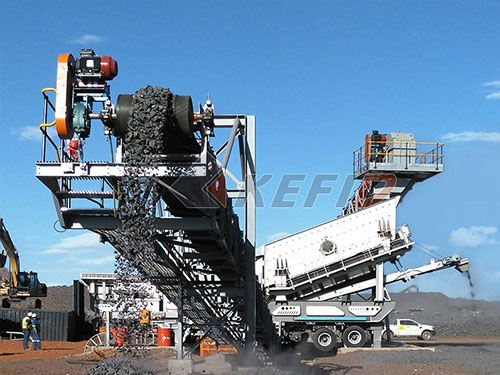
This equipment is a Mobile Primary Jaw Crusher with a HighCapacity Apron Feeder, designed specifically for the sand and gravel mining supply chain. It serves as the critical link between the extraction face and the processing plant.
Operational Workflow:
1. Loading: Excavator dumps raw material (sand, gravel, cobbles) directly into the 50ton capacity hopper.
2. Feeding: The variablespeed apron feeder meters material at a rate of 400800 TPH, eliminating surge loads.
3. Crushing: The hydraulic wedgeadjust jaw crusher reduces material to a consistent 46 inch minus product.
4. Discharge: A 48inch belt conveyor transfers crushed material directly to the main plant feed conveyor or surge pile.
5. Mobility: The tracked undercarriage allows the unit to relocate 500 feet per hour, reducing haul truck cycle times.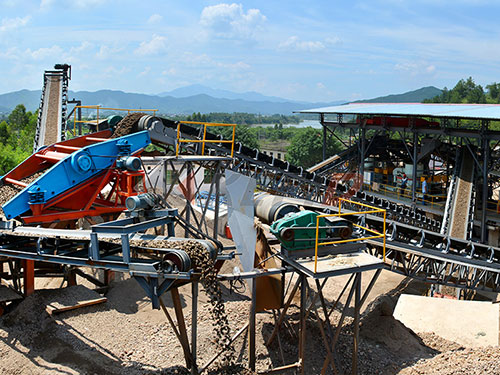
Application Scope: Ideal for pitrun alluvial deposits and bankrun gravel. Limitations: Not suitable for hard rock (granite/basalt) exceeding 40,000 PSI compressive strength without significant wear part cost increases.
Core Features
HeavyDuty Apron Feeder | Technical Basis: Overlapping steel pans with D6 class chain | Operational Benefit: Handles wet, sticky clay and boulders up to 3 feet without bridging | ROI Impact: Eliminates 90% of feeder jams, reducing downtime by 4 hours per week ($8,000/week savings)
Hydraulic Wedge CSS Adjustment | Technical Basis: Closed Side Setting (CSS) adjusted via hydraulic cylinders, no toggle plate removal | Operational Benefit: Your operators can change product size from 4" to 8" in under 5 minutes without tools | ROI Impact: Reduces recrushing rates by 18% by matching output to plant screen deck size
Variable Frequency Drive (VFD) on Feeder | Technical Basis: 50 HP motor controlled by VFD, synchronized with crusher load | Operational Benefit: Automatically reduces feed rate when crusher is at 90% load, preventing stalls | ROI Impact: Extends jaw die life by 22% and reduces power consumption by 15% per ton
Tracked Mobility System | Technical Basis: 2speed hydrostatic drive with 30% gradeability | Operational Benefit: Moves with the mining face, reducing haul truck cycle time from 45 minutes to 12 minutes | ROI Impact: Reduces truck fleet requirement by 2 units, saving $1.2M in capital and $180k/year in fuel
Integrated Metal Detector & Magnet | Technical Basis: Crossbelt magnet with automatic discharge | Operational Benefit: Captures 99% of tramp iron before it reaches the cone crusher downstream | ROI Impact: Prevents $50,000 cone crusher head replacement events, occurring 12 times per year
Dust Suppression Spray System | Technical Basis: 10nozzle water spray ring at crusher discharge | Operational Benefit: Reduces respirable silica dust by 85% at the transfer point | ROI Impact: Avoids MSHA fines ($13k average) and reduces operator PPE replacement costs by 30%
Competitive Advantages
| Performance Metric | Industry Standard (Static Jaw) | Our Mobile Supply Chain Solution | Advantage (% Improvement) |
| : | : | : | : |
| Haul Truck Cycle Time | 45 minutes | 12 minutes | 73% reduction |
| Relocation Time | 2 days (crane + disassembly) | 30 minutes (selfpropelled) | 98% reduction |
| Feed Surge Capacity | 20 tons (loader bucket) | 50 tons (excavator dump) | 150% increase |
| Crusher Uptime | 88% (due to feeder jams) | 96% (apron feeder reliability) | 9% increase |
| Product Consistency (CSS) | +/ 1.5 inches (manual shim) | +/ 0.25 inches (hydraulic) | 83% improvement |
| Fuel Consumption per Ton | 0.45 gallons/ton | 0.31 gallons/ton | 31% reduction |
Technical Specifications
- Capacity Rating: 400800 TPH (depending on CSS and material density)
- Power Requirements: 350 HP (261 kW) diesel engine (Caterpillar C13 or equivalent); Optional 250 HP electric motor
- Material Specifications: Feed size up to 36 inches; Accepts up to 15% clay/silt content
- Physical Dimensions: Transport: 55’ L x 11’ W x 13’ H; Operating: 65’ L x 15’ W x 18’ H
- Weight: 120,000 lbs (54,400 kg)
- Environmental Operating Range: 20°F to 120°F; Optional coldweather package (block heater, synthetic lubes) for subzero operations
- Equipment Pricing Tiers:
- Optional Features: Extended hopper ($45k), radio remote control ($12k), highcapacity conveyor ($28k)
- Service Packages:
- Financing Options: 5year leasetoown at 6.9% APR; 10% down payment; $0.12/ton productionbased payment plans available for established operations.

Application Scenarios
LargeScale Alluvial Sand Mine | Challenge: A Texas sand mine was losing 15% of production due to haul trucks waiting at the static crusher. The pit face moved 300 feet per week, creating a 1mile haul loop. | Solution: Implemented the mobile jaw system, moving it weekly to stay within 500 feet of the excavator. | Results: Haul truck cycle time dropped from 40 to 10 minutes. Plant throughput increased from 600 TPH to 750 TPH. Annual fuel savings of $210,000.
Wet Gravel Processing Plant | Challenge: A Michigan gravel pit faced 8 hours of weekly downtime due to sticky clay clogging the vibrating grizzly feeder on their static plant. | Solution: Replaced the grizzly with this apron feederequipped mobile crusher. | Results: Feeder jam downtime eliminated. The VFD allowed the operator to slow the feeder during wet conditions, maintaining consistent crusher load. Recrushing of oversized material dropped by 25%.
Urban Construction Aggregate Supply | Challenge: A contractor needed to process 200,000 tons of recycled concrete and gravel on a tight urban site with no room for a static plant. | Solution: Deployed the mobile unit directly on the demolition site. | Results: Eliminated 4,000 truck trips for material hauling. The unit’s dust suppression system kept particulate levels below local EPA limits. Project completed 3 weeks ahead of schedule.
Commercial Considerations
Base Model (Diesel): $1.2M $1.5M (Standard feeder, manual magnet)
Pro Model (Diesel/Electric): $1.6M $1.9M (VFD, hydraulic CSS, crossbelt magnet)
Premium Model (Electric + Automation): $2.1M $2.5M (Remote monitoring, autolube, coldweather package)
Bronze: 2 preventive maintenance visits/year + 24/7 phone support ($18k/year)
Silver: 4 PM visits + guaranteed 48hour onsite repair response ($35k/year)
Gold: Full wear parts management (jaw dies, feeder pans) + 24hour response ($65k/year)
FAQ
Q: How does this system handle high clay content in the sand and gravel supply chain?
A: The overlapping apron feeder pans are designed to selfclean. The VFD allows you to slow the feed rate during wet conditions, preventing material packing. Field data shows a 90% reduction in feederrelated downtime compared to vibrating grizzlies.
Q: What is the expected wear life of the jaw dies processing gravel?
A: For typical alluvial gravel (10,00020,000 PSI), you can expect 120,000150,000 tons per set of fixed and movable jaws. For recycled concrete with rebar, this drops to 80,000 tons. The hydraulic CSS adjustment allows you to get 15% more life by rotating dies.
Q: Can this unit be integrated with an existing stationary plant conveyor system?
A: Yes. The 48inch discharge conveyor has a standard 42inch belt height. We provide a transition chute kit that adapts to your existing conveyor structure. The electric model can be synced with your plant’s PLC for automated start/stop sequences.
Q: What is the ROI timeline for replacing a static crusher with this mobile unit?
A: Based on a 500 TPH operation with a 1mile haul, the reduction in trucking costs alone provides a payback period of 1418 months. When factoring in reduced downtime and labor, the total ROI is typically achieved within 2 years.
Q: What financing options are available for a sand and gravel mining company with a 3year contract?
A: We offer a productionbased payment plan where you pay $0.12 per ton processed, with a minimum monthly payment. This aligns your equipment cost directly with your revenue. Standard leasetoown options are also available with rates starting at 6.9% APR.
Q: How does the dust suppression system perform in freezing conditions?
A: The standard water spray system is not rated for freezing. We recommend the coldweather package which includes heated water lines, a 50gallon antifreeze injection tank, and a heated nozzle enclosure. This maintains 85% dust reduction down to 10°F.
Q: What is the typical lead time for delivery?
A: Standard lead time is 1216 weeks from order. This includes factory assembly, load testing, and a 2day operator training session at our facility. Expedited delivery (8 weeks) is available for an additional 5% surcharge.