
Отсутствие Рэймонда Крашера

Beyond the Hype: Understanding the Limitations of Raymond Mills (Often Mistakenly Called "Raymond Crushers")
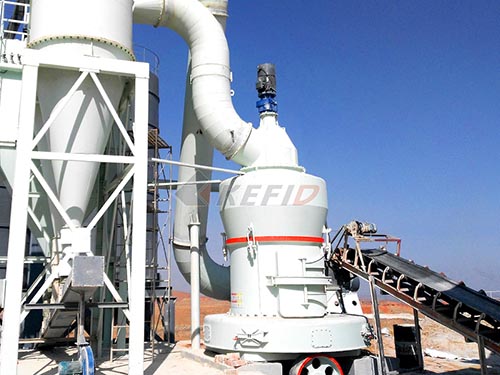
Термин "Раймонд Крашер" is a persistent misnomer in certain industrial circles, particularly when translated from languages like Indonesian ("Отсутствие Рэймонда Крашера"). While widely recognized, it's crucial to clarify: Raymond technology refers primarily to milling equipment (Raymond Roller Mills), not crushing equipment. True crushers (челюсть, конус, влияние) perform size reduction through compression or impact on larger rocks, while mills like the Raymond are designed for fine grinding dry materials into powders.
Despite its historical significance and widespread use in processing minerals (барит, кальцит, известняк), подготовка угля, тальк, гипс, and other non-metallic minerals with Mohs hardness below 7 and moisture below 6%, the Raymond mill design carries inherent limitations compared to modern grinding technologies.
Here’s a breakdown of key disadvantages associated with traditional Raymond Roller Mills:
1. Limited Particle Size Range & Fineness Control:
Lower Fineness Cap: Achieving ultra-fine powders (consistently below 325 сетка / 45 микроны) becomes significantly less efficient and more energy-intensive compared to advanced mills like vertical roller mills (VRM) or stirred media mills.
Top-End Constraint: While capable of grinding coarser feed (up to ~20-30mm), its efficiency and output drop noticeably compared to dedicated coarse crushers or even modern VRMs handling similar sizes.
2. Высокое энергопотребление (Relative Efficiency):
The mechanical spring-pressure system used to generate grinding force requires substantial power input.
Compared to VRMs which utilize hydraulic systems and direct grinding between rollers/tables with higher efficiency classifiers, traditional Raymond mills generally have higher specific energy consumption (kWh per ton of product), especially for finer grinds.
3. Complex Structure & Интенсивность обслуживания:
Numerous Moving Parts: The system involves multiple rollers (обычно 3-5), complex linkage assemblies for roller swing-out/pressure application, central shafts with plum blossom frames/planetary gearsets in some models, classifiers with rotating blades/vanes/impellers.
High Wear Part Count: Rollers and grinding rings wear relatively quickly depending on material abrasiveness. Bearings throughout the linkage system also require regular monitoring and replacement.
Labor-Intensive Maintenance: Replacing rollers or