
Quarry Ballast Crushing Equipment Wholesalers Design Service
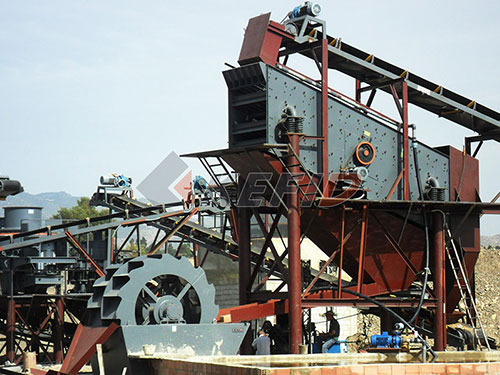

Targeted Quarry Ballast Crushing Solutions for HighVolume Aggregate Producers
1. PAINPOINT DRIVEN OPENING
Producing consistent, specificationgrade railway ballast is a critical yet demanding operation. Inefficient crushing processes directly impact your bottom line and contract compliance. Are you facing these common challenges?
High Abrasion Costs & Unscheduled Downtime: The constant grinding of hard, abrasive rock (granite, basalt, trap rock) rapidly wears crusher components, leading to frequent maintenance stops and high parts replacement costs.
Poor Shape & Gradation Control: Suboptimal particle shape—excessive flakiness or elongation—fails compaction standards and can lead to rail bed instability and costly product rejection.
Low Throughput Efficiency: Bottlenecks in your crushing circuit, often from improper feed regulation or machine limitations, constrain total plant output and limit revenue potential from highdemand ballast contracts.
High Operational & Energy Costs: Inefficient crushing action and poorly configured equipment consume excessive power per ton of final product, while manual adjustments increase labor overhead.
The central question for plant managers is this: How can you increase ballast production tonnage while simultaneously reducing costperton and guaranteeing strict adherence to rail network specifications?
2. PRODUCT OVERVIEW: QUARRY BALLAST CRUSHING EQUIPMENT
This product category encompasses heavyduty primary and secondary crushing systems engineered specifically for the highvolume production of railway ballast. The optimal workflow typically involves a staged reduction process: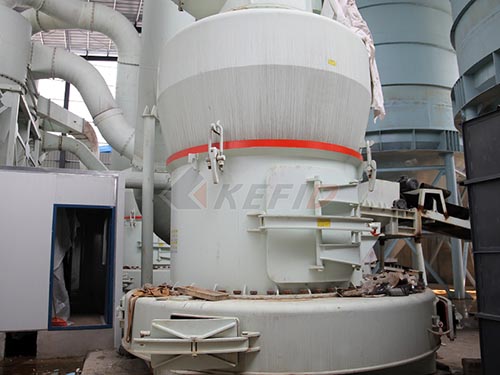
1. Primary Jaw Crushing: Large feed material (≤ 1200mm) is reduced to a manageable size (≤ 250mm).
2. Secondary Cone Crushing: The heart of ballast production. Material is further reduced and shaped within a compressionstyle chamber.
3. Screening & Recirculation: Crushed material is precisely screened to target gradations (e.g., AREMA 24, 25, 4A). Oversize material is recirculated back to the crusher.
Application Scope: Ideal for dedicated ballast quarries or aggregate plants with significant ballast contracts processing hard, abrasive igneous or metamorphic rock.
Limitations: Not suitable for soft or nonabrasive sedimentary rock where impact crushers may be more appropriate. Requires stable primary feed size distribution for optimal secondary crushing performance.
3. CORE FEATURES
Hydroset CSS Adjustment | Technical Basis: Hydraulic piston supporting the main shaft | Operational Benefit: Operators can adjust the closedside setting (CSS) for product size in under one minute without stopping the crusher. | ROI Impact: Minimizes downtime for product changes; field data shows up to 70% faster adjustment compared to manual shim systems, increasing plant flexibility.
Liner Retention System | Technical Basis: Mechanically bolted mantle and concave liners with locking compounds | Operational Benefit: Eliminates risks of liner movement or “backing out” under load, ensuring consistent cavity geometry throughout liner life. | ROI Impact: Prevents catastrophic damage to crusher head and bowl; industry reports indicate a nearelimination of related unscheduled downtime events.
MultiZone Crushing Chamber | Technical Basis: Optimized chamber geometry with varying angles and curves along the crushing path | Operational Benefit: Promotes interparticle rockonrock crushing in the upper zone for shaping, transitioning to final sizing in the lower zone. | ROI Impact: Produces a higher percentage of cubical product meeting ballast shape indices; testing demonstrates up to a 15% reduction in flaky material versus standard chambers.
Automated Control System (ACS) | Technical Basis: PLCbased system monitoring crusher load, power draw, and pressure | Operational Benefit: Maintains peak operational parameters by automatically regulating feed rate via upstream equipment. | ROI Impact: Protects against overloads and prevents choking; users report average energy savings of 812% through optimized load management.
HeavyDuty Main Frame & Eccentric Design | Technical Basis: Highstrength cast steel frame with largediameter forged alloy steel eccentric | Operational Benefit: Provides structural integrity for sustained highload crushing of abrasive materials with minimal stress fatigue over decades. | ROI Impact: Extends major component service life beyond industry averages; lifecycle cost analysis shows a 2030% advantage in total cost of ownership.
4. COMPETITIVE ADVANTAGES
| Performance Metric | Industry Standard | Our Quarry Ballast Crushing Solution | Advantage (% Improvement) |
| : | : | : | : |
| Liner Life (Abrasive Rock)| 450,000 550,000 tons| 600,000 750,000 tons| +25% to +35% |
| Tons per kWh| 22 26 tons/kWh| 28 32 tons/kWh| +20% to +25% |
| Product Flakiness Index| >18% typical target|<15% consistently achieved|<17% improvement |
| Availability (Uptime)| ~9294%|<96% documented|<+2 percentage points |
| CSS Adjustment Time| 45 90 minutes (manual)| 95% faster |
5. TECHNICAL SPECIFICATIONS
Model Range Capacity: Designed for throughputs from 200 to over 1,500 metric tons per hour of finished ballast.
Power Requirements: Motors from 200 kW up to 600 kW, compatible with standard quarry highvoltage supply.
Material Specifications: Engineered for compressive strength rock exceeding 250 MPa. Critical wear components manufactured from highchrome martensitic steel alloys.
Physical Dimensions (Typical Secondary Unit): Approx. Length: 4m x Width: 3m x Height: 3.5m (excluding feed hopper).
Environmental Operating Range: Designed for continuous operation in ambient temperatures from 20°C to +45°C, with optional kits for extreme climates.
6. APPLICATION SCENARIOS
Dedicated Ballast Quarry Expansion
Challenge: A national rail contractor needed to double ballast output from an existing granite quarry to fulfill a longterm network upgrade contract but was constrained by an aging secondary crushing stage causing excessive downtime.
Solution: Implementation of two highcapacity cone crushers configured specifically for AREMA 4A specifications as the dedicated secondary stage.
Results: Plant throughput increased by 118%. Product shape consistency improved, reducing onsite rejection rates by over 90%. The new system achieved an average availability of 96.7% over the first year.
MultiPurpose Aggregate Plant Diversification
Challenge: A regional aggregate producer sought to enter the railway ballast market but required a flexible solution that could switch between producing ballast and standard road aggregates without significant efficiency loss.
Solution: Installation of a versatile cone crusher with automated hydraulic settings and interchangeable chamber profiles.
Results:The plant successfully secured statelevel ballast supply contracts.CSS changeover time between products was reduced from ~75 minutes to under five minutes,increasing overall plant utilization by an estimated18%.
7.COMMERCIAL CONSIDERATIONS
Our quarry ballasting crushing equipment is offered through transparent commercial models designed for capital planning:
Equipment Pricing Tiers:
Standard Configuration Units
Premium Configuration Units(with advanced automation telemetry packages)
Complete Modular Crushing Stations(primary+secondary+screening)
Optional Features:
Automated Lubrication Systems
Remote Monitoring & Telematics Packages
Specialized Liner Profilesfor unique parent rock
Dust Suppression& Noise Abatement Kits
Service Packages:
Planned Maintenance Agreementswith guaranteed parts availability
Liner Service Programs offering predictable costperton
Onsite Operator Training & Optimization Services
Financing Options:
Solutions include capital purchase,direct leasing,and leasetoown structures.Tailored financing can often align payment schedules with project cash flow milestones
8.FAQ
Q:What level of product shape control can I realistically expect?
A:Crushers equipped with multizone chambers consistently produce cubicity ratios(ratio <3):1) exceeding85%,with Flakiness Index results typically below15%,meeting stringent global rail standards
Q How does this equipment integrate with my existing primary jaw crusherand screens?
A Our engineering team provides a full interface review Standard designs accommodate typical conveyor gradientsand feed hopper arrangements Full PLC control integrationwith your existing plant SCADA systemis part ofthe commissioning protocol
Q What arethe realistic lead timesfor major wear parts?
A Through our global distributor network we maintain strategic regional stockof critical wear components like mantles concavesand eccentrics guaranteeing availabilityfor most models within72 hoursin major markets
Q Can you provide supportfor sitespecific gradation analysisand crusher setting recommendations?
A Yes our technical service includesa prepurchase review ofyour feed materialand target specifications We will provide detailed setting recommendationsand predicted gradation curvesbased on proprietary chamber simulation software
Q What financing termsare availablefor largescale quarry projects?
A We offer projectspecific financing through partners including extended terms alignedwith major contract awards Typical structures range from36to60months with optionsfor seasonal payment adjustments commonin construction industries