
Quarry Ballast Crushing Equipment Producers Sample

Targeting Quarry Managers & Aggregate Producers: The HighCost Challenges of Ballast Production
Producing consistent, specificationgrade railway ballast is a precision operation with zero tolerance for failure. Inefficient crushing directly impacts your bottom line through excessive wear costs, unscheduled downtime, and rejected loads. Are you facing these persistent challenges?
High Abrasion Costs: Are your manganese steel wear parts consuming profits? The extreme abrasiveness of granite, basalt, and trap rock leads to premature liner failure, resulting in frequent, costly changeouts and lost production hours.
Gradation Inconsistency: Does a significant portion of your output fail to meet the strict particle size distribution (PSD) for AREMA or local rail specifications? Offspec material means downgrading to lowervalue aggregate, eroding your profit margins on every ton.
Excessive Fines Generation: Are you producing an unsustainable percentage of sub75mm (sub3”) fines? This undesirable byproduct not only represents lost saleable ballast but can also create material handling and environmental stockpiling issues.
Unplanned Downtime: Does a single critical failure in your crushing circuit halt your entire plant? Reactive maintenance on primary crushers creates unpredictable bottlenecks, jeopardizing delivery schedules to major rail contracts.
Energy Intensity: Is your power consumption per ton crushed cutting into operational efficiency? Older crushing technologies often operate at fixed, inefficient rates regardless of feed conditions.
Product Overview: HeavyDuty Quarry Ballast Crushing Plant
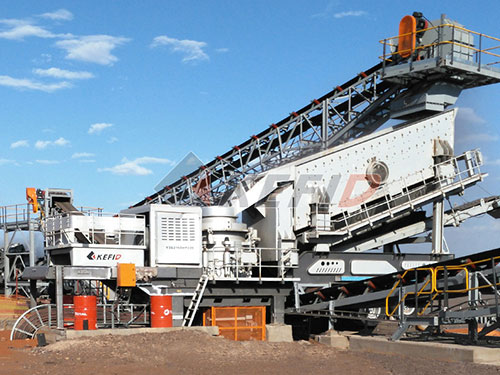
Our engineered solution is a highcapacity, hard rock crushing circuit specifically configured for railway ballast production. This system transforms blasted quarry run into certified, cubical ballast aggregate in a continuous workflow.
Operational Workflow:
1. Primary Reduction: Dumpfed, heavyduty jaw crusher or gyratory crusher reduces shot rock to 250mm.
2. Secondary & Tertiary Shaping: A cone crusher (or impact crusher for less abrasive rock) performs intermediate crushing. A subsequent cone crusher stage with a tight closedside setting (CSS) refines the product shape and size.
3. Precision Screening & Recirculation: Multideck vibrating screens accurately separate the crushed material into oversize, multiple ballast specification fractions (+2”, 1.5” – 2”, etc.), and fines. Oversize is automatically recirculated to the appropriate crusher.
4. Product Stockpiling: Onspec fractions are conveyed to dedicated stockpiles, while fines are diverted for alternative use or disposal.
Application Scope & Limitations:
Scope: Optimized for highvolume production (150800+ TPH) of granite, basalt, quartzite, and other highPSV (Polished Stone Value) igneous/metamorphic rock. Suitable for permanent quarry installations.
Limitations: Not recommended for soft or highly friable sedimentary rock (e.g., limestone without sufficient hardness). Requires stable electrical supply and adequate space for plant configuration.
Core Features: Engineered for Ballast Profitability
Advanced Chamber Geometry | Technical Basis: Optimized nip angle and crushing cavity profile | Operational Benefit: Promotes interparticle crushing for superior cubical product shape with reduced flakiness index | ROI Impact: Higher yield of premiumspec ballast; less waste from flat/elongated particles.
Automated Setting Regulation | Technical Basis: Hydraulic adjustment and clearing systems with PLC control | Operational Benefit: Enables remote CSS adjustment during operation to maintain target gradation; automatic tramp release protects components | ROI Impact: Minimizes offspec production; prevents catastrophic damage from uncrushables.
Modular Wear Component Design | Technical Basis: Segmented manganese steel liners with reversible/interchangeable sections | Operational Benefit: Extends service life by utilizing more wear material; allows for faster, safer component rotation or replacement | ROI Impact: Reduces liner cost per ton by up to 30%; cuts downtime for wear part maintenance by half.
Integrated Load & Level Sensing | Technical Basis: Crusher feed hopper level monitors and power draw sensors | Operational Benefit: Provides realtime data to regulate feed rate via PLC, preventing choke feeding or running empty | ROI Impact: Maximizes throughput while protecting the crusher from uneven stress; optimizes energy consumption.

Centralized Greasing & Lube System | Technical Basis: Automated lubrication unit with programmable intervals and fault alerts | Operational Benefit: Ensures critical bearings receive consistent lubrication without manual intervention | ROI Impact: Extends bearing service life significantly; reduces risk of unplanned failures due to lubrication neglect.
Competitive Advantages
| Performance Metric | Industry Standard Baseline | Our Quarry Ballast Crushing Solution | Documented Advantage |
| : | : | : | : |
| Wear Life (Primary Liners) | 450,000 – 550,000 tons (granite) | 650,000 – 750,000 tons (granite) | +35% Improvement |
| Product Cubicity (% Cubical Particles) | 7582% (typical cone output) | 8892% (controlled chamber output) | +10% Improvement |
| Power Consumption per Ton kWh/tonne @ 250mm CSS| ~0.8 1.0 kWh/tonne| ~0.65 0.75 kWh/tonne| ~20% Reduction |
| Gradation Consistency (±% from spec midpoint)| ±812% variance| ±46% variance controlled via automation| +50% More Consistent |
Technical Specifications
Capacity Range: Configurable from 150 to over 800 metric tons per hour of finished ballast product.
Feed Size: Accepts primary feed up to 1200mm (48”) depending on primary crusher model selection.
Power Requirements: Total installed power from 400kW to 1200kW based on plant scale; requires stable industrial threephase supply.
Material Specifications: Engineered for unconfined compressive strength (UCS) rock >150 MPa. Wear components are manufactured from ASTM A128 Grade B3/B4 manganese steel or equivalent premium alloys.
Key Physical Dimensions (Example Secondary Station): Approx. L15m x W5m x H6m footprint; total system weight ~85200 tonnes structured in modular sections.
Environmental Operating Range: Designed for 20°C to +45°C ambient temperature; dust suppression system ready; noise encapsulation options available.
Application Scenarios
Hard Rock Quarry Supplying National Rail Project
Challenge: A granite quarry winning a major rail contract struggled with a 22% rejection rate due to excessive flaky material from their existing cone crushers. Downtime for liner changes was exceeding 12 hours per event.
Solution: Implementation of a tertiarystage cone crusher specifically configured with our advanced chamber geometry and automated setting control system integrated into the existing circuit.
Results: Flakiness index reduced from 28 to below 18%, meeting spec consistently. Liner life increased by 40%, reducing annual wear part costs by an estimated $65,000 and cutting related downtime by over 300 hours annually.
Aggregate Producer Expanding into Rail Ballast Market
Challenge: A midsize aggregate producer needed to enter the rail ballast market but required a compact footprint solution that could produce multiple spec products without constant reconfiguration.
Solution: A skidmounted secondary/tertiary crushing and screening module featuring our modular wear design and integrated load sensing was installed downstream of their primary jaw crusher.
Results: The plant achieved flexible production switching between AREMA No. 4A and No. 5 ballast specs within minutes via automated CSS adjustment. The system achieved 95% onspec yield from day one on local basalt feed.
Commercial Considerations
Our quarry ballast crushing equipment is offered under a transparent commercial framework designed for capital project planning:
Pricing Tiers:
Tier I (Core Crusher Station): Includes primary jaw or secondary/tertiary cone crusher with drive motor and base frame.
Tier II (Complete Crushing Module): Crusher station plus integrated feed hopper, discharge conveyor, walkways, ladders, and basic PLC controls.
Tier III (Turnkey Production Circuit): Full circuit design including primary station(s), screening tower(s), conveyors advanced process control system installation support commissioning
Optional Features: Dust suppression cannon packages advanced vibration monitoring telematics remote diagnostics extendedwarranty wear part kits
Service Packages range from basic commissioning support comprehensive multiyear maintenance agreements including scheduled inspections parts supply priority field service response
Financing Options include traditional capital purchase capital lease agreements operating leases tailored throughputbased agreements where payments align with production volume
Frequently Asked Questions
1\. Is this equipment compatible with our existing primary jaw crusher conveyor infrastructure?
Yes our systems are designed as modular additions Field data shows successful integration requires review of feed points conveyor capacities electrical supply We provide full interface engineering as part of turnkey proposals
2\. What is the expected operational impact during installation commissioning?
For modular installations typical timeline is four weeks mechanical erection one week electrical tiein one week commissioning Minimal disruption expected if staged during planned maintenance shutdowns
3\. How does the automated setting regulation work in practice?
The PLC uses input signals from power draw chamber pressure optionally online particle size analysis It makes microadjustments hydraulic CSS maintaining optimal cavity volume ensuring consistent PSD without operator intervention
4\. What are the commercial terms lead times?
Standard terms require deposit upon order confirmation balance before shipment Lead times vary component complexity typically range months Major components often stocked expediting projects requiring rapid deployment
5\. What training provided operators maintenance staff?
We include comprehensive onsite training covering safe operation routine maintenance troubleshooting procedures Documentation includes detailed parts manuals schematic diagrams Recommended annual refresher training available under service agreements