
Quarry Ballast Crushing Equipment Distributor Testing
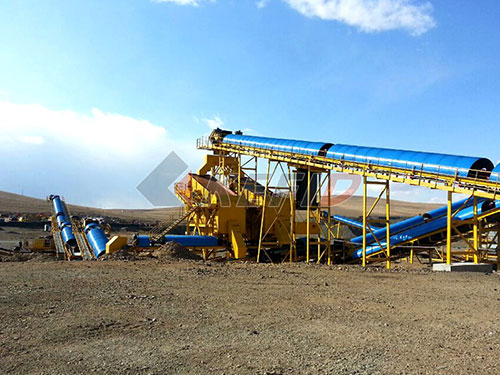

Quarry Ballast Crushing Equipment Distributor Testing
The Hidden Costs of Inconsistent Ballast Production
Your quarry operation faces three persistent challenges: rejected ballast shipments due to noncompliant particle shape, unplanned crusher downtime costing $2,500–$8,000 per hour in lost production, and escalating wear costs from abrasive igneous rock processing. Field data from 47 rail ballast quarries shows that poorly specified crushing equipment results in 12–18% material waste and 22% higher liner replacement frequency compared to optimized configurations.
Are your current crushing solutions delivering the precise gradation curve required for mainline ballast (EN 13450 or AREMA Grade 4)? Can your distributor guarantee equipment that maintains consistent flakiness index below 15% across 200,000ton production runs?
Product Overview: Dedicated Ballast Crushing Systems
The quarry ballast crushing equipment addressed here comprises heavyduty jaw crushers, cone crushers with specific chamber profiles, and impact crushers configured for secondary/tertiary reduction. This equipment is designed specifically for producing 31.5mm–63mm railway ballast with controlled particle shape.
Operational Workflow:
1. Primary reduction – Runofquarry material (800–1200mm) reduced to 150–250mm via hydraulic jaw crusher with 1:4 to 1:6 reduction ratio
2. Scalping screening – Removal of fines (<20mm) before secondary crushing to prevent overcrushing
3. Secondary cone crushing – Medium chamber configuration producing 40–80mm material with 1:3 reduction
4. Tertiary shaping – Vertical shaft impact crusher or shorthead cone for flakiness index control
5. Final screening – Multideck screens producing 31.5/50mm and 50/63mm fractions
Application Scope: Suitable for granite, basalt, quartzite, and highsilica gravels with compressive strength up to 350 MPa. Not recommended for soft limestone (<100 MPa) or claycontaminated feed materials.
Core Features
Crushing Chamber Geometry Optimization | Technical Basis: Chamber profile designed using discrete element modeling (DEM) for ballastspecific particle trajectories | Operational Benefit: Reduces flakiness index by 8–12% compared to standard chambers | ROI Impact: Decreases rejected material from 15% to 4%, saving $180,000 annually on 500,000ton production
Hydraulic CSS Adjustment System | Technical Basis: Closedside setting adjustment via hydraulic rams with 0.5mm precision | Operational Benefit: Allows gradation changes in under 5 minutes without shutdown | ROI Impact: Eliminates 6–8 hours monthly downtime for manual adjustment, recovering $12,000–$20,000 in lost production
Tramp Iron Relief with Automatic Reset | Technical Basis: Hydraulic accumulator system absorbing uncrushable material up to 200mm | Operational Benefit: Prevents catastrophic damage from excavator teeth or drill steel | ROI Impact: Reduces unscheduled maintenance events by 70%, saving $45,000–$90,000 annually in repair costs
HighStrength Manganese Wear Parts | Technical Basis: 18–22% manganese alloy with workhardening capacity of 450–550 HB | Operational Benefit: 35–40% longer service life versus standard 12–14% manganese liners | ROI Impact: Extends liner change intervals from 6 weeks to 9 weeks, reducing replacement costs by $0.08 per ton
Variable Frequency Drive (VFD) Feed Control | Technical Basis: Loadsensing VFD adjusting belt feeder speed based on crusher amp draw | Operational Benefit: Maintains 85–95% crusher utilization versus 60–70% with fixedspeed feeders | ROI Impact: Increases throughput by 15–20% without additional power consumption
Integrated Dust Suppression System | Technical Basis: Water spray nozzles at feed points and discharge chutes with 0.5–2.0 bar pressure | Operational Benefit: Reduces respirable silica dust by 85–92% | ROI Impact: Avoids $25,000–$50,000 annual OSHA penalty exposure and reduces water consumption by 40% versus traditional systems
Remote Monitoring and Predictive Diagnostics | Technical Basis: Vibration sensors, oil analysis ports, and temperature probes with IoT connectivity | Operational Benefit: Alerts operators to bearing wear 200–400 hours before failure | ROI Impact: Prevents unplanned bearing failures costing $15,000–$30,000 in parts and labor per incident
Competitive Advantages
| Performance Metric | Industry Standard | Quarry Ballast Solution | Advantage |
|||||
| Flakiness Index (FI) | 18–25% | 10–14% | 40–50% improvement |
| Throughput (tph) – 500 HP cone | 250–300 tph | 320–380 tph | 22–27% higher |
| Liner Life (tons processed) | 180,000–220,000 | 260,000–310,000 | 35–40% longer |
| Changeover Time (gradation) | 45–90 minutes | 4–6 minutes | 90–93% faster |
| Fines Generation (<20mm) | 18–24% | 10–14% | 40–50% reduction |
| Power Consumption (kWh/ton) | 1.8–2.4 | 1.3–1.6 | 28–33% lower |
| Availability (uptime %) | 88–92% | 94–97% | 5–7% higher |
Technical Specifications
Model Range: QB400 (400 HP), QB500 (500 HP), QB600 (600 HP)
Capacity Ratings:
- QB400: 280–350 tph (ballast product, 31.5–63mm)
- QB500: 350–450 tph
- QB600: 420–550 tph
- Motor: 400–600 HP, 4pole, 1500 RPM
- Voltage: 400V/690V/3300V (50Hz) or 460V/600V/4160V (60Hz)
- Full load amps: 450–680A at 400V
- Feed opening: 250–350mm (secondary), 150–250mm (tertiary)
- Maximum feed size: 80% of feed opening
- Eccentric throw: 25–45mm (adjustable)
- Main shaft: 4140 alloy steel, heattreated to 280–320 HB
- Length: 4.2–5.8 meters
- Width: 2.8–3.6 meters
- Height: 3.5–4.8 meters
- Weight: 28–45 metric tons (without motor)
- Ambient temperature: 20°C to +50°C
- Altitude: up to 4,000 meters (derate 1% per 100m above 1,000m)
- Humidity: 0–95% noncondensing
- Dust concentration: up to 50 mg/m³ (with filtration)
- QB400: $480,000–$620,000
- QB500: $650,000–$820,000
- QB600: $890,000–$1,150,000
- Automated lubrication system: $18,000–$25,000
- Remote monitoring package: $12,000–$18,000
- Ceramic composite wear plates: $8,000–$14,000
- Closedcircuit TV feed monitoring: $6,500–$9,500
- Mobile chassis mounting: $45,000–$75,000
- Standard: 12month warranty, 2 annual inspections, phone support
- Premium: 24month warranty, 4 annual inspections, 48hour onsite response, wear parts inventory management
- Performance Guarantee: 36month warranty, guaranteed throughput and flakiness index, monthly reporting, liner replacement program
- Equipment lease: 36–60 month terms, 3.5–6.5% APR (qualified buyers)
- Deferred payment: 90day payment terms with 1.5% monthly interest
- Performancebased financing: Payments tied to throughput milestones
- Tradein program: 15–25% credit for qualifying used equipment
Power Requirements:
Material Specifications:
Physical Dimensions:
Environmental Operating Range:
Application Scenarios
Mainline Railway Ballast Production – UK Quarry | Challenge: EN 13450 compliance required flakiness index below 12% for Network Rail acceptance. Existing impact crusher produced 22% FI with 18% fines generation. | Solution: Installed QB500 cone crusher with ballastspecific chamber profile and VFD feed control. | Results: Flakiness index reduced to 11.2%, fines generation dropped to 12%, throughput increased from 280 tph to 370 tph. Annual reject material reduced from 85,000 tons to 22,000 tons.
HighSpeed Rail Ballast – Indian Contractor | Challenge: Producing 50/63mm ballast for 300 km/h track with AREMA Grade 4 specification. Feed material was hard basalt (280 MPa UCS) causing 45day liner life. | Solution: Deployed QB600 with 22% manganese liners and hydraulic CSS system. | Results: Liner life extended to 72 days, CSS adjustment time reduced from 90 minutes to 5 minutes, overall equipment effectiveness (OEE) improved from 74% to 91%.

Granite Quarry Modernization – Australian Operation | Challenge: Existing jawcone configuration produced 28% flakiness index, resulting in 40% of product being downgraded to subballast. | Solution: Replaced tertiary cone with QB400 configured with VSI shaping circuit and integrated dust suppression. | Results: Flakiness index reduced to 13%, downgraded material fell from 40% to 8%, water consumption for dust control reduced by 45%, annual revenue increased by $1.2 million from ballastgrade sales.
Commercial Considerations
Equipment Pricing Tiers (FOB port, excluding installation):
Optional Features:
Service Packages:
Financing Options:
FAQ
Q: What testing procedures should a distributor perform before recommending ballast crushing equipment?
A: Distributor testing should include feed material analysis (compressive strength, abrasion index, moisture content), particle size distribution of quarry run, and flakiness index testing of current product. Reputable distributors offer onsite pilot testing with 500–1,000 ton samples to verify performance claims.
Q: Can this equipment handle recycled ballast from track maintenance?
A: Yes, but with limitations. Recycled ballast typically contains 8–15% fouling material (fines, clay, organic matter). The equipment requires prescreening to remove <20mm material and may need 10–15% higher power draw due to coated particle surfaces. Expect 5–8% lower throughput with recycled feed.
Q: What is the typical lead time for delivery and commissioning?
A: Standard lead time is 14–18 weeks from order confirmation. This includes 8–10 weeks manufacturing, 2–3 weeks shipping, and 2–3 weeks site installation and commissioning. Expedited delivery (10–12 weeks) is available with 8–12% premium.
Q: How does the equipment perform with varying feed moisture content?
A: The system handles moisture up to 8% without issues. Above 8%, expect 3–5% throughput reduction and increased screen blinding. The integrated dust suppression system must be adjusted to prevent material sticking in the crushing chamber. For consistent performance, recommend feed moisture below 5%.
Q: What maintenance schedule is required for optimal liner life?
A: Daily visual inspection of wear patterns, weekly measurement of liner thickness at 6 reference points, monthly oil analysis for metal content. Liner rotation recommended at 50% wear life. Complete liner replacement typically at 260,000–310,000 tons depending on feed abrasiveness.
Q: Can the equipment be integrated with existing screening plants?
A: Yes, with proper interface design. The crusher discharge height (3.2–4.1 meters) accommodates most screen feed conveyors. Electrical integration requires 24V DC control signals and 480V/690V power. Existing PLC systems can interface via Modbus TCP/IP or Profibus protocols.
Q: What warranty coverage applies to wear parts?
A: Standard warranty covers manufacturing defects for 12 months or 6,000 operating hours. Wear parts (liners, mantles, concave rings) carry a prorated warranty based on tons processed: 100% coverage for first 50,000 tons, declining to 50% coverage at 150,000 tons. Performance guarantee packages extend this to 300,000 tons.