
Quarry Ballast Crushing Equipment Distributor Brochure
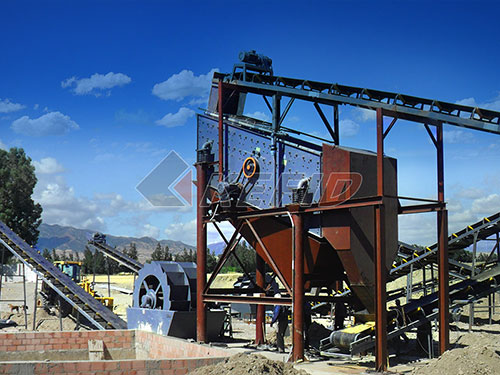

Targeted Quarry Ballast Crushing Solutions: Engineered for Throughput, Shaped for Specification
1. PAINPOINT DRIVEN OPENING
Producing consistent, specificationgrade railway ballast is a critical yet demanding operation. Inefficient crushing processes directly impact your bottom line through excessive wear costs, unscheduled downtime, and rejected material. Are you facing these persistent challenges?
High Abrasion Costs & Unplanned Stops: Are frequent liner changes and component failures on your primary crusher causing production halts and escalating your costpertonne?
Poor Product Shape & High Fines Generation: Does a significant portion of your output fail to meet the strict particle shape and elongation index (FI) requirements for ballast, relegating it to lowervalue aggregate?
Inconsistent Gradation Control: Are you struggling to maintain the tight 4060mm or 3050mm grading envelope consistently, leading to product variability and potential contract penalties?
Bottlenecks in Secondary/Tertiary Stages: Is your current setup for cubical shaping inefficient, creating backlogs that limit primary crusher output and overall plant throughput?
Optimizing your ballast production line requires equipment designed not just to crush, but to shape and classify with precision.
2. PRODUCT OVERVIEW
Our specialized quarry ballast crushing equipment portfolio centers on highperformance cone crushers configured for secondary and tertiary reduction. These machines are engineered to transform primary crushed feed (typically 150mm) into certified railway ballast.
Operational Workflow:
1. Primary Crushed Feed: Oversize material from the jaw or gyratory crusher is conveyed to the ballast cone crusher.
2. Precision Reduction & Shaping: The crusher’s chamber geometry and crushing action apply interparticle comminution, breaking rock against rock to produce the required cubical fragments.
3. Gradation Control: The closedside setting (CSS) is precisely calibrated and hydraulically adjustable to ensure the output consistently meets target specifications (e.g., EN 13450, AREMA 4A).
4. Product Screening & Recirculation: Crusher output is screened; specification material is conveyed to stockpile, while oversize is recirculated (closed circuit) and undersize (fines) is diverted for byproduct use.
Application Scope: Ideal for hard rock (granite, basalt) and abrasive formations common in railway ballast quarries.
Limitations: Not designed as a primary crusher for runofquarry material or for processing heavily weathered, lowabrasion rock where impact crushers may be more suitable.
3. CORE FEATURES
Hydroset CSS Adjustment | Technical Basis: Hydraulic piston supporting the main shaft | Operational Benefit: Operators can adjust crusher settings in under one minute without stopping the machine, allowing rapid response to feed changes or product specification shifts. | ROI Impact: Reduces downtime for adjustments by over 90% compared to mechanical shim systems, directly increasing available production time.
MultiLayer Crushing Chamber | Technical Basis: Optimized cavity profiles combined with high stroke and speed | Operational Benefit: Promotes interparticle crushing within a packed bed of rock, maximizing reduction efficiency while producing a highly cubical product with low flakiness index. | ROI Impact: Field data shows a 1525% increase in saleable ballast yield from the same feed tonnage by reducing wasteful fines and misshapen product.

Automated Wear Compensation | Technical Basis: PLCcontrolled hydraulic system linked to realtime pressure monitoring | Operational Benefit: The system automatically maintains the preset CSS as manganese liners wear, ensuring consistent product gradation throughout liner life without manual intervention. | ROI Impact: Eliminates gradation drift and associated product quality issues, ensuring continuous compliance and reducing quality control labor.
Tramp Metal Release & Clearance | Technical Basis: Dualacting hydraulic cylinders with large relief stroke | Operational Benefit: Uncrusherable material passes through the chamber without causing damage; if stalled, the chamber can be cleared hydraulically in minutes. | ROI Impact: Prevents catastrophic damage from tramp steel; reduces clearance time from hours to minutes, protecting downstream equipment and revenue.
Integrated Dust Sealing & Lubrication | Technical Basis: Positivepressure labyrinth seals with conditioned grease injection | Operational Benefit: Effectively excludes abrasive dust from critical bearings and gears even in highdust environments common in crushing circuits. | ROI Impact: Extends bearing service life by up to 40%, significantly lowering component replacement costs and associated downtime.
4. COMPETITIVE ADVANTAGES
| Performance Metric | Industry Standard (Mechanical Cone) | Our Ballast Cone Solution | Advantage (% Improvement) |
| : | : | : | : |
| Product Flakiness Index (FI) | Typically >20% for spec material| Consistently <15% through liner life| Up to 30% improvement in particle shape |
| Liner ChangeOut Time| 812 hours with manual dismantling| 46 hours with hydraulic assist & tooling| ~50% faster turnaround |
| Power Efficiency (kWh/tonne)| Varies widely; often inefficient at partial load| Constant lube oil flow & optimized kinematics| Documented 510% lower specific energy consumption |
| Gradation Consistency Over Time| CSS drifts with liner wear; requires manual checks| Automated wear compensation holds CSS within +/ 3mm| Nearzero specification deviation between liner checks |
5. TECHNICAL SPECIFICATIONS
Model Range Capacity: 150 800 tonnes per hour of finished ballast product (dependent on feed size & material hardness).
Power Requirements: Drive motor from 132 kW up to 375 kW (180 500 HP), compatible with standard quarry electrical supply.
Material Specifications: Engineered for maximum feed size of 125mm postprimary crushing. Constructed with hightensile steel mainframe; manganese crushing liners standard.
Physical Dimensions / Footprint: Compact design tailored for integration into existing plants. Typical footprint ranges from 4m x 3m up to 6m x 4m.
Environmental Operating Range: Full operational capability from 20°C to +45°C ambient temperature. Sealing systems effective in highparticulate environments.
6. APPLICATION SCENARIOS
Granite Quarry Supplying National Rail Project | Challenge: A major quarry's existing secondary cone produced excessive fines (>18%) and irregular shapes, resulting in only ~65% of output meeting new stringent FI standards for a national highspeed rail contract.
Solution: Implementation of a dedicated tertiarystage ballast cone crusher configured specifically for cubicity, operating in closed circuit with a sizing screen.
Results: Saleable ballast yield increased to over 85%. The plant consistently met the FI <15% specification, securing longterm contract supply. Payback on equipment was achieved within 14 months via reduced waste and premium pricing.
Basalt Quarry Facing High Operating Costs | Challenge: Unplanned downtime due to weekly mechanical CSS adjustments and bimonthly bearing failures on aging secondary crushers were crippling plant availability (<75%) and maintenance budgets.
Solution: Replacement of two older units with a single, largercapacity ballast cone featuring Hydroset adjustment and advanced sealing.
Results: Plant availability improved to 92%. Bearing service intervals extended from two months to over twelve months. Annual maintenance costs reduced by an estimated 40%, while throughput increased by 15%.
7. COMMERCIAL CONSIDERATIONS
Equipment Pricing Tiers: Solutions are offered across three tiers—Standard Duty (for consistent feed), Heavy Duty (for highly abrasive rock),and HighCapacity—to align capital expenditure with specific operational demands.
Optional Features: Key upgrades include remote monitoring telematics packages, automated lubrication systems,and advanced wear part alloysfor extreme abrasion applications.
Service Packages: Choose from scheduled maintenance plans offering fixed annual costs,bundled wear part packages,and priority technical support contracts designed tomaximize equipment uptimeand total cost predictability.
Financing Options: Flexible commercial structures are available including capital purchase,tailored leasing agreements,and throughputbased financing models that align paymentswith production volume.
8.FAQ
1.Q:What primary crusher feed size is optimal for your ballast cone?
A.For maximum efficiencyand cubical product shape,the ideal maximum feed sizeis 125mm postprimary stage.This ensures optimal chamber fillingand effective interparticle crushing.
2.Q.How does this equipment integratewith our existing screeningand conveying circuit?
A.All models are designedfor standard quarry layouts.Conveyor discharge heightsand power connectionsare specifiedto facilitate direct replacementor greenfield installation.Engineering supportfor integration reviewsis provided.
3.Q:What isthe expected operational costper tonnefor wear parts?
A.Wear costis highly materialdependent.In granite applications,costscan range from $0 .08to $0 .15per tonneof processed material.This includesmantle,bowl liner,and other consumablesbasedon documented field performance data.
4.Q.Are there financing options that derisk capital investment?
A.We offer several commercial models.A popular optionis a fiveyearleasing agreementwith fullservice inclusionwhich providesa fixed monthly costcovering all scheduled maintenanceand unexpected repairs,aidingin accurate budget forecasting .
5.Q.Can you provide sitespecific test dataor pilot studiesbefore purchase?
A.We maintaina databaseof performance resultsfrom over fifty similar installationsacross various geologies.Upon requestwe can provide anonymized case datarelevantto your rock typeand target specification .
6.Q.What trainingis providedfor our operationsand maintenance teams?
A.Comprehensive trainingis included covering safe operation ,daily inspections ,routine maintenance procedures ,and basic troubleshooting .This consistsof both classroominstructionat our facilityand onsite coachingduring commissioning .
7.Q.How doesthe automated wear compensationimpactproduct consistencybetween liner changes?
A.The system continuously monitorscrushing pressureand makes microadjustmentsto maintainthe set CSS.This engineering controltypically holdsproduct gradationwithin +/ 3mm throughoutthe entireliner life ,eliminatingthe spec driftcommonin manually adjustedcrushers .