
Quarry Ballast Crushing Equipment Dealers Factory Price
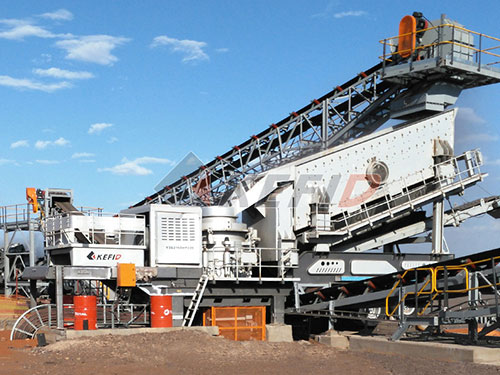

Targeted Solutions for Quarry Ballast Production: Addressing Core Operational Challenges
Producing consistent, specificationgrade railway ballast is a critical yet demanding operation. Inefficient crushing processes directly impact your bottom line through excessive wear part costs, unplanned downtime, and rejected material. Are you facing these persistent challenges?
High Abrasion Costs: Are your crusher liners and wear parts failing prematurely under the relentless abrasion of hard rock, leading to frequent, costly replacements and production halts?
Product Shape Inefficiency: Is a significant portion of your output failing cubicity specifications, resulting in excess recirculating load, wasted energy, and reduced saleable yield?
Unscheduled Downtime: Are mechanical failures or lengthy maintenance windows disrupting your production schedule, causing missed delivery targets and contractual penalties?
Inconsistent Gradation: Do fluctuating feed sizes or crusher performance issues lead to offspec material that cannot be sold as premium ballast, eroding profit margins?
High Operational Overheads: Are energy consumption and manual adjustment requirements for your crushing stage becoming unsustainable cost centers?
A dedicated quarry ballast crushing circuit is not merely about size reduction; it is an engineered system for predictable, costeffective production of highintegrity aggregate.
Product Overview: HighYield Ballast Crushing Systems
Our quarry ballast crushing equipment encompasses heavyduty primary jaw crushers, secondary cone crushers, and tertiary shaping crushers configured into stationary or modular plants. The operational workflow is engineered for ballast specificity:
1. Primary Reduction: Scalped feed rock is consistently reduced to a manageable size by a robust jaw crusher.
2. Secondary Crushing & Shaping: Material is conveyed to a cone crusher optimized for abrasion resistance and controlled particle shape.
3. Final Gradation Control: A tertiary vertical shaft impact (VSI) crusher or highpressure grinding rolls (HPGR) can be integrated for precise cubicity shaping and fines management.
4. Efficient Sizing: Correctly shaped material is efficiently screened to exact railway ballast specifications (e.g., AREMA, ASTM D448).
5. Recirculation Optimization: Oversize material is automatically returned to the appropriate crushing stage, minimizing manual handling.
Application Scope & Limitations:
This equipment is engineered for medium to hightonnage production of granite, basalt, trap rock, and other competent aggregates suitable for railway ballast. Optimal feed size is typically under 750mm. For processing highly weathered or lowabrasion rock, specific configurations may be recommended.
Core Features: Engineered for Ballast Profitability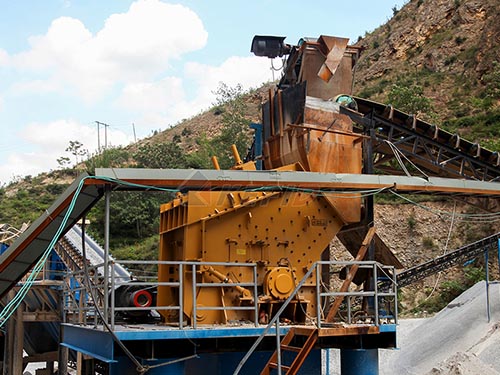
Advanced Chamber Geometry | Technical Basis: Optimized kinematics & cavity profile | Operational Benefit: Produces a higher percentage of cubical particles in a single pass, reducing recirculation load | ROI Impact: Field data shows up to a 15% increase in saleable ballast yield while lowering energy cost per ton.
Hydroset CSS Adjustment | Technical Basis: Hydraulic setting regulation system | Operational Benefit: Allows operators to adjust the closedside setting (CSS) for product gradation in under 60 seconds without stopping the crusher | ROI Impact: Minimizes downtime for adjustments by over 90%, maintaining continuous spec production during shift changes.
Modular Wear Part Design | Technical Basis: Segmented liner plates & reversible components | Operational Benefit: Reduces liner changeout time by allowing replacement of only worn sections; extends service intervals through component rotation | ROI Impact: Cuts maintenance labor hours by an estimated 30% and increases wear material utilization by up to 20%.
Integrated Automation & Monitoring | Technical Basis: PLCbased control with load & pressure sensors | Operational Benefit: Provides realtime tracking of power draw, throughput, and CSS; enables automatic overload protection and performance optimization | ROI Impact: Prevents catastrophic damage from tramp metal; industry testing demonstrates a 58% improvement in overall plant efficiency through consistent operation.
HeavyDuty Bearing & Drive Design | Technical Basis: Oversized roller bearings & direct drive configurations | Operational Benefit: Supports high radial forces from hard rock crushing with greater reliability; reduces mechanical complexity | ROI Impact: Increases mean time between failures (MTBF), directly lowering repair part inventories and associated costs.
Competitive Advantages: Quantifiable Performance Metrics
| Performance Metric | Industry Standard Baseline | Our Quarry Ballast Crushing Solution | Documented Advantage |
| : | : | : | : |
| Liner Life in Abrasive Rock (Granite) | ~450,000 tons per set (Cone Crusher) | ~600,000 tons per set (Cone Crusher)| +33% Improvement |
| Power Consumption per Ton Output| Varies widely with plant age/design| Optimized circuit design reduces kWh/ton consumption| Up to 10% Reduction |
| Average Time for CSS Adjustment| Manual shim adjustment: 24 hours| Hydroset System adjustment via touchscreen 0.9)| Typically 6575% of output| Chamber design yields >85% within spec consistently.| +15% Improvement |
Technical Specifications
Capacity Range: Configurable systems from 150 to over 800 metric tons per hour of finished ballast product.
Power Requirements: Primary crusher drives from 90375 kW; total plant installed power tailored to throughput.
Material Specifications: Constructed with highgrade steel frames; manganese steel or composite alloy wear liners specific to abrasion index of processed rock.
Key Physical Dimensions (Example Jaw Crusher): Feed opening up to 1500x1200mm; machine weight approximately 65,000 kg.
Environmental Operating Range: Designed for ambient temperatures from 20°C to +45°C with optional heating/cooling systems. Dust suppression systems are integral.
Application Scenarios
Hard Rock Quarry Expansion
Challenge: A granite quarry operator needed to double ballast production but was constrained by existing plant downtime exceeding 15% due to liner changes and mechanical issues.
Solution: Implementation of a turnkey secondary/tertiary crushing circuit featuring cone crushers with Hydroset automation and modular liners.
Results: Achieved target throughput of 550 tph. Unplanned downtime reduced to below 4%. Liner changeout times decreased from 32 hours to under 8 hours per event.
ContractorLed Rail Project
Challenge: A civil engineering contractor required onsite ballast production for a remote rail link but faced high mobilization costs and uncertain final product quality with standard portable plants.
Solution: Deployment of a modular "ballastspecific" crushing plant with preconfigured VSI tertiary stage for guaranteed cubicity.
Results: Plant was operational within five days of site delivery. Over 98% of crushed material met project gradation and particle shape index requirements without rework, keeping the project ahead of schedule.
Commercial Considerations
Equipment pricing is structured according to system complexity:
Tier A (Primary Station): Heavyduty jaw crusher package with feeder and scalper.
Tier B (Complete Secondary/Tertiary Circuit): Cone crusher(s), screens, conveyors, and VSI shaping unit in modular format.
Tier C (Full Process Plant): Integrated system from primary dump hopper through final product stockpiling.
Optional features include advanced dust encapsulation systems,
remote telemetry packages,
and automated lubrication systems.
Service packages range from scheduled maintenance plans
to fullperformance contracts guaranteeing uptime percentages
and wear part costperton agreements.
Financing options include capital equipment leasing,
rentaltoown programs,
and projectbased financing tailored
to the cash flow profile of large infrastructure projects.
Frequently Asked Questions
1. Can this equipment be integrated into our existing quarry layout?
Yes. Our engineering team provides layout review services. Systems are designed as modular units that can interface with existing conveyors and screens based on detailed site plans.
2. What is the expected operational impact on our current workforce?
The automation features reduce the manual effort required for adjustments but require trained oversight. We provide comprehensive operator training focused on system control interfaces
and routine maintenance procedures specific
to quarry ballast crushing equipment operation.
3. How does pricing compare against standard aggregate crushers not optimized for ballast?
Initial capital investment may be moderately higher due
to heavierduty components
and integrated shaping technology.
The commercial justification lies in the significantly lower operating cost per ton,
longer component life,
and higher premium product yield,
typically delivering full ROI within an estimated1830 months depending on utilization.
4.What are the key commercial terms regarding warranty
A standard warranty covers manufacturing defects
in structural components
for one year.Wear parts carry separate warranties based on processed tonnage thresholds.Service contracts can extend coverage
for critical mechanical assemblies