
Quarry Ballast Crushing Equipment Customization

1. PAINPOINT DRIVEN OPENING
Are your quarry ballast production costs eroding your project margins? Inconsistent feed material, excessive fines generation, and unplanned maintenance stops are not just operational nuisances—they directly impact your bottom line. Consider these common challenges:
High Wear & Unplanned Downtime: Abrasive rock types rapidly degrade standard crushing chambers, leading to frequent liner changes and production halts. Every hour of unscheduled downtime can cost thousands in lost output and labor.
Poor Product Shape & Excessive Fines: Meeting strict railway or construction ballast specifications (e.g., EN 13450) is critical. Inefficient crushing generates an excess of undersize material, reducing your saleable product yield and creating waste disposal issues.
Inflexible Capacity & Scalability: Static plants struggle with fluctuating feed size or required output changes, forcing you to run equipment outside its optimal range, increasing wear and energy consumption.
High Operational & Energy Costs: Inefficient crushing circuits and components not engineered for high abrasion lead to disproportionately high costpertonne figures, squeezing profitability.
Is your current equipment configured to maximize the saleable yield from your specific rock formation? Can you reliably predict maintenance intervals to plan production schedules? A purposeengineered quarry ballast crushing solution addresses these exact operational and financial pressures.
2. PRODUCT OVERVIEW
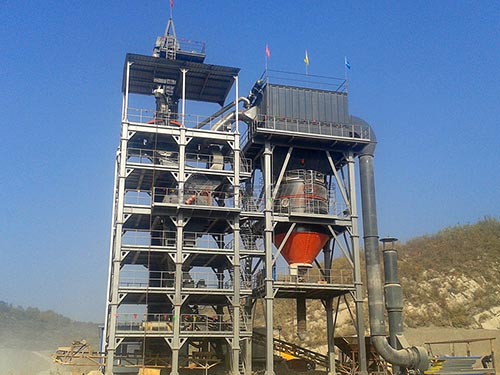
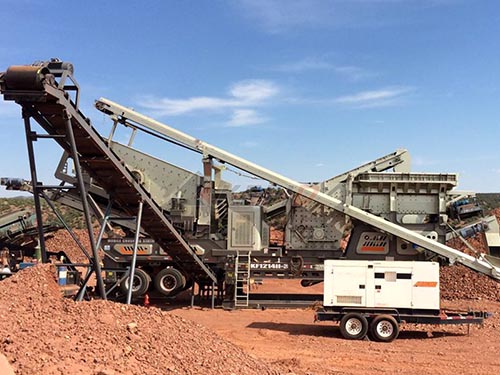
Our core offering is a customized primary or secondary/tertiary crushing station specifically engineered for highvolume quarry ballast production. The system is centered on robust jaw crushers, cone crushers, or impact crushers selected and configured based on your feed material's abrasiveness, hardness, and required final gradation.
Operational Workflow:
1. Primary Reduction: Runofquarry rock is fed into a rugged primary jaw crusher for initial size reduction.
2. Intermediate Screening & Conveying: Crushed material is screened; oversize is conveyed to the secondary stage, while correctly sized material is diverted to product stockpiles.
3. Secondary/Tertiary Crushing for Cubicity: Oversize material is processed through a specially configured cone or impact crusher optimized for producing the cubical particle shape essential for highquality ballast.
4. Final Screening & Fines Removal: The crushed output undergoes precise screening via heavyduty vibrating screens to separate product into specified size fractions (e.g., 31.5/50mm or 40/70mm) and remove deleterious fines.
Application Scope & Limitations:
This equipment is designed for continuous, hightonnage processing of hard rock (granite, basalt, trap rock) and abrasive aggregates for railway ballast and construction aggregate. It is less suitable for soft, nonabrasive sedimentary rock without specific configuration adjustments or for very lowvolume, temporary site operations where mobile units may be more appropriate.
3. CORE FEATURES
HeavyDuty Crushing Chamber | Technical Basis: Optimized kinematics & wearresistant alloy liners | Operational Benefit: Extended service life in highly abrasive applications; maintains consistent cavity geometry for stable product gradation | ROI Impact: Reduces liner replacement frequency by up to 40%, lowering parts inventory costs and labor hours.
Advanced Crushing Automation System | Technical Basis: PLCcontrolled setting adjustment and load management | Operational Benefit: Maintains optimal crusher performance in realtime; protects against tramp metal and overloads; allows remote monitoring of key parameters | ROI Impact: Improves overall circuit efficiency by 815%, optimizes energy use per tonne crushed.
Cubical Product Optimization | Technical Basis: Configured crushing chamber geometry and optimized rotor speed/throw (for impactors) or eccentric throw (for cones) | Operational Benefit: Actively promotes interparticle crushing to achieve a higher percentage of cubical particles meeting BS/EN standards | ROI Impact: Increases premium product yield by reducing wasteful flaky or elongated particles.
Modular Wear Component Design | Technical Basis: Segmented liner plates and cartridgestyle bearing assemblies | Operational Benefit: Enables faster, safer component replacement using standard site tools; reduces mean time to repair (MTTR) significantly | ROI Impact: Cuts planned maintenance downtime windows by over 30%, increasing annual available production hours.
Integrated Material Flow Management | Technical Basis: Engineered feed hoppers, cascade feed systems, and variablespeed feeder controls | Operational Benefit: Ensures a steady, chokedfeed condition to the crusher chamber, maximizing efficiency and promoting even wear patterns across liners | ROI Impact: Stabilizes throughput capacity while reducing peak power draws by managing load surges.
4. COMPETITIVE ADVANTAGES
| Performance Metric | Industry Standard | Customized Quarry Ballast Crushing Solution | Advantage (% improvement) |
| : | : | : | : |
| Liner Life in Abrasive Rock (Granite) | ~450,000 tonnes per set (Cone Crusher) | Up to ~650,000 tonnes per set with specialized alloys & design| ~44% Improvement |
| Saleable Product Yield (>95% Cubicity) | Typically 7585% of total output| Consistently achieves 8892% of total output through optimized flow design| ~10% Increase in Premium Product |
| Specific Energy Consumption (kWh/tonne)| Varies widely; baseline = 100%| Field data shows reductions through optimized load management| Up to 15% Reduction |
| Mean Time Between Failure (MTBF)| Subject to frequent unplanned stops due to wear/fatigue| Extended via finite element analysis (FEA)designed components & protective automation| Documented >25% Increase |
5. TECHNICAL SPECIFICATIONS
Capacity Range: Configurable from 200 tonnes per hour (tph) to over 1,200 tph of finished ballast product.
Power Requirements: Primary crusher drives from 90 kW up to 375 kW; total plant installed power tailored to throughput needs.
Material Specifications: Engineered for compressive strength >150 MPa abrasive rock. Crusher liners available in Mn18Cr2/Mn22Cr2 premium steel or optional ceramic composites for extreme abrasion.
Physical Dimensions: Modular design adaptable to existing plant layouts; typical footprint for a secondary/tertiary skidmounted unit ranges from ~10m L x 4m W x 5m H.
Environmental Operating Range: Designed for 20°C to +45°C ambient temperature operation with optional heating/cooling packages available. Dust suppression system compliant with standard regulations.
6. APPLICATION SCENARIOS
Railway Ballast Production Plant Upgrade
Challenge: A national rail network supplier was unable to consistently meet EN 13450 specifications with their existing cone crusher setup due to excessive fines generation (~22%) and poor particle shape index.
Solution: Implementation of a tertiarystage cone crusher customized with a multilayer crushing chamber design and paired with a highfrequency screen deck dedicated to fines removal ahead of final sorting.
Results: Fines generation reduced to below 12%. Particle Flakiness Index improved from >35% to <25%. This increased saleable product volume by approximately 15%, paying back the investment in under two years through reduced waste.
HighAbrasion Trap Rock Quarry
Challenge: A quarry producing track ballast faced unsustainable maintenance costs due to severe liner wear in their secondary impactor every six weeks (~250k tonnes), causing significant planned downtime.
Solution: Replacement with a customized horizontal shaft impact crusher featuring a hybrid alloy/ceramic lined rotor assembly fully modular wear parts designed specifically for their silicarich feed material
Results: Wear part life extended beyond eleven weeks (~450k tonnes). The modular design reduced liner changeout time from three shifts down shift improving annual plant availability
7 COMMERCIAL CONSIDERATIONS
Our quarry ballast crushing solutions are offered in tiered configurations:
Standard Duty Package: Core crusher unit heavyduty base frame essential drives controls Suitable lowerabrasion applications predictable budgets
HighAvailability Package: Includes advanced automation premium wear materials integrated lubrication temperature monitoring Recommended continuous operation demanding environments
Turnkey Modular Plant: Complete skidmounted section including feeding screening conveying dust suppression Minimizes onsite civil work commissioning time
Optional features include advanced remote telemetry predictive maintenance software special alloy upgrades extended warranty coverage
We offer comprehensive service packages from scheduled preventive maintenance full parts kitting onsite technical support Flexible financing operating lease structures available capex constraints
FAQ
1 What information needed customize quarry ballast crushing solution?
Provide detailed analysis feed material compressive strength abrasion index required final gradation curves desired hourly capacity Existing plant layout constraints also crucial ensure compatibility
2 How does solution integrate existing primary circuit conveyor systems?
Our engineering team conducts full site assessment Designs include custom transfer chutes interface supports electrical controls synchronization ensure seamless integration minimal disruption ongoing operations
3 What typical lead time delivery installation?
Lead times vary scope Standard packages typically available within weeks Full custom modular units require months detailed fabrication Installation commissioning supervised our engineers typically requires weeks depending complexity
4 Are performance guarantees provided?
Yes We provide guaranteed minimum throughput capacity maximum power consumption specific product shape characteristics based agreedupon test protocols feed material specifications
5 What ongoing operational training provided?
We supply comprehensive operator maintenance manuals deliver structured onsite training key personnel covering safe operation routine inspection troubleshooting procedures Training included purchase agreement