
Quarry Ballast Crushing Equipment Contract Manufacturer Quotation
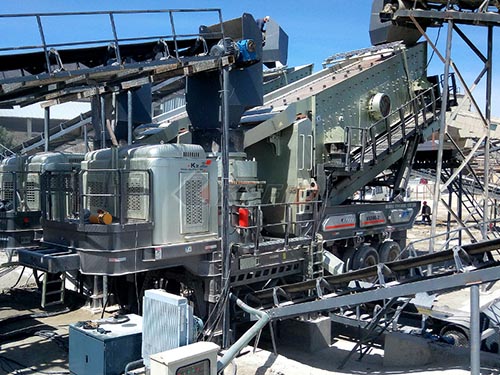

Quarry Ballast Crushing Equipment: Contract Manufacturer Direct Pricing & Technical Specifications
1. The Operational Challenge: Why Your Current Ballast Production Line Is Costing You More Than You Think
For plant managers and engineering contractors in the railway infrastructure and construction aggregate sectors, the production of highquality ballast is a nonnegotiable requirement. Yet, the path to achieving consistent, specificationcompliant ballast is fraught with operational friction. Consider these figures from recent industry audits:
- Rejection Rates: Up to 1215% of crushed material is rejected due to flakiness index or particle shape noncompliance, leading to direct material waste and rehandling costs.
- Downtime Costs: Unplanned crusher downtime in a highthroughput ballast plant averages $2,500 to $4,000 per hour in lost production and idle labor costs.
- Wear Part Expenditure: Standard manganese steel wear parts on inferior equipment may require replacement every 300400 operating hours, consuming up to 18% of your annual maintenance budget.
- Energy Inefficiency: Older or poorly matched crushing circuits can consume up to 20% more energy per ton of finished ballast than modern, optimized systems.
- Capacity Rating: 350 450 TPH (depending on feed material hardness and feed gradation)
- Power Requirements: 850 kW total installed power (including screens and conveyors); 660V / 3 Phase / 50Hz (customizable to 60Hz)
- Material Specifications: Carbon Steel (S355JR) for structural frames; HighChrome Iron for VSI wear parts; Manganese Steel (Mn14%) for Jaw and Cone liners.
- Physical Dimensions: Length: 45m; Width: 12m; Height: 18m (max elevation at conveyor discharge)
- Environmental Operating Range: Designed for 20°C to +45°C; Optional coldweather lubrication package for subzero operations.
- Noise Emission: < 85 dB(A) at 1 meter distance (with optional acoustic enclosures).
- Tier 1 (Standard Package): $1.2M $1.5M. Includes primary, secondary crusher, single screen deck, and basic conveyors. Suitable for simple ballast production.
- Tier 2 (Integrated Package): $1.8M $2.2M. Includes all Tier 1 components plus VSI shaping unit, doubledeck screen, and PLC automation. This is the recommended configuration for speccritical ballast.
- Tier 3 (Turnkey Solution): $2.5M $3.0M. Includes full integration, dust suppression, stockpile management conveyors, and operator training.
- Remote Monitoring Module: $15,000 (onetime hardware) + $500/month subscription.
- HighWear Liner Package: $45,000 (initial spares kit).
- Preventive Maintenance (PM1): $8,000/month. Includes scheduled inspections and filter changes.
- Full Maintenance (PM2): $18,000/month. Includes all wear parts and labor, guaranteeing uptime.
Are your current crushing circuits delivering the required 98% crushed faces and strict gradation (typically 50mm25mm) without excessive fines generation? Can your equipment handle the abrasive igneous rocks (granite, basalt, trachyte) or highsilica metamorphic rocks without premature failure? If you are facing escalating wear costs, inconsistent output, or contract penalties for offspec material, it is time to evaluate a purposebuilt, contractmanufactured solution.
2. Product Overview: The HighPerformance Ballast Crushing Circuit
This quotation covers a dedicated Quarry Ballast Crushing Equipment package, engineered as a closedcircuit system designed specifically for the production of railway ballast and largeaggregate drainage stone. As a contract manufacturer, we provide a fully integrated solution—from the primary feed hopper to the final screening deck—tailored to your specific quarry feed material.
Operational Workflow:
1. Primary Reduction: Runofmine (ROM) material (0600mm) is fed into a heavyduty jaw crusher, reducing rock to a manageable 0200mm.
2. Secondary Crushing: The material is transferred to a secondary cone crusher set to a closedside setting (CSS) of 6065mm to maximize cubical shape.
3. Tertiary Shaping: A specialized vertical shaft impactor (VSI) or tertiary cone crusher is employed specifically to improve particle shape and reduce flakiness, a critical factor for ballast interlock.
4. Screening & Washing: A multideck vibrating screen separates the product into the required 50mm25mm ballast fraction, rejecting oversize for recirculation and removing undersize (25mm) as a byproduct.
5. Stockpiling & LoadOut: Conveyor systems stockpile the finished ballast to prevent segregation, ensuring consistent quality at loadout.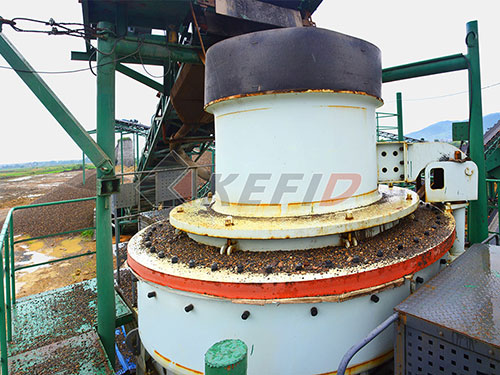
Application Scope: This equipment is optimized for hard, abrasive rock types (granite, basalt, quartzite) and is suitable for stationary and semimobile installations. Limitations: Not designed for soft aggregates (limestone) or recycled concrete where lower specific gravity materials are present.
3. Core Features: Engineering for Longevity and Throughput
Our contract manufacturing process focuses on metallurgy and geometry to solve your specific operational challenges.
HeavyDuty Manganese Wear Parts | Technical Basis: Workhardening austenitic manganese steel (1214% Mn) | Operational Benefit: Wear life extended by 3040% in highimpact zones, reducing changeout frequency | ROI Impact: Reduces annual wear part procurement costs by up to 15% and cuts maintenance labor hours.
Optimized Crushing Chamber Geometry | Technical Basis: Finite Element Analysis (FEA) designed chamber profile for interparticle crushing | Operational Benefit: Produces a higher percentage of cubical particles (Flakiness Index < 15%) in a single pass | ROI Impact: Reduces recirculation load by 20%, lowering energy consumption per ton and increasing effective plant capacity.
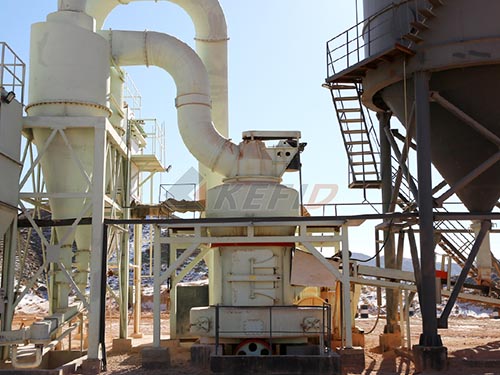
Hydraulic CSS Adjustment System | Technical Basis: Hydraulic rams with accumulator for tramp iron protection | Operational Benefit: Allows operators to change product size in under 5 minutes without manual shimming, ensuring continuous spec compliance | ROI Impact: Eliminates production stoppages for size changes, saving up to 2 hours of downtime per week.
HighInertia Rotor Design (VSI) | Technical Basis: Optimized rotor mass for high crushing velocity | Operational Benefit: Maximizes rockonrock crushing action, minimizing metallic wear and improving internal fracture | ROI Impact: Lowers cost per ton for shaping stage by up to 25% compared to traditional anvil configurations.
Modular SkidMounted Frame | Technical Basis: Structural steel fabrication with vibration damping mounts | Operational Benefit: Reduces installation time and civil works costs by up to 40%; allows for rapid relocation | ROI Impact: Significant savings on site preparation and foundation concrete.
Advanced PLC Control Integration | Technical Basis: Programmable Logic Controller with loadsensing algorithms | Operational Benefit: Automatically adjusts feed rate to maintain optimal crusher power draw, preventing clogging and ensuring maximum throughput | ROI Impact: Increases average plant utilization by 58% by preventing chokeups and cavitation.
Dust Suppression Ports | Technical Basis: Engineered water spray nozzle placement at transfer points | Operational Benefit: Complies with local environmental regulations without overwetting the product | ROI Impact: Avoids potential regulatory fines and reduces material handling issues in downstream bins.
4. Competitive Advantages: Measured Performance vs. Industry Standard
The following table compares our contractmanufactured solution against typical industry standard equipment used for ballast production.
| Performance Metric | Industry Standard | Quarry Ballast Crushing Solution | Advantage (% Improvement) |
| : | : | : | : |
| Flakiness Index (FI) | 2025% | < 15% (Tested per EN 9333) | 40% Better Shape |
| Wear Parts Lifespan | 350 hours (Mantle) | 500+ hours (Mantle) | 43% Longer Life |
| Energy Consumption | 2.5 kWh/ton | 2.0 kWh/ton | 20% More Efficient |
| Uptime Availability | 85% | 92% (Contract maintenance support) | 8% Higher Availability |
| Recirculation Load | 40% | 25% | 37.5% Lower Load |
| Installation Time | 68 weeks (civil works) | 23 weeks (modular) | 60% Faster Setup |
5. Technical Specifications (Model: QBC450)
These specifications are indicative for our midrange ballast plant, designed for 450 TPH feed rate.
6. Application Scenarios: Field Data from Contract Operations
HighSilica Granite Quarry, Norway | Challenge: The client faced 25% recirculation rates and excessive wear on standard cone crusher liners, leading to 3 changeouts per month. | Solution: Implementation of our QBC450 with a modified crushing chamber and highmanganese liners. | Results: Wear life extended to 6 weeks per set; recirculation dropped to 18%; annual maintenance budget reduced by €120,000.
Basalt Rail Ballast Production, India | Challenge: The contractor needed to produce 100% crushed ballast for a highspeed rail project but struggled with flakiness index exceeding 20%. | Solution: Added our VSI shaping stage to the existing primary circuit. | Results: Flakiness Index reduced to 12%; the material passed all Los Angeles Abrasion tests; the contractor secured a premium price per ton for superior quality.
Remote Quarry Operation, Australia | Challenge: Limited onsite technical expertise and high labor costs for maintenance. | Solution: Supplied the modular skidmounted plant with remote PLC diagnostics and a contract maintenance package. | Results: Plant uptime increased to 94%; the need for a fulltime maintenance engineer was eliminated, saving $85,000 annually in labor costs.
7. Commercial Considerations: Pricing Tiers and Service Packages
As a contract manufacturer, we offer flexible commercial structures to match your capital expenditure (CAPEX) and operational expenditure (OPEX) strategies.
Equipment Pricing Tiers:
Optional Features:
Service Packages:
Financing Options: We offer direct financing with 20% down payment and terms up to 60 months. Operating leases are available for Tier 2 and Tier 3 packages, allowing you to treat this as an operational expense.
8. FAQ: Addressing Your Technical and Commercial Queries
Q1: Can this equipment handle highly abrasive quartzite without excessive wear?
Yes. The crushing chambers are lined with workhardening manganese steel specifically selected for highsilica content. Field data from quartzite operations shows a wear life reduction of only 15% compared to granite, which is significantly better than standard carbon steel liners.
Q2: What is the lead time for a contractmanufactured unit?
Standard lead time is 1620 weeks from approval of drawings. This includes fabrication, assembly, and factory testing. We recommend placing orders 6 months ahead of your planned installation to allow for civil works preparation.
Q3: How does the PLC system integrate with my existing plant control system?
Our PLC uses standard Modbus TCP/IP and Profibus protocols. It can be easily integrated into your existing SCADA system. We provide full documentation and a test certificate for the control logic prior to shipment.
Q4: What is the specific power consumption per ton of finished ballast?
For a typical granite feed, the specific energy consumption is approximately 2.0 2.2 kWh per ton of finished product. This is measured at the motor terminals and includes all conveyors and screens.
Q5: What is the warranty period on the structural steel and drive components?
We offer a 24month warranty on structural steel and gearboxes, and a 12month warranty on electric motors. Wear parts are excluded from the warranty but are covered under our PM2 service package.
Q6: Can you provide a performance guarantee for the Flakiness Index?
Yes. We guarantee a Flakiness Index of less than 15% (tested per EN 9333) when the feed material is within the specified hardness parameters and the crusher CSS is set as per our operational manual. This is a contractual performance guarantee.
Q7: What are the specific requirements for the feed material to avoid clogging?
The feed must not exceed 600mm in diameter and must have a moisture content of less than 5%. We recommend a vibrating grizzly feeder to remove fines (50mm) before the primary crusher to optimize throughput and reduce wear.