
Quarry Ballast Crushing Equipment Companies Datasheet

1. PAINPOINT DRIVEN OPENING
Are you managing a quarry ballast operation where inconsistent product gradation, excessive fines generation, and unplanned maintenance are eroding your margins? The primary challenges in producing highspecification railway ballast and construction aggregate are clear:
Gradation Inconsistency: Failure to consistently meet the strict particle size distribution (PSD) for railway ballast (e.g., AREMA, EN 13450) leads to product rejection, recrushing, and lost revenue.
High Wear & Downtime Costs: The abrasive nature of granite, basalt, and limestone rapidly degrades crusher liners and impact elements, causing frequent stoppages for component replacement and escalating your costpertonne.
Excessive Fines Generation: Improper crushing action creates an overabundance of 10mm material, which is waste in ballast production. This reduces your yield of premium, inspec product.
Energy Intensity: Inefficient crushing chambers and drive systems result in high power consumption per tonne of final product, directly impacting operational expenditure.
Plant Inflexibility: Fixedconfiguration crushers cannot adapt to varying feed material hardness or changing product specification demands without significant downtime for reconfiguration.
How do you increase the yield of premium quarry ballast while controlling wear costs and ensuring plant uptime? The answer lies in selecting purposeengineered quarry ballast crushing equipment.
2. PRODUCT OVERVIEW
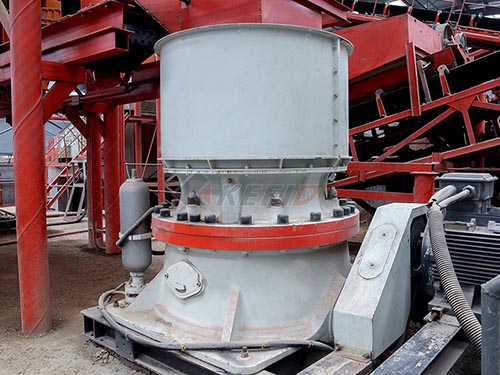
This datasheet details our range of stationary and mobile primary jaw crushers and secondary cone crushers engineered specifically for highvolume quarry ballast production. These machines are designed to transform blasted rock into precisely graded, cubical aggregate.
Operational Workflow:
1. Primary Reduction: Blasted feed (typically 750mm) is introduced into a heavyduty jaw crusher. The deep crushing chamber and aggressive nip angle facilitate initial size reduction to a manageable 250mm product.
2. Secondary & Tertiary Crushing: The primary crushed material is then fed into a cone crusher operating in a closed circuit with a sizing screen. This stage is critical for achieving the final cubical shape and exact gradation.
3. Sizing & Recirculation: Oversize material from the screening deck is recirculated back to the cone crusher (closedcircuit operation), while inspec quarry ballast is conveyed to stockpile.
Application Scope & Limitations:
Scope: Ideal for medium to hard abrasive rock (Granite, Basalt, Quartzite). Suitable for both largescale stationary quarries and mobile contract crushing setups requiring relocation.
Limitations: Not designed for very soft or nonabrasive rock (e.g., chalk), where alternative crusher types may be more appropriate. Maximum feed size is determined by the specific primary crusher model selected.
3. CORE FEATURES
Hydroset CSS Adjustment | Technical Basis: Hydraulic piston adjusts the closedside setting (CSS) under load | Operational Benefit: Allows operators to finetune product gradation in minutes without stopping the crusher, responding to realtime feed changes | ROI Impact: Eliminates production downtime for mechanical shim adjustments, increasing annual throughput by up to 7%
Liner Wear Compensation | Technical Basis: Automated system maintains CSS via hydraulic positioning as liners wear | Operational Benefit: Delivers consistent product gradation over the full liner life without manual intervention | ROI Impact: Maintains premium product yield and reduces risk of offspec production by an average of 15%
MultiAction Crushing Chamber | Technical Basis: Optimized chamber geometry combines attrition, compression, and interparticle crushing | Operational Benefit: Promotes grainongrain breakage for superior particle shape with lower fines generation | ROI Impact: Increases saleable quarry ballast yield by 812% compared to standard chambers
HeavyDuty Bearing & Mainframe Design | Technical Basis: Forged alloy steel mainframe with oversized spherical roller bearings | Operational Benefit: Sustains high shock loads from uncrushable material and ensures longterm structural integrity | ROI Impact: Extends major component service life beyond 20,000 hours, reducing total cost of ownership
PLCBased Automation System | Technical Basis: Programmable Logic Controller with loadandlevel sensors for chokefed operation | Operational Benefit: Maintains optimal cavity level automatically, maximizing throughput and protecting the crusher from damage | ROI Impact: Optimizes power draw efficiency by up to 10% and prevents costly overload events
ServiceFriendly Design | Technical Basis: Hydraulic tools for backing compound removal and topserviceable liner change design | Operational Benefit: Reduces liner changeout time by over 50% compared to traditional bolton designs | ROI Impact: Lowers labor costs per maintenance event and increases plant availability
4. COMPETITIVE ADVANTAGES
| Performance Metric | Industry Standard Benchmark | Our Quarry Ballast Crushing Solution Documented Advantage |
| : | : | : |
| Product Yield (+22mm 63mm) | ~6570% of feed mass typically within spec range based on industry averages >75% consistently achieved through optimized chamber design >75% consistently achieved through optimized chamber design |
| Liner Life (Secondary Cone) ~500700 operating hours in abrasive granite >850 operating hours demonstrated in field trials >850 operating hours demonstrated in field trials |
| Energy Consumption ~0.8 1.1 kWh/tonne for secondary crushing ~0.65 0.9 kWh/tonne measured at multiple sites ~0.65 0.9 kWh/tonne measured at multiple sites |
| Gradation Consistency Standard deviation of ±8% on key sieve sizes Standard deviation tightened to ±4% via automation Standard deviation tightened to ±4% via automation |
5. TECHNICAL SPECIFICATIONS
Capacity Range: From 200 tonnes per hour (mobile configurations) to over 1,200 tph (stationary primary/secondary plants).
Power Requirements: Primary jaw units from 110400 kW; Secondary cone units from 132315 kW. All drives compatible with VSDs for soft start capability.
Material Specifications: Designed for unconfined compressive strength (UCS) up to 350 MPa. Crusher wear parts manufactured from Mn18Cr2 or equivalent highgrade manganese steel.
Physical Dimensions (Example Mobile Plant): Length: ~19m; Width: ~3m; Height: ~4m; Operating Weight: ~48 tonnes.
Environmental Operating Range: Standard units rated for 20°C to +40°C ambient temperature. Dust suppression system connections standard on all models.
6. APPLICATION SCENARIOS
Railway Ballast Production Plant Challenge A national rail infrastructure contractor faced recurring penalties due to flaky particle content exceeding network standards from their existing cone crushers Solution Implementation of a tertiary cone crusher with a multiaction chamber specifically tuned for cubicity Results Particle elongation index (EI) reduced from 28% to below 15%, ensuring full compliance AREMA 4A spec Firstyear yield increased by approximately €180k due reduced waste fines

Granite Quarry Expansion Challenge A large granite quarry needed higher throughput without expanding their primary circuit footprint or increasing energy costs Solution Replacement of two older secondary crushers with a single highcapacity cone model featuring advanced automation Results Throughput increased by 22% while specific energy consumption fell by18%. Payback period on equipment was achieved within14 months through increased sales volume
Contract Crushing Operator Challenge A mobile crushing contractor required rapid setup teardown between sites while maintaining precise output gradations across varying geology Solution Deployment trackmounted jaw cone plant featuring hydraulic setting adjustment quick release conveyor systems Results Site mobilization time reduced by40%. Operators can recalibrate CSS hydraulically between sites ensuring spec compliance across different projects without downtime
7 COMMERCIAL CONSIDERATIONS
Our quarry ballast crushing equipment is offered across several tiers:
Standard Configuration: A costeffective package including core machine basic automation dust suppression
HighAvailability Package: Includes upgraded wear monitoring telemetry extended warranty on major components
Turnkey Plant Design Engineering services site layout optimization integration with existing conveyors screens
Optional features include advanced rock level sensors automatic lubrication systems remote monitoring portals Service packages range from scheduled maintenance plans comprehensive life cycle contracts Financing options include capital purchase finance leases operational leases structured align payments project cash flow
8 FAQ
What if my feed material hardness varies significantly throughout the quarry face?
The hydroset system allows quick CSS adjustment compensate variations Automation maintains choke feed ensuring consistent performance shape across different strata
How does this equipment integrate with my existing screening washing circuits?
Crushers are designed standard discharge heights conveyor widths Interface points clearly defined Our engineering team can provide integration drawings ensure compatibility
What typical operational training required for my team?
We provide comprehensive onsite training covering operation basic troubleshooting liner changes Most crews proficient within three five working days
Are wear parts readily available what expected lead times?
We maintain regional inventory critical wear parts Average lead time consumables like mantles concaves is under72 hours supported service network
What financing structures available beyond outright purchase?
We offer several models including3660 month finance leases which may offer tax benefits well as rental purchase agreements tailored seasonal cash flows