
wate é triturador de cone

What Is A Cone Crusher? (And How It Powers Crushing Operations)
The cone crusher stands as a fundamental and highly efficient workhorse within the aggregate production, mineração, and mineral processing industries. Its primary mission? To take relatively large rocks fed from primary crushers (like jaw crushers) and systematically reduce them into significantly smaller, uniformly sized particles suitable for further processing or direct use. Understanding its function and mechanics is key to optimizing crushing circuits.
Função principal: Esmagamento por compressão
No seu coração, a cone crusher operates on the principle of compressive force. Unlike impact crushers that smash rock with hammers or blow bars, a cone crusher squeezes the feed material between two essential surfaces:
1. The Mantle: This is a moving conical surface attached to a rotating vertical shaft (o eixo principal). It gyrates within the crushing chamber.
2. The Concave: This is a fixed outer liner forming the walls of the crushing chamber. It's typically made of manganese steel for wear resistance.
Como funciona: O Ciclo de Esmagamento
1. Entrada de feed: Rock enters the top of the crushing chamber through the feed opening.
2. Compression Zone: As the mantle gyrates eccentrically (it rotates while its base moves in a circular path), it periodically moves towards and away from the concave liner.
3. Rock Reduction: When the mantle moves towards the concave, it compresses the trapped rock against this stationary surface. This immense pressure fractures the rock along its natural cleavage planes.
4. Descarga: The crushed material falls downward under gravity each time the mantle moves away from the concave during its gyration cycle. Smaller particles pass through the gap between the mantle and concave at the bottom – this gap is known as the Closed Side Setting (CSS).
5. Controle de tamanho: The CSS is the critical parameter determining the final product size output from a cone crusher. A smaller CSS produces finer material; a larger CSS produces coarser material.
Componentes:
Quadro Principal: Fornece integridade estrutural.
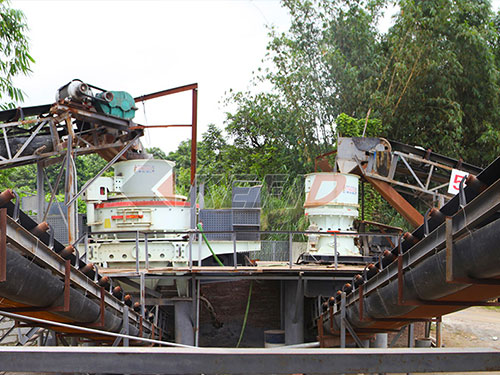
Head & Montagem do Manto: A superfície de esmagamento cônica móvel.
Forros côncavos (Bowls): The fixed outer crushing surfaces; replaceable wear parts.
Eixo Principal: Transmits rotation and eccentric motion to the head/mantle assembly.
Montagem Excêntrica: Creates the gyratory motion of the mantle