
Sustainable Iron Ore Crushing Plant Procurement
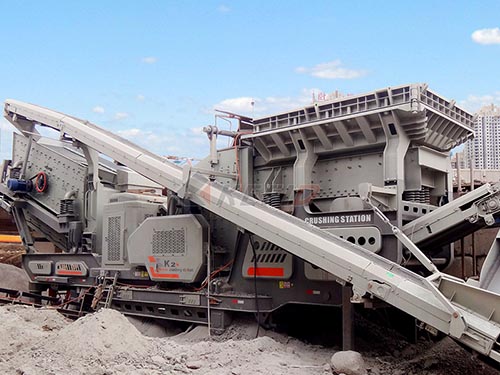

Título do conteúdo: Sustainable Iron Ore Crushing Plant Procurement: Engineering for Lower Operating Costs and Environmental Compliance
1. ABERTURA ACIONADA POR PAINPOINT
Are escalating energy costs consuming 3040% of your crushing plant’s operational budget? Are you facing regulatory pressure to reduce Scope 1 and Scope 2 emissions without sacrificing throughput? Do frequent liner changes and unscheduled downtime for your primary and secondary crushers reduce your effective utilization rate below 75%?
Para gerentes de fábrica e empreiteiros de engenharia, o desafio é claro: traditional iron ore crushing circuits are energyintensive (often consuming 46 kWh por tonelada) and generate significant fines, reduzindo o rendimento geral. The question is not if you need to modernize, mas como to procure a sustainable iron ore crushing plant that balances high availability (targeting >92%) with a measurable reduction in carbon footprint and total cost of ownership (TCO). This procurement guide addresses those specific operational and financial hurdles.
2. VISÃO GERAL DO PRODUTO
UM sustainable iron ore crushing plant is an integrated processing system designed to reduce runofmine (ROM) ore from 1200mm to a final product of 40mm or 25mm, optimized for downstream grinding or direct shipping. The operational workflow focuses on energy efficiency and material conservation:
- Redução Primária: Highcapacity gyratory or jaw crusher (600800 TPH) com variador de frequência (VFD) to match feed rate, reducing peak power demand.
- Secundário & Britagem Terciária: Highpressure grinding rolls (HPGR) or cone crushers operating in closed circuit with vibrating screens to minimize recirculating load.
- Gestão de Multas: Integrated dry magnetic separation or dust collection systems to recover iron values from fines and reduce waste.
- Transporte & Estoque: Energyefficient belt conveyors with regenerative drives and covered transfer points to control fugitive dust.
- Classificação de capacidade: 250 1,200 TPH (nominal), com base na densidade aparente do minério de 2.4 t/m³
- Requisitos de energia: 800 3,500 kVA (total installed), 480V/3phase/60Hz or 690V/3phase/50Hz
- Especificações de materiais: Crushable feed size up to 1200mm; feed moisture <8% (dry circuit); resistência à compressão até 350 MPa
- Dimensões Físicas: Primary module: 15m x 8m x 12m (CxLxA); Secondary/Tertiary module: 25m x 12m x 15m; Conveyor lengths variable up to 500m
- Faixa operacional ambiental: Temperatura ambiente: 10°C a +50°C; Altitude: up to 4,000m above sea level (com desclassificação); Dust concentration: projetado para <50 mg/Nm³ na fonte
- Níveis de preços de equipamentos:
- Recursos opcionais: Advanced AIbased feed optimization ($150k), extended warranty on wear parts (5 anos, $250k), remote monitoring center setup ($80k)
- Pacotes de serviços:
- Opções de financiamento: Cidade arrendada (3660 meses), equipmentasaservice (EaaS) with perton pricing ($0.80$1.20/tonelada processada), or traditional financing at 46% APR for qualified buyers.
Escopo de aplicação: Best suited for medium to largescale operations (210 MTPA) processing hematite, magnetita, ou minérios de goethita. Limitações: Não recomendado para altamente abrasivos, minérios argilosos (>15% umidade) sem modificações de pré-seleção.
3. RECURSOS PRINCIPAIS
Sistemas de acionamento de alta eficiência | Base Técnica: Permanent magnet synchronous motors (PMSM) and VFDs replace induction motors | Benefício Operacional: Seus operadores verão um 1520% reduction in kWh per ton processed | Impacto do ROI: Lower energy bills by $0.50$1.20 por tonelada, depending on local power tariffs
Intelligent Liner Profile Design | Base Técnica: Análise de elementos finitos (FEA) optimized crushing chambers for iron ore | Benefício Operacional: This addresses your challenge of premature wear; liner life extends by 2535% in secondary crushers | Impacto do ROI: Reduces annual wear parts procurement costs by 1822%
ClosedCircuit Dry Classification | Base Técnica: Highfrequency vibrating screens with polyurethane decks and airknife systems | Benefício Operacional: Melhora a consistência do produto (Alvo P80) and reduces overgrinding | Impacto do ROI: Increases yield by 35%, directly adding revenue per ton of ore processed
Supressão de poeira integrada | Base Técnica: Engineered fogging nozzles and enclosed chutes at transfer points | Benefício Operacional: Your site will meet PM10 and PM2.5 regulatory limits without waterlogging the ore | Impacto do ROI: Avoids potential fines of $10k$50k per violation and reduces water consumption by 40%
Plataforma de Manutenção Preditiva | Base Técnica: IoT sensors monitoring vibration, temperatura, and oil condition | Benefício Operacional: Os dados de campo mostram um 30% redução no tempo de inatividade não planejado | Impacto do ROI: Saves $200k$500k annually in lost production and emergency repair costs
Design modular montado em skid | Base Técnica: Pré-montado, prewired modules on structural steel skids | Benefício Operacional: Your engineering contractors will reduce site installation time by 40% | Impacto do ROI: Accelerates project payback by 35 meses

4. VANTAGENS COMPETITIVAS
| Métrica de desempenho | Padrão da Indústria (Planta Convencional) | Solução sustentável de britagem de minério de ferro | Vantagem (% Melhoria) |
| : | : | : | : |
| Consumo de energia | 5.5 7.0 kWh/tonelada | 4.0 5.2 kWh/tonelada | 2025% redução |
| Disponibilidade Efetiva | 8287% | 9094% | 810% melhoria |
| Custo de peças de desgaste | $0.35 $0.50/tonelada | $0.25 $0.35/tonelada | 2030% redução |
| Geração de Multas (0.075milímetros) | 1218% | 812% | 3040% redução |
| Consumo de água (Controle de poeira) | 1525 litros/tonelada | 812 litros/tonelada | 4050% redução |
| Carbon Emissions (Escopo 2) | 3545 kg CO2/ton | 2532 kg CO2/ton | 2028% redução |
5. ESPECIFICAÇÕES TÉCNICAS
6. CENÁRIOS DE APLICAÇÃO
Magnetite Beneficiation Plant, Austrália Ocidental | Desafio: Altos custos de energia ($0.18/kWh) and strict carbon tax compliance were eroding margins on a 5 MTPA operation. O circuito existente tinha 78% disponibilidade. | Solução: Procured a sustainable iron ore crushing plant with HPGRs and PMSM drives, replacing old cone crushers. | Resultados: O consumo de energia caiu de 6.8 para 4.9 kWh/tonelada (28% redução). Availability increased to 93%. Annual carbon tax liability reduced by $1.2M. Período de retorno: 18 meses.
Minério de envio direto de hematita (DSO) Operação, Brasil | Desafio: Excessive fines generation (22%) in primary crushing was reducing lump ore premium pricing by $8/ton. Dust complaints from local community. | Solução: Installed a sustainable plant with intelligent chamber design and dry fog dust suppression. | Resultados: Geração de multas reduzida para 11%. Product premium recovered. Dust emissions compliant with local standards. Community complaints dropped by 90%.
Projeto Greenfield, Northern Canada | Desafio: Remote site required minimal onsite construction and low maintenance intervention. Extreme cold (40°C) required robust equipment. | Solução: Deployed a modular, skidmounted sustainable iron ore crushing plant with heated enclosures and synthetic lubricants. | Resultados: Instalação no local concluída em 6 semanas (contra. 14 weeks for conventional). First ore crushed on schedule. Intervalos de manutenção estendidos por 40% due to predictive monitoring.
7. CONSIDERAÇÕES COMERCIAIS
Configuração básica (250400 TPH): $2.5M $4.0M (inclui mandíbula primária, cone secundário, telas, transportadores)
Configuração padrão (500800 TPH): $5.5M $9.0M (includes gyratory primary, HPGR, dry classification, sistema de poeira)
Configuração Premium (9001,200 TPH): $12M $18M (includes dual HPGR, full predictive platform, regenerative conveyors)
Básico: 2year parts warranty, suporte remoto
Desempenho: 5year TCO guarantee, onsite technician for first year, guaranteed availability >90%
8. Perguntas frequentes
P: How does a sustainable iron ore crushing plant handle highclay or sticky ores?
UM: Para minérios com >12% moisture or high clay content, we recommend adding a grizzly feeder and a wet scrubber circuit upstream. The standard dry configuration is not suitable for these conditions without modification.
P: Qual é o prazo de entrega típico desde o pedido até o comissionamento?
UM: For a standard 500 Planta de TPH, engineering and fabrication takes 2024 semanas. Site installation and commissioning requires an additional 812 semanas, depending on site readiness.
P: Can this plant be integrated with my existing downstream ball mill circuit?
UM: Sim. The plant is designed with a standard P80 output of 1215mm, which is compatible with most SAG and ball mill feed requirements. We provide a guarantee on product size distribution.
P: What is the expected ROI for the predictive maintenance platform?
UM: Dados de campo de 15 installations shows an average reduction of 30% in unplanned downtime. Por um 5 Planta MTPA, this translates to an additional 150,000 tons of production per year, valued at $3M$6M in revenue.
P: Are there financing options for international buyers?
UM: Sim. We offer structured financing through our partner banks for projects in Africa, Ámérica do Sul, e Ásia. O pagamento mínimo inicial é 20%, with terms up to 60 meses.
P: How does the plant achieve lower carbon emissions?
UM: Primarily through reduced energy consumption (VFDs and HPGRs) and lower recirculating loads. The regenerative conveyors also feed power back into the grid during downhill sections. Typical Scope 2 emissions are 2530% lower than a conventional plant.
P: What is the warranty on the crusher liners?
UM: We provide a guaranteed minimum liner life based on your specific ore abrasion index (Ai). For Ai 0.5, we guarantee 2,800 horas.