
Fabricação de britagem
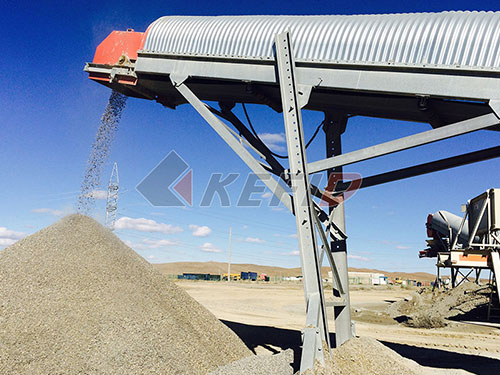

The Art and Science of Crushing: Unlocking Value from Raw Materials
Introdução: The Foundational Step
In the vast landscape of industrial processing, from mining and quarrying to recycling and chemical production, lies a fundamental operation that shapes the destiny of raw materials: Esmagamento. Often perceived as a brute-force activity, crushing is, na realidade, a sophisticated blend of physics, engenharia, material science, and operational strategy. It is the critical first step in liberating valuable components from ores, preparing aggregates for construction, reducing waste volume for disposal or recycling, and creating feedstock for further refinement. This article delves deep into the process of crushing ("Fabricação de britagem"), exploring its principles, equipment types, considerações operacionais, optimization strategies, and emerging trends.
1. Understanding the Core Objective: Redução de tamanho
Na sua essência, crushing aims to reduce large solid particles (lumps) em fragmentos menores. This size reduction serves several crucial purposes:
Libertação: Breaking down ores to separate valuable minerals from worthless gangue material.
Exposure: Increasing surface area for more efficient chemical reactions (por exemplo, lixiviação) or combustion.
Homogeneização: Creating a more uniform particle size distribution for consistent downstream processing.
Redução de volume: Minimizing bulk for easier handling, transporte (por exemplo, desperdício), or storage.
Preparação: Producing specific particle sizes required for subsequent processes like grinding (cominuição), screening separation (classificação), or direct use (por exemplo, agregados de construção).
The effectiveness of crushing hinges on applying forces sufficient to overcome the internal cohesive forces binding the particles together.
2. Mechanisms of Breakage: How Forces Fragment Solids
Material failure under load occurs through several primary mechanisms:
Compressão: Applying opposing forces towards each other on the particle. This is dominant in jaw crushers and cone crushers. Particles fracture along natural planes of weakness when compressive stress exceeds their strength.
Impacto: Delivering high-energy blows delivered by hammers or impellers striking particles at high velocity. Hammer mills and impact crushers rely heavily on this mechanism. Rapid energy transfer causes sudden fracture.
Atrito: Rubbing action between particles themselves or between particles and machine surfaces under pressure. This generates fines but is less efficient as a primary breakage mechanism; it's more significant in grinding stages but plays a role in some crusher designs like roll crushers.
Cisalhamento: Applying forces parallel but opposite