
Controle de qualidade de mineração de cascalho de areia ODM

1. ABERTURA ACIONADA POR PAINPOINT
Managing a sand and gravel operation means contending with relentless pressure on margins and predictability. Material de alimentação inconsistente, fluctuating moisture content, and the constant demand for precise specification aggregates create significant operational hurdles. Você está enfrentando esses desafios específicos?
Unpredictable Yield & Qualidade do Produto: Variable raw feed leads to inconsistent gradation and excessive fines, resulting in offspec product that cannot be sold at premium rates or requires costly reprocessing.
Alto tempo de inatividade operacional: Frequent clogging in screens and crushers, coupled with unplanned maintenance on wear parts due to abrasive materials, directly reduces plant availability and increases labor costs.
Água Ineficiente & Uso de energia: Ineffective washing and classification processes waste millions of gallons of water annually and consume excessive power, driving up utility costs and environmental compliance burdens.
LaborIntensive Quality Control: Reliance on manual sampling and lab testing creates lag times in process adjustment, leading to prolonged runs of noncompliant material before corrections are made.
A questão central para os gerentes de fábrica é esta: how can you deploy a sand gravel mining quality control system that acts as a continuous, automated guardian of your process—optimizing yield, protecting equipment, and ensuring every ton meets spec from the first load to the last?
2. VISÃO GERAL DO PRODUTO: INTEGRATED PROCESS CONTROL & MONITORING SYSTEM
The solution is an integrated sand gravel mining quality control sistema. Esta não é uma única máquina, but a networked suite of sensors, samplers, and software designed to monitor and manage your crushing, triagem, and washing circuit in realtime.
Fluxo de Trabalho Operacional:
1. Monitoramento Contínuo: Onbelt analyzers and point sensors continuously measure key parameters such as particle size distribution, teor de umidade, and clay concentration at critical transfer points.
2. Feedback automatizado & Controlar: Data is fed into a central Process Control System (PCS), which compares realtime readings against target specifications.
3. Precision Adjustment: The PCS automatically sends adjustment signals to connected equipment—such as crusher gap settings, screen vibration frequency, or water solenoid valves—to correct deviations without operator intervention.
4. Verified Sampling: An automated crossbelt sampler collects representative composite samples at programmed intervals for laboratory verification, providing auditable quality records.
5. Centralized Reporting: All data is logged and displayed on a central HMI or remote dashboard, providing full visibility into plant performance, yield efficiency, and quality compliance.
Escopo de aplicação & Limitações:
Escopo: Ideal for medium to largescale sand and gravel operations producing concrete/ asphalt aggregates, areias especiais, or golf course materials. Effective in both pitrun and dredgefed applications.
Limitações: System effectiveness is dependent on proper sensor placement and calibration. Initial integration requires plant survey and may involve modest mechanical modifications for sensor installation. Not typically costjustified for very small or temporary sites.
3. RECURSOS PRINCIPAIS
Análise de tamanho de partícula em tempo real | Base Técnica: Noncontact laser diffraction or digital image processing | Benefício Operacional: Instant feedback on crusher performance and screen efficiency allows for immediate adjustment to maintain target gradation bands | Impacto do ROI: Reduces offspec production by up to 15%, maximizing saleable tonnage.
Automated Moisture Control | Base Técnica: Microwavebased or nearinfrared (NIR) moisture sensing with PLCintegrated valve control | Benefício Operacional: Dynamically adjusts spray bar flow rates based on feed moisture, ensuring optimal washing efficiency without saturating material | Impacto do ROI: Cuts fresh water consumption by an average of 2030% and reduces downstream dewatering load.
Monitoramento de peças de desgaste & Prediction | Base Técnica: Vibration analysis sensors paired with algorithmic wearrate modeling specific to liner profiles | Benefício Operacional: Provides actionable alerts on crusher mantle/concave and screen cloth condition before catastrophic failure occurs | Impacto do ROI: Enables scheduled maintenance during planned downtime; dados de campo mostram um 40% reduction in unplanned stoppages due to wear part failure.
Centralized Process Control Interface | Base Técnica: Industrial SCADA software with customizable logic for closedloop control | Benefício Operacional: Gives operators a singlepaneofglass view of the entire circuit’s health and quality parameters from the control room | Impacto do ROI: Melhora a eficiência geral da planta (OPE) by optimizing multiple variables simultaneously; reduces reliance on highly experienced operators for constant tuning.
Automated Representative Sampling | Base Técnica: Programmable crossstream sampler with sealed sample collection system | Benefício Operacional: Provides legally defensible, representative samples for lab analysis without exposing personnel to hazardous collection points | Impacto do ROI: Creates accurate quality records for customer certification while improving site safety; eliminates manual sampling labor.
Clay & Fines Content Monitoring | Base Técnica: Optical turbidity sensors in wash water circuits combined with feedforward data from upstream size analyzers | Benefício Operacional: Early detection of high clay content allows preemptive adjustment of scrubbing intensity or retention time in classifying tanks | Impacto do ROI: Protects final product quality (por exemplo, sand equivalency tests), reducing reject piles by ensuring consistent adherence to strict specs like ASTM C33.
4. VANTAGENS COMPETITIVAS
| Métrica de desempenho | Prática padrão da indústria | Integrated Quality Control Solution | Vantagem (% Melhoria) |
| : | : | : | : |
| Consistência de gradação (Passagem 200 Peneira) | Manual sampling every 24 horas; lag time for lab results leads to drift. | Continuous realtime monitoring with automatic feedback loops to crusher/screen settings. | Variation reduced by up to 70%, ensuring tighter spec compliance. |
| Water Usage per Ton Processed| Fixedrate spray bars or manual valve adjustment based on visual assessment.| Dynamic flow control tied to realtime moisture sensors on incoming feed.| Redução de 2035% in fresh water consumption documented across multiple sites. |
| Unplanned Downtime Due to Wear| Reactive changeouts after noted drop in production or catastrophic failure.| Predictive analytics schedule replacements during planned maintenance windows.| Redução de até 40% in emergency downtime events related to liner wear. |
| Yield of Saleable Specification Material| Batchbased process control often results in startup/shutdown transition material being offspec.| Continuous optimization maintains target parameters throughout run time.| Aumento de 510% in saleable yield from the same raw feed volume. |
5. ESPECIFICAÇÕES TÉCNICAS
Compatibilidade de capacidade do sistema: Designed for plants processing from 150 acabar 1,000 toneladas por hora (TPH).
Requisitos de energia: Dependent on sensor suite; typical auxiliary power draw is 480V/3Ph/60Hz (or regional equivalent), sob 25 kVA total.
Especificações de materiais: All contactpoint components (sampler cutters) utilize tungsten carbide or hardened stainless steel liners suitable for highly abrasive C33/C144 aggregates.
Sensor Operating Environment: Rated IP66/IP67 for dust ingress protection; operational temperature range 20°C to +55°C (4°F to +131°F).
Control System Interface: Standard communication protocols include Ethernet/IP Profinet; compatible with most major PLC platforms (Rockwell AllenBradley Siemens).
Dimensões Físicas & Integração: Projeto modular; specific dimensions vary per plant layout but require minimal structural modification for installation at designated transfer points.
6. CENÁRIOS DE APLICAÇÃO
Concrete Aggregate Producer Challenge:
A large readymix supplier was consistently failing stringent state DOT specifications for fine aggregate cleanliness (clay lumps), levando a cargas rejeitadas e atrasos no projeto.
Solução:
Implementation focused on clay/fines monitoring within their washing circuit using optical turbidity sensors linked directly backtothe log washer controls
Resultados:
Within one month achieved consistent compliance with ASTM C33 Section requirements reducing load rejections from ~8% downto lessthan05%. This also allowed themto commanda premium pricefor certified material
DredgeFed Sand Operation Challenge:
A river dredging operation struggledwith highly variable moisturecontentin their pitrun material causing severe blindingof final sizing screensand erratic stockpile drainage
Solução:
Installationof microwave moisture metersat two key feed pointswith dataintegrated intothe spray bar PLCsystemon their primary screening tower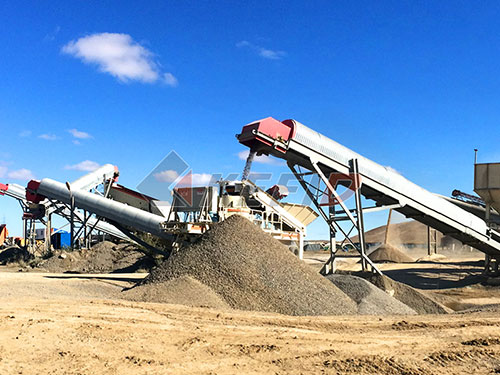
Resultados:
Automated modulationof wash water eliminated screen blinding events which had previously caused ~10 hours/weekof unplanned downtime Product consistency improved enabling entry into highervalue concrete sand markets Plant throughput increasedby an averageof12%
7 CONSIDERAÇÕES COMERCIAIS
A modern sand gravel mining quality control system representsa strategic capital investmentin operational precisionand cost reduction Pricingis typically tieredbasedon the scopeof integration:
Tier I – Basic Monitoring Package ($): Includes core particle size analyzerand centralized dashboardfor visualization Idealfor operations seekingdata transparencybefore movingto full automation
Tier II – ClosedLoop Control Package ($$): Adds automated feedback controlsfor crushers screensand water valves plusone predictive maintenance sensor module The most common selectionfor achieving direct ROI
Tier III – Full Plant Optimization Suite ($$$): Comprehensive integration including all Tier II elements plus additional sensorsfor slurry density pHand full advanced analytics reporting For large multipit operations requiring enterpriselevel oversight
Optional features include remote telematics access mobile operator interfacesand extended calibration support packages Multiple financing options are commonly available including capital lease programsor payforperformance models tiedto documented savingsin water energyor yield improvement
8 Perguntas frequentes
Q1 How long does it taketo integrate this system intoan existing plant?
A A typical integration projectfrom initial surveyto full commissioning takes between610 weeks dependingon plant complexityand scope The systemis designedfor phased installationto minimize disruption
Q2 Can the control system interfacewith our existing PLCsand operator panels?
A Yes Industrystandard communication protocols ensure compatibilitywith most major industrial automation platforms A preinstallation audit confirms all interface requirements
Q3 What kindof trainingdo our operators need?
A We provide comprehensive onsite training covering normal operation alarm responseand basic troubleshooting This typically consistsof two daysof handson instructionfor your control roomand maintenance teams
Q4 How are the accuracy claimsfor particle size measurement validated?
A System calibrationis performed using certified reference materialsand verified against parallel mechanical sieve analysis tests conductedby an independent lab Ongoing accuracyis maintainedthrough scheduled validation checks as partof standard service agreements
Q5 What isthe expected payback periodon this investment?
A Basedon field datafrom similar installations payback periods rangefrom1424 months Primary drivers are increased saleable yield reductionsin water energy costsand decreased unplanned downtime Your specific geologyand product mix will determine exact figures which we model during the proposal phase
Q6 Does this eliminate our needfor laboratory testing?
A No The system enhances lab testing by providing continuous dataand taking representative automated samples It shifts your lab’s role from process troubleshootingto highvalue verification auditing allowingfewer more targeted tests