
Personalização de exportadores de mineração de calcário


1. ABERTURA ACIONADA POR PAINPOINT
Gerenciar a exportação de calcário de alta qualidade é uma operação de precisão onde a consistência, pureza, e o rendimento determinam diretamente a lucratividade. Seus processos atuais estão causando gargalos dispendiosos?? Os desafios comuns incluem:
Tamanho de feed inconsistente: A distribuição descontrolada do tamanho das partículas da britagem primária leva ao entupimento a jusante em britadores secundários e peneiras, aumentando o tempo de inatividade não planejado em uma estimativa 1520%.
Entrada de contaminantes: Solo, argila, e impurezas de sílica não removidas na fase primária comprometem a pureza química (Conteúdo de CaCO3) do seu produto final, arriscando a rejeição da remessa e a erosão do preço premium.
Baixa eficiência de britagem primária: Britadores de mandíbula ou de impacto desatualizados enfrentam a natureza abrasiva do calcário, resultando em custos excessivos de substituição de peças de desgaste e rendimento abaixo do ideal das frações de exportação desejadas.
Altos custos operacionais: Ciclos de manutenção frequentes, alto consumo de energia por tonelada processada, e triagem manual para controle de contaminação aumentam seu custo por tonelada exportada.
Seu estágio primário de processamento está equipado para fornecer um resultado consistente?, alimentação limpa que maximiza a capacidade e a longevidade de toda a sua lavagem a jusante, classificação, e circuito de carregamento?
2. VISÃO GERAL DO PRODUTO
O Grizzly Feeder é um serviço pesado, solução de alimentação primária e escalpelamento robustamente projetada para o estágio inicial de processamento de calcário. Ele serve como o primeiro ponto de contato crítico para material de pedreira, garantindo uma operação downstream estável.
Fluxo de Trabalho Operacional:
1. Caminhões de pedreira despejam matérias-primas, calcário não dimensionado diretamente no convés de serviço pesado do alimentador.
2. À medida que o deck vibra com um movimento linear, materiais finos (solo subdimensionado, argila, e pequenas pedras) passar pelas barras cinzentas (deck primário), ignorando o britador primário para reduzir o desgaste.
3. Material de tamanho grande (a rocha calcária alvo) é transportado ao longo do convés e descarregado na tremonha do britador primário a uma taxa controlada.
4. A taxa de alimentação controlada evita a sobrecarga do britador e o derramamento da pilha.
Escopo de aplicação: Ideal para operações em pedreiras de alta tonelagem que alimentam britadores primários de mandíbula ou giratórios. Eficaz para remover finos naturais e contaminantes leves antes da trituração.
Limitações: Não é um dispositivo de esmagamento; o dimensionamento final é realizado por equipamento a jusante. O desempenho em argila extremamente pegajosa pode exigir soluções adicionais, como uma tela de rolo ou lavagem de grizzly.
3. RECURSOS PRINCIPAIS
Deck Grizzly Pesado | Base Técnica: Construção em aço manganês fundido ou barra de aço AR400 | Benefício Operacional: Suporta impacto direto de grandes pedreiras (até 1500 mm) com deformação mínima ou falha por fadiga | Impacto do ROI: Reduz a frequência de substituição do deck em até 40% em comparação com decks de aço padrão.
Taxa de alimentação controlada | Base Técnica: Inversor de frequência variável (VFD) em motores vibratórios de eixo excêntrico duplo | Benefício Operacional: Os operadores podem combinar com precisão a produtividade do alimentador com a capacidade do britador primário em tempo real, eliminando condições de alimentação sufocada ou fome | Impacto do ROI: Otimiza o consumo de energia do britador e o perfil de desgaste, melhorando o rendimento geral da planta, 812%.
Escalpelamento Eficaz | Base Técnica: Espaçamento ajustável da barra grizzly (normalmente 50150 mm) defina para o tamanho alvo do pré-escalpo | Benefício Operacional: Remove uma porção significativa de finos e contaminantes antes que eles entrem e causem desgaste na câmara do britador primário | Impacto do ROI: Reduz os custos de desgaste das camisas do britador em uma estimativa 2530% e melhora a pureza do produto final.
Sistema de acionamento de baixa manutenção | Base Técnica: Rolamentos de rolos selados em labirinto com sistema de purga de graxa em um conjunto vibrador reforçado | Benefício Operacional: Os rolamentos são protegidos contra entrada de poeira; a purga de graxa expele o lubrificante contaminante sem desmontagem | Impacto do ROI: Prolonga a vida útil do rolamento além 20,000 horas em condições normais, reduzindo eventos de manutenção planejada.
Seções panorâmicas modulares | Base Técnica: Revestimentos de deck Bolton e seções de barra grizzly substituíveis | Benefício Operacional: Seções desgastadas ou danificadas podem ser substituídas individualmente sem remover toda a estrutura do alimentador | Impacto do ROI: Reduz em mais de tempo de inatividade para substituição do revestimento 60% e reduz o custo de estoque de peças de reposição.
Sistema de montagem resiliente | Base Técnica: Molas helicoidais de aço ou suportes de cisalhamento de borracha ajustados à massa do alimentador & AVC | Benefício Operacional: Isolados 90% de forças dinâmicas da estrutura de suporte, impedindo a transmissão de vibração para tremonhas de solo ou estruturas de aço de suporte | Impacto do ROI: Elimina reparos de fissuras estruturais e reduz custos de fundação.
4. VANTAGENS COMPETITIVAS
| Métrica de desempenho | Solução padrão da indústria | Nossa solução de alimentador Grizzly para serviços pesados | Vantagem (% Melhoria) |
| : | : | : | : |
| Expectativa de vida no convés| Barras de aço padrão T1 (1218 meses) | Manganês fundido / Barras AR400 (2436 meses) | +100% vida útil |
| Eficiência Energética| Unidades de velocidade fixa (consumo constante de alta potência) | Motores Vibradores Controlados por VFD (potência ajustável)| Até 35% redução do uso de energia durante cargas fora de pico |
| Eficiência de Scalping| Pardo Estático (propenso a cegar com material pegajoso)| Ação de vibração linear HighStroke| +50% remoção eficaz de finos em condições úmidas |
| Integridade Estrutural| Construção de deck soldado (rachaduras em pontos de estresse)| Deck Modular BoltOn & Forros| Permite reparos pontuais; elimina a substituição completa do deck |
5. ESPECIFICAÇÕES TÉCNICAS
Gama de modelos & Capacidade: Série GFH1200 a GFH2400; Taxas de alimentação de 600 MT/h para 2,500 MT/hora.
Requisitos de energia: Motores vibratórios duplos da 2 x 15 kW para 2 x 45 kW; Tensão de alimentação padrão: 415V/50Hz ou personalizável.
Especificações de materiais: Estrutura principal Chapa de aço pesada fabricada; Deck Hardox 450 base com forros Bolton AR400; Barras Grizzly fundidas em aço manganês (opcional); Revestimentos laterais em aço resistente à abrasão.
Dimensões Físicas: Larguras de abertura de alimentação de 1200 mm a 2400 mm; Comprimentos de 4.500 mm a 7.500 mm; Faixa de peso aproximada: 8 – 22 toneladas.
Faixa operacional ambiental: Projetado para temperaturas ambientes de 20°C a +50°C; Motores protegidos contra poeira (IP65); Pode ser fornecido com barras de pulverização para aplicações de lavagem.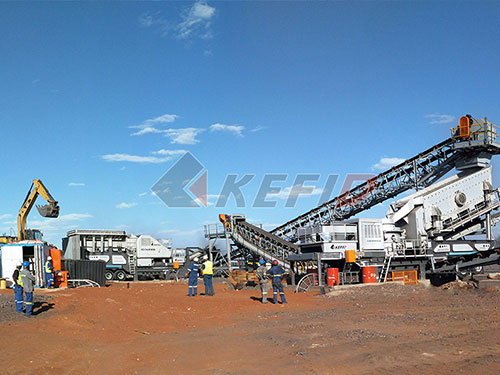
6. CENÁRIOS DE APLICAÇÃO
Exportação de calcário de grau químico de alta pureza
Desafio Um grande exportador asiático enfrentou penalidades consistentes por contaminação por sílica que excedia os limites rígidos do contrato (<1%). A pré-seleção manual era trabalhosa e não confiável.
Solução Instalação de um alimentador de grelha GFH1800 com barras precisamente espaçadas à frente da linha do britador de mandíbulas.
Resultados O alimentador escalpelou 90% de nódulos de sílex ricos em sílica e areia fina antes da britagem. Pureza do produto final consistentemente atendida <0.8% especificação de sílica dentro de seis meses.
Projeto de expansão da produtividade da pedreira
Desafio Um produtor europeu de agregados precisava aumentar o rendimento da planta em 25% mas foi limitado por sobrecargas frequentes do britador primário, causando desligamentos do sistema.
Solução Atualização do alimentador estático de sapatas para um alimentador pardo GFH2000 equipado com VFD e capacidade de taxa de alimentação controlada.
Resultados A alimentação controlada eliminou totalmente os eventos de sobrecarga do britador, permitindo taxas de alimentação máximas durante condições ideais. A planta alcançou um aumento sustentado de rendimento médio de >22%.
7. CONSIDERAÇÕES COMERCIAIS
Nossos alimentadores pardos são oferecidos em três níveis:
Dever Padrão: Para menor tonelagem (<800 MT/hora), aplicações menos abrasivas usando revestimentos Hardox.
Serviço Pesado (Recomendado): Para a maioria das operações de calcário com foco na exportação com revestimentos AR400/Manganês & Unidades VFD como padrão.
Serviço Extra Pesado: Para condições de impacto extremo (>1500mm avanço), apresentando conjuntos de vibradores reforçados & aços de liga especializados.
Recursos opcionais incluem:
Transportador de coleta subterrânea
Sistemas integrados de barras de pulverização
Pacote de montagem do rompedor de rochas
Sensores de monitoramento remoto
Os pacotes de serviços vão desde suporte básico de comissionamento até contratos abrangentes de inspeção anual que incluem relatórios de análise de vibração em componentes de acionamento.
Estão disponíveis opções de financiamento flexíveis, incluindo estruturas de leasing de equipamentos que preservam os orçamentos de despesas de capital.
8. Perguntas frequentes
Q1 Como determino o espaçamento correto das barras pardas?
O espaçamento A1 normalmente é definido em aproximadamente ~80% da configuração do lado fechado do britador primário (CSS). Nossa equipe de engenharia analisará seus dados de gradação de alimentação junto com seu perfil de tamanho de saída alvo durante a especificação do projeto.
Q2 Este equipamento pode lidar com calcário molhado ou pegajoso?
A2 Sim. O curso linear de alta energia ajuda a evitar a adesão do material em nossos decks inclinados melhor do que grades estáticas ou alimentadores de baixo curso, mas pode exigir pulverizações de limpeza periódicas se o teor de argila for excepcionalmente alto (>15%).
Q3 O que é necessário para instalação?
A3 Você precisará de fundações preparadas de acordo com nossos desenhos detalhados, juntamente com capacidade de elevação adequada no local (~1025T). Fornecemos supervisão completa da instalação como parte do nosso pacote de comissionamento, se selecionado
Q4 Como isso se integra ao meu sistema PLC/controle existente?
A4 Nosso painel de controle VFD inclui protocolos de comunicação padrão, como Modbus TCP/IP, permitindo integração perfeita na maioria dos sistemas SCADA em toda a planta para comandos centralizados de partida/parada
Q5 Quais são os prazos de entrega típicos?
A5 Os prazos de entrega variam com base na complexidade do modelo, mas geralmente variam entre doze semanas após a aprovação do projeto, em grande parte devido aos rigorosos processos de fabricação envolvidos
Q6 As peças sobressalentes estão prontamente disponíveis em todo o mundo??
A6 Sim, mantemos estoques de armazéns regionais, componentes críticos de desgaste, como barras fundidas de manganês, conjuntos de motores vibratórios, garantindo tempos de envio rápidos, minimizando possíveis riscos de tempo de inatividade