
Maldito Mandíbula

A jaw crusher is a primary crushing machine used in mining, pedreira, and construction industries to reduce large rocks, minérios, ou outros materiais duros em menores, peças mais gerenciáveis. Here’s a detailed breakdown:
Como funciona
1. Mecanismo de esmagamento:
- A jaw crusher consists of two vertical jaws—one fixed (estacionário) e um móvel (mandíbula oscilante).
- The movable jaw exerts force on the material by pressing it against the fixed jaw.
- Material is crushed progressively until small enough to pass through the bottom gap (abertura de descarga).
2. Componentes principais:
- Placa de mandíbula fixa: Attached to the crusher frame.
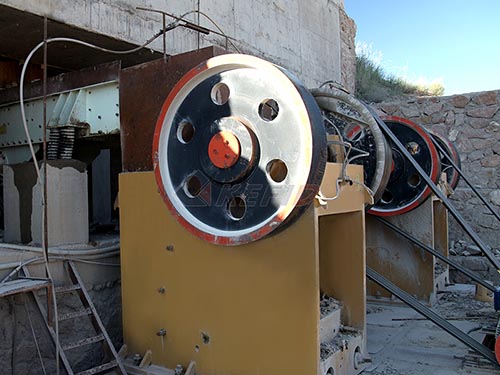
- Placa de mandíbula móvel: Driven by an eccentric shaft (pitman) that creates an elliptical motion.
- Placa de alternância: Safety mechanism to protect the crusher from overload.
- Flywheel: Stores energy for consistent crushing force.
Types of Jaw Crushers
1. Blake (Double Toggle): Older design with a pivoted swing jaw; robust but less efficient.
2. Desviar (Single Toggle): Movable jaw pivots at the bottom; simpler but limited in capacity.
3. Universal (Overhead Eccentric): Modern single-toggle design with higher efficiency and adjustability.
Aplicativos
- Primary crushing of hard materials (granito, basalto, minério de ferro).
- Reciclagem de concreto e resíduos de demolição.
- Laboratory-scale crushing for research.
Vantagens
- Simple structure, low maintenance.
- Alta taxa de redução (tipicamente 6:1 para 8:1).
- Handles abrasive materials well.
Desvantagens
- Less efficient than gyratory crushers for high-capacity needs.
- Wear-prone parts (placas de mandíbula) require regular replacement.
Maintenance Tips
- Regularly check jaw plates for wear and replace as needed.
- Lubricate bearings and eccentric shafts to prevent overheating.
- Monitor discharge settings to ensure optimal particle size output.
Would you like details on sizing, operational parameters, or comparisons with other crushers (por exemplo, cone/impact)?