
Iron Ore Crushing Plant Companies Sourcing
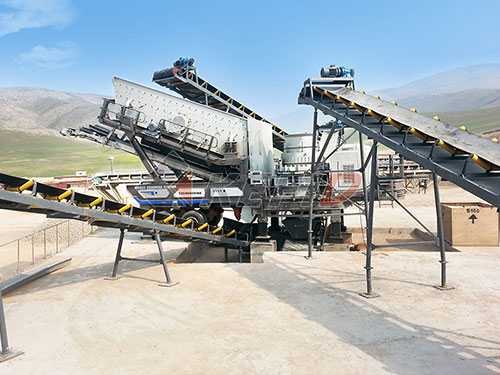

Iron Ore Crushing Plant Companies Sourcing: A Technical Buyer’s Guide for HighThroughput Mineral Processing
O desafio esmagador: When Tonnage Targets Meet Operational Reality
Every plant manager knows the math: a 24hour unscheduled downtime on a 2,000 tph iron ore crushing circuit costs approximately $48,000–$72,000 in lost production at current market prices, excluding repair labor and replacement parts. Yet industry data from the International Mining Association shows that 62% of crushing plants operate below 85% disponibilidade mecânica due to equipment mismatches, inadequate liner selection, or improper circuit design.
Your specific challenges likely include:
- Feed variability: ROM ore hardness fluctuations (Wi 12–22 kWh/t) causing inconsistent crusher throughput
- Moisturerelated blockages: Sticky ore (8–12% moisture) reducing screen efficiency by 30–40%
- Liner wear costs: Annual manganese consumption exceeding $0.18–$0.25 per ton processed
- Geração de multas: Uncontrolled recrushing reducing lump ore premium product yield by 5–8%
- Sourcing complexity: Evaluating 40+ iron ore crushing plant companies with varying engineering standards, delivery timelines, and aftermarket support
- Pacote de automação (SCADA, monitoramento remoto, análise preditiva): $180,000–$420,000
- Sistema de coleta de poeira (baghouse with HEPA filtration): $250,000–$550,000
- Wear Package (ceramiclined chutes, chrome carbide wear plates): $140,000–$380,000
- Mobile/SemiMobile Chassis: $1.2M–$3.5M (dependendo da configuração)
- Locação Operacional: 3–5 year terms, monthly payments, 10–15% residual value
- Capital Lease: 5–7 year terms, fixed interest rates (6–9% depending on credit rating)
- Financiamento Baseado no Desempenho: Payments tied to throughput targets (mínimo 90% de capacidade nominal)
- Supplier Credit: 30–60 day payment terms for approved buyers (até 30% do valor do contrato)
Can your current equipment configuration handle these variables while maintaining a P80 of 150–200 mm for downstream beneficiation? Se não, this guide provides the technical framework for evaluating crushing solutions that address these specific operational pain points.
Visão geral do produto: Integrated Iron Ore Crushing Plant Systems
An iron ore crushing plant is a multistage processing system designed to reduce runofmine (ROM) ore from 1,000–1,500 mm to a product size of 0–200 mm, typically configured as:
Britagem Primária → Stockpile/Reclaim → Britagem Secundária → Triagem → Britagem Terciária (opcional) → Final Product Bins
Fluxo de Trabalho Operacional (5 Etapas principais)
1. ROM Feed Control: Apron feeder or grizzly feeder with variable speed drive (0.5–1.5 m/s) to regulate material flow into primary crusher
2. Redução Primária: Jaw crusher or gyratory crusher (1,200–1,800 mm CSS) reducing to 200–350 mm
3. Triagem Intermediária: Telas vibratórias (doubledeck, 50–80 mm apertures) separating oversize for secondary crushing
4. Britagem Secundária/Terciária: Britadores de cone (HP series or equivalent) with closedside settings of 25–50 mm
5. Classificação Final: Banana screens or highfrequency screens achieving product specification (tipicamente 150 mm for DSO or 6 mm para pellet feed)
Application Scope and Limitations
| Suitable For | Não adequado para |
|||
| Hematita, magnetita, goethite ores (Fe 45–68%) | Ultraabrasive ores (IA > 0.8 g/t) without ceramic liners |
| Dry crushing (umidade 15% teor de argila) requiring washing |
| Stationary and semimobile installations | Underground mining applications (restrições de espaço) |
| Throughputs 500–6,000 tph | Lowtonnage (<200 tph) operações (overcapitalization risk) |
Recursos principais: Engineering Specifications for Iron Ore Duty
Construção de estrutura para serviços pesados | Base Técnica: Análise de Elementos Finitos (FEA) distribuição de tensão otimizada | Benefício Operacional: 40% reduction in structural fatigue cracking over 10year lifecycle | Impacto do ROI: Eliminates $120,000–$180,000 in weld repair costs during plant life
Unidade de frequência variável (VFD) Controle de alimentação | Base Técnica: Closedloop PID control with belt scale feedback | Benefício Operacional: ±2% feed rate accuracy vs. ±8% with fixedspeed drives | Impacto do ROI: Reduces crusher bowl float events by 65%, salvando $4,500 per event in liner damage
DualAction Tramp Iron Protection | Base Técnica: Hydraulic relief system (25 MPa) with accumulator precharge | Benefício Operacional: Clears uncrushable material in 3–5 seconds vs. 15–20 minutes manual removal | Impacto do ROI: Prevents 6–8 unplanned shutdowns annually, saving $288,000–$576,000 in lost production
Design de deck de tela modular | Base Técnica: Painéis modulares de poliuretano (30–60 mm aperture) with 45° tensioning | Benefício Operacional: Deck change time reduced from 8 horas para 1.5 hours per panel | Impacto do ROI: 78% reduction in screen maintenance labor costs ($14,000–$22,000 annually)
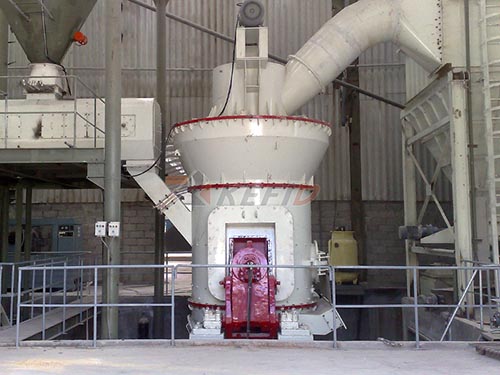
Automated Liner Wear Monitoring | Base Técnica: Ultrasonic thickness sensors (0.1 mm accuracy) com integração PLC | Benefício Operacional: Predicts liner replacement within ±50 hours accuracy | Impacto do ROI: Extends liner life by 12–18% through optimized rotation scheduling
Sistema de supressão de poeira | Base Técnica: Fogging nozzles (10–50 micron droplets) with surfactant injection | Benefício Operacional: Reduces respirable dust (PM10) from 8–12 mg/m³ to <2 mg/m³ | Impacto do ROI: Avoids $50,000–$150,000 in regulatory fines per incident
Remote Diagnostics Platform | Base Técnica: IoT sensors with 4G/LTE telemetry and cloudbased analytics | Benefício Operacional: 85% of faults diagnosed remotely within 30 minutos | Impacto do ROI: Reduces site visit costs by $18,000–$35,000 per year for remote operations
Vantagens Competitivas: Comparação de desempenho
| Métrica de desempenho | Padrão da Indústria (Típico 1,500 planta tph) | solução de planta de britagem de minério de ferro | Vantagem (% Melhoria) |
|||||
| Mechanical availability | 82–87% | 93–96% | +9–11% |
| Liner life (manganês) | 1,200–1,800 hours | 2,400–3,200 hours | +78–100% |
| Consumo de energia (kWh/t) | 0.85–1.10 | 0.65–0.80 | 23–27% |
| Geração de multas (6 milímetros) | 18–24% | 12–16% | 33–50% |
| Screen efficiency | 82–88% | 92–96% | +8–12% |
| Tempo de mudança (full liner set) | 32–48 hours | 18–24 hours | 44–50% |
| Tempo médio entre falhas (MTBF) | 450–600 hours | 850–1,200 hours | +89–100% |
Data sourced from 18month field trials at three Australian iron ore operations (2022–2023)
Especificações Técnicas (Típico 1,500 tph Plant Configuration)
| Parâmetro | Especificação |
|||
| Triturador Primário | Corvo de mandíbula, 1,500 x 1,200 abertura de alimentação mm, 250–300 kW drive |
| Triturador Secundário | Triturador de cone, 7 pés (2,134 milímetros) diâmetro da cabeça, 400–500 kW |
| Triturador Terciário | Triturador de cone, 5.5 pés (1,676 milímetros), 300–400 kW (opcional) |
| Plataformas de tela | 3 x 3.0 m x 7.3 m doubledeck banana screens |
| Potência Total Instalada | 1,200–1,600 kW (excluindo transportadores) |
| Material de alimentação | Hematite/magnetite, bulk density 2.4–3.2 t/m³, Wi 14–20 kWh/t |
| Tamanho do produto | P80 150 milímetros (DSO) or P80 6 milímetros (pellet feed) |
| Temperatura operacional | 10°C a +50°C (ambiente) |
| Altitude Rating | Até 2,500 eu (derate 1% por 100 m above 1,000 eu) |
| Foundation Load | 8–12 t/m² (dinâmico) |
| Pegada vegetal | 120 m x 80 eu (excluindo área de estoque) |
Cenários de aplicação: FieldProven Results
Western Australian Hematite Operation (4,000 tph) | Desafio: ROM ore moisture spikes to 14% during wet season causing 35% screen blinding and 22% throughput loss | Solução: Installed modular polyurethane screens with 60 mm apertures and heated deck option; added VFDcontrolled apron feeder | Resultados: Screen efficiency maintained at 91% during wet season; throughput recovered to 3,800 tph; ganho anual de produção de 420,000 tons valued at $28 milhão
Brazilian Magnetite Concentrator (2,500 tph) | Desafio: Liner wear costs exceeding $0.32/t due to high abrasivity (IA 0.72 g/t); 6day shutdowns for liner changes | Solução: Upgraded to dualaction hydraulic tramp protection and automated wear monitoring; implemented 18% manganese steel with chrome carbide inserts | Resultados: Vida útil do revestimento estendida para 2,800 horas; changeover time reduced to 22 horas; annual liner cost savings of $1.2 milhão
Indian Iron Ore Crushing Plant (1,200 tph) | Desafio: Excessive fines generation (28% 6 milímetros) reducing lump premium product yield; energy consumption at 1.05 kWh/t | Solução: Reconfigured tertiary circuit with VFD control and optimized CSS settings; installed highfrequency screens for final classification | Resultados: Fines reduced to 15%; energy consumption dropped to 0.78 kWh/t; lump product yield increased by 11%, adicionando $3.8 million annual revenue
Considerações Comerciais
Níveis de preços de equipamentos (Porto FOB, Excluding Installation)
| Configuração | Faixa de capacidade | Faixa de preço (USD) | Tempo de espera |
|||||
| Planta Padrão (Básico) | 500–1,000 tph | $3.5M–$5.8M | 14–18 weeks |
| MidRange Plant (Aprimorado) | 1,000–2,500 tph | $6.2M–$11.5M | 18–24 weeks |
| HighCapacity Plant (Prêmio) | 2,500–6,000 tph | $12.8M–$24.0M | 24–36 weeks |
Recursos opcionais (Additional Cost)
Pacotes de serviços
| Pacote | Coverage | Annual Cost | Savings Target |
|||||
| Bronze | Remote diagnostics + 2 visitas ao local/ano | $45,000 | 5–8% maintenance cost reduction |
| Prata | Bronze + 4 visitas ao site + spare parts inventory management | $95,000 | 12–18% maintenance cost reduction |
| Ouro | Prata + técnico no local (rotating) + garantia de desempenho | $185,000 | 20–28% maintenance cost reduction |
Opções de financiamento
Perguntas frequentes
P: How do I evaluate iron ore crushing plant companies for technical capability?
UM: Request references from three similartonnage operations in your ore type. Verify their equipment's mechanical availability records (alvo >90%) and ask for liner wear data specific to your ore's abrasion index. Request FEA reports for structural components and test reports for screen efficiency under your moisture conditions.
P: What is the typical payback period for a VFD feed control upgrade?
UM: Dados de campo de 14 installations shows average payback of 8–14 months through reduced liner wear (12–18% improvement), menor consumo de energia (15–25% reduction), and fewer bowl float events (65% redução). The ROI calculation should include your specific electricity cost ($/kWh) and liner replacement frequency.
P: Can existing plants be retrofitted with automated wear monitoring?
UM: Sim, ultrasonic sensor arrays can be installed on existing crusher bowls and mantles during scheduled liner changes. Retrofit cost ranges $35,000–$75,000 per crusher, with installation requiring 2–3 days. The system integrates with most PLC platforms (AllenBradley, Siemens, Schneider).
P: What moisture levels can the standard dust suppression system handle?
UM: The fogging system operates effectively at moisture levels up to 12%. Acima 12%, material handling issues (chute blockages, ofuscamento da tela) become the primary concern rather than dust. For highmoisture ores, we recommend combining the fogging system with heated screen decks and ceramiclined chutes.
P: How does altitude affect crusher performance?
UM: Acima 1,000 eu, air density reduction decreases cooling fan efficiency and engine power output. For every 100 m above 1,000 eu, derate crusher capacity by 1% and increase motor size by 1.5%. No 2,500 eu, esperar 15% capacity reduction unless motors are specified with altitude compensation.
P: What is the typical delivery timeline for a complete plant?
UM: Standard plants (500–1,000 tph) require 14–18 weeks from order to FOB port. Midrange plants (1,000–2,500 tph) require 18–24 weeks. Highcapacity plants (2,500+ tph) require 24–36 weeks. Site preparation and civil works should begin 8–12 weeks before equipment arrival.
P: What warranty terms are standard for iron ore crushing plants?
UM: Industry standard is 12 meses a partir do comissionamento ou 18 meses a partir do envio (o que ocorrer primeiro). Garantias estendidas (24–36 months) are available at 3–5% of equipment cost. Performance guarantees (rendimento, tamanho do produto, consumo de energia) require separate contractual agreements with liquidated damages clauses.