
Como funciona um britador de cone
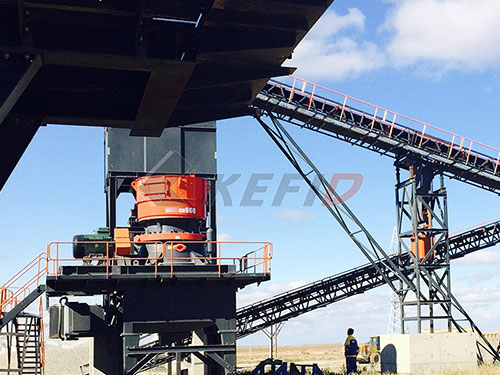

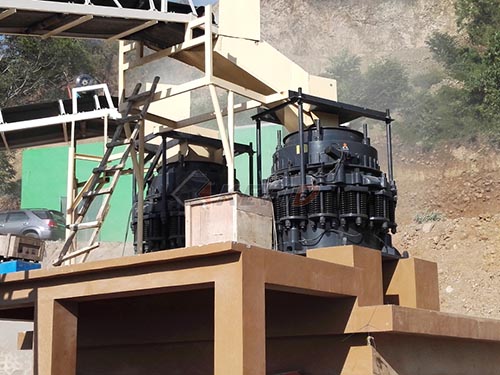
The Mechanics Behind the Power: How Does a Cone Crusher Work?
Cone crushers are fundamental pieces of equipment in the aggregates mining and construction industries, renowned for their ability to efficiently reduce hard and abrasive rocks into precisely sized particles. But what happens inside that robust steel chamber? Understanding how a cone crusher works reveals an elegant interplay of gravity, geometria, and controlled force.
O Princípio Fundamental: Esmagamento por compressão
Unlike impact crushers that smash rock with hammers or blow bars, cone crushers operate primarily through compression. This means rock is crushed by being squeezed between two hardened surfaces as they move towards each other.
Componentes:
1. Manto: A moving conical head made of manganese steel.
2. Côncavo (or Bowl Liner): A fixed outer surface, also lined with manganese steel wear parts, forming the crushing chamber walls.
3. Montagem Excêntrica: The heart of the motion mechanism. It consists of an eccentric bushing rotating within a bronze eccentric sleeve.
4. Eixo Principal: The central shaft upon which the mantle is mounted.
5. Hydraulic/Pneumatic System: Controls adjustment (crusher setting) and provides overload protection (liberação de vagabundo).
6. Feed Hopper/Distributor: Guides incoming material evenly around the crushing chamber.
7. Sistema de acionamento: Typically an electric motor connected via belts or gears to rotate the eccentric assembly.
The Crushing Process Step-by-Step:
1. Alimentação: Rock enters the top of the crusher through a feed hopper or distributor plate designed to spread material evenly around the circumference of the crushing chamber (360° feed). This ensures optimal utilization of the crushing surfaces and prevents uneven wear.
2. Contexto & Initial Contact: The gap between the mantle at its closest point to any part of the concave determines the smallest size particle produced – this is known as the Closed Side Setting (CSS) ou simplesmente "crusher setting." Material entering this narrowing gap first makes contact with either mantle or concave.
3. The Gyrating Motion – Creating Compression:
The drive motor rotates the eccentric assembly.
As this eccentric rotates inside its sleeve/bushing, it imparts an oscillating motion called a gyratory pendulum movement to the main shaft and mantle assembly.
Crucialmente, this is not simple rotation; it's an orbital path where: