
Como funciona o britador de cone
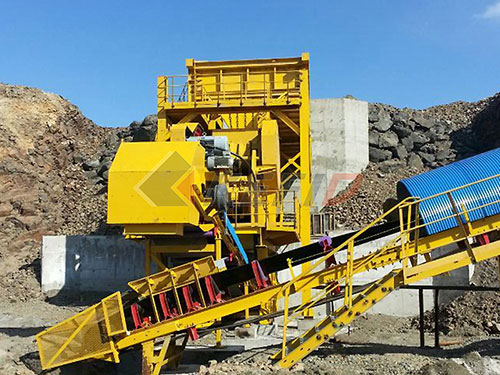

How Cone Crushers Work: The Engineered Power of Size Reduction
Cone crushers are fundamental workhorses in the aggregates, mineração, e indústrias de reciclagem, tasked with efficiently reducing large rocks and ore into smaller, tamanhos mais gerenciáveis. Their robust design and unique operating principle make them ideal for secondary, terciário, e estágios de britagem quaternária. Understanding how a cone crusher functions reveals the elegant engineering behind its powerful size reduction capability.
O Princípio Fundamental: Esmagamento por compressão
Unlike impact crushers that use sudden force to break material, cone crushers operate primarily through compression. Material is squeezed between two heavy surfaces – a moving element and a stationary element – until it fractures along natural fault lines.
Componentes:
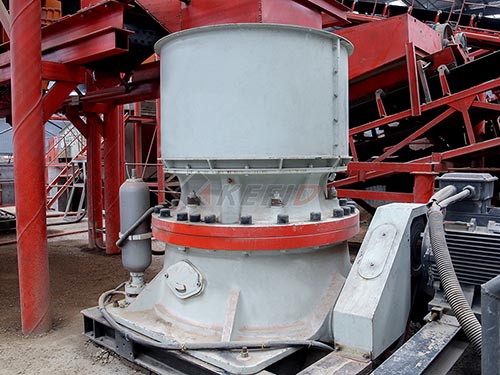
1. Manto: This is the moving conical surface attached to the main shaft (excêntrico). It gyrates within the concave.
2. Côncavo (Forro de tigela): This is the stationary outer surface, often shaped like an inverted cone. It provides the surface against which the mantle crushes the material.
3. Eixo Principal & Montagem Excêntrica: The heart of the motion. The main shaft is mounted off-center within a large eccentric bushing or gear. À medida que este excêntrico gira (driven by belts/pulleys or directly by a motor), transmite uma oscilação, gyratory motion to the mantle attached to the top of the shaft.
4. Câmara de esmagamento: The space formed between the mantle and concave where rock is compressed and broken.
5. Feed Hopper/Distributor: Guides incoming material evenly into the crushing chamber around the top of the mantle.
6. Sistema Hidráulico (Modern Crushers): Provides several critical functions:
Adjusting the Crusher Setting (CSS - Configuração lateral fechada): By raising or lowering the main shaft assembly hydraulically, operators can increase or decrease the gap at the bottom discharge point between the mantle and concave. This directly controls the size of the crushed product output.
Proteção contra sobrecarga (Liberação de vagabundo): If uncrushable material (metal vagabundo) enters, powerful hydraulic cylinders allow the entire upper assembly (mantle and shaft) to lift slightly ("vagabundo"), opening wider than usual to eject the object before lowering back automatically to its set position.
Clearing Blockages ("Limpeza de Cavidades"): Allows rapid lowering of the main shaft to open up