
triturador de escória de exportação
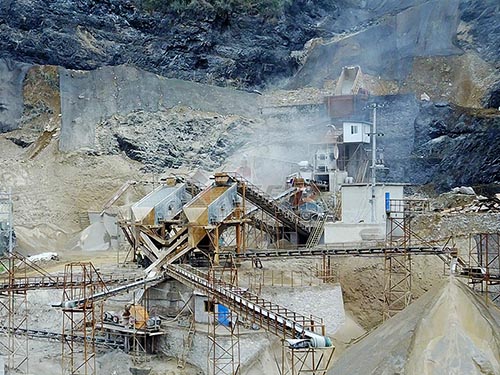

triturador de escória de exportação
Your Slag Processing Is Costing You More Than You Think
Every ton of unprocessed slag sitting in your yard represents tiedup capital, escalating haulage fees, and mounting environmental compliance costs. Plant managers report that inefficient slag crushing operations lead to 12–18% material loss during handling, while contractors face 3–5 day delays waiting for thirdparty processing. Engineering firms calculate that manual slag reduction methods consume 40% more labor hours than mechanized systems. Are your current crushing methods bleeding profit through excessive wear parts replacement? Is inconsistent output size forcing you to reject usable aggregate? The solution lies in a dedicated slag crusher plant designed for exportgrade material recovery.
Visão geral do produto: Dedicated Slag Crusher Plant for Export Markets
Este equipamento é um fully integrated slag crushing and screening system engineered specifically for processing ferrous and nonferrous slag from steel mills, fundições, and smelting operations. The plant operates through a continuous workflow:
1. Funil de alimentação & Alimentador vibratório – Receives slag material up to 600mm, regulates flow to prevent choke feeding
2. Britador de mandíbula primário – Reduces slag to 100–150mm, separating metallic content from mineral matrix
3. Magnetic Separation Stage – Overband electromagnet recovers 95–98% of ferrous metals
4. Secondary Cone or Impact Crusher – Produces final aggregate sizes (0–5 mm, 5–20 mm, 20–40 mm)
5. Tela vibratória & Stockpile Conveyors – Classifies material into saleable fractions
Escopo de aplicação: Suitable for blast furnace slag, escória siderúrgica, escória de cobre, and nickel slag with silica content up to 30%. Limitações: Not designed for highly abrasive slag exceeding 8 Mohs hardness without wearresistant liner upgrades.
Recursos principais
Câmara do britador de mandíbula para serviços pesados
Base Técnica: Deepchamber geometry with 45degree nip angle reduces slabby particle generation.
Benefício Operacional: Your operators will process 220–350 tons per hour with fewer bridging incidents.
Impacto do ROI: 18% reduction in recirculating load compared to standard jaw crushers, lowering energy cost by $0.12 por tonelada.
DualMagnetic Separation System
Base Técnica: Twostage overband magnet with 1,200 gauss field strength and selfcleaning belt.
Benefício Operacional: Recupera 97% of ferrous content from slag, producing clean aggregate for road base or concrete.
Impacto do ROI: Metal recovery adds $4–7 per ton revenue, with payback period under 8 meses em 50,000 tons annual throughput.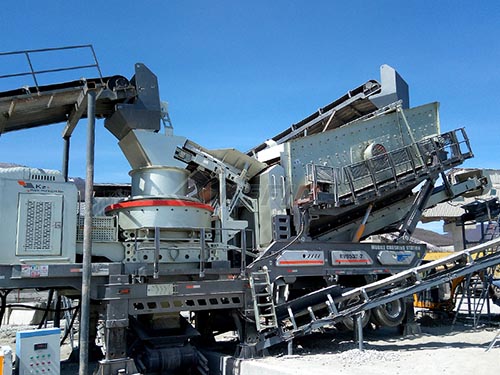
Ajuste hidráulico de CSS
Base Técnica: Closedside setting adjustment via hydraulic rams with digital position indicator.
Benefício Operacional: Your maintenance team can change output size in under 5 minutes without shim plates.
Impacto do ROI: Reduces downtime for size changes by 80%, adding 12–15 operating hours per month.
WearLined Chutes and Transfer Points
Base Técnica: 12mm thick AR400 steel liners with ceramic tile inserts at highimpact zones.
Benefício Operacional: Chute replacement intervals extend to 18–24 months versus 6 months for standard steel.
Impacto do ROI: Saves $8,000–$12,000 annually in replacement parts and labor per transfer point.
Sistema de supressão de poeira
Base Técnica: Water spray nozzles at crusher discharge and screen decks, with misting ring at feed point.
Benefício Operacional: Your facility meets EPA PM10 standards without baghouse installation.
Impacto do ROI: Avoids $15,000–$25,000 in annual dust control fines and reduces water consumption by 40% versus wet scrubbers.
Design modular montado em skid
Base Técnica: Pré-conectado, prepiped modules on heavyduty Ibeam skids with forklift pockets.
Benefício Operacional: Your contractors can install the plant in 5–7 days versus 3–4 weeks for concrete foundations.
Impacto do ROI: Saves $60,000–$90,000 in civil works and reduces project mobilization time by 70%.
Sistema de controle baseado em PLC
Base Técnica: AllenBradley CompactLogix with HMI touchscreen, remote monitoring via Ethernet.
Benefício Operacional: Your plant manager monitors throughput, consumo de energia, and wear status from a single screen.
Impacto do ROI: Reduces operator staffing by 1 pessoa por turno, saving $45,000–$55,000 annually.
Vantagens Competitivas
| Métrica de desempenho | Padrão da Indústria | Solução de planta de britador de escória | Vantagem (% Melhoria) |
|||||
| Ferrous metal recovery rate | 82–88% | 95–98% | +12% |
| Wear parts lifespan (mandíbula morre) | 1,200–1,800 hours | 2,400–3,200 hours | +78% |
| Cubicidade do produto final (índice de descamação) | 18–25% | 8–12% | 55% |
| Consumo de energia por tonelada | 1.8–2.4 kWh/t | 1.2–1.6 kWh/t | 33% |
| Setup time (from delivery to operation) | 21–28 days | 5–7 dias | 75% |
| Annual maintenance downtime | 180–240 hours | 90–120 hours | 50% |
| Dust emission (PM10 at property line) | 150–250 µg/m³ | 50–80 µg/m³ | 65% |
Especificações Técnicas
| Parâmetro | Especificação |
|||
| Modelo | SCP300 (Standard Export Configuration) |
| Capacidade de alimentação | 220–350 tons per hour (depending on slag type and feed size) |
| Tamanho da alimentação | Até 600 mm (24 polegadas) |
| Tamanhos finais do produto | 0–5 mm, 5–20 mm, 20–40 mm (ajustável) |
| Triturador Primário | 900mm x 1,200mm jaw crusher, 132 motor kW |
| Triturador Secundário | 1,300mm cone crusher or 1,200mm impact crusher, 160 motor kW |
| Magnetic Separator | 1,200mm largura da correia, 1,200 gauss, selfcleaning |
| Plataformas de tela | 2.4m x 6.0m tripledeck vibrating screen, 22 kW |
| Potência Total Instalada | 380–420 kW (dependendo da configuração) |
| Requisitos elétricos | 415V/50Hz/trifásico (optional 480V/60Hz) |
| Temperatura operacional | 10°C a 50 °C (14°F a 122°F) |
| Peso da planta | 78–95 metric tons (depending on options) |
| Shipping Dimensions | 3 modules: 12m x 2.8m x 3.2m each |
| Especificações de materiais | Quadro principal: Aço estrutural S355JR; Peças de desgaste: 12–14% manganese steel; Forros: AR400/AR500 |
Cenários de aplicação
Steel Mill Slag Processing – India
Desafio: A 2milliontonperyear steel mill generated 180,000 tons of slag annually, com 40% going to landfill due to inconsistent crushing. Haulage costs were $8.50 por tonelada, and metal recovery was only 72%.
Solução: Installed a SCP300 slag crusher plant with dual magnetic separation and hydraulic adjustment.
Resultados: A recuperação de metal aumentou para 96%, gerando $1.2 million annual revenue from scrap sales. Landfill volume reduced by 85%. Período de retorno: 11 meses.
Copper Slag Recycling – Chile
Desafio: A copper smelter needed to process 120,000 tons of granulated copper slag per year for use as abrasive blasting media. Existing impact crushers produced excessive fines (35% below 0.5mm), making the product unsalable.
Solução: Deployed a slag crusher plant with cone crusher secondary stage and closedcircuit screening.
Resultados: Final product gradation met ISO 111263 standards with only 8% multas. Plant achieved 98% uptime over 18 meses. Customer reported 22% higher selling price for the abrasive product.
Foundry Sand Reclamation – Germany
Desafio: A grey iron foundry produced 25,000 tons of spent foundry sand mixed with slag annually. Disposal costs were €45 per ton, and the material contained 8% recoverable iron.
Solução: Integrated a compact slag crusher plant with magnetic separator and air classification system.
Resultados: Recovered 1,800 tons of iron annually (€540,000 value). Reclaimed sand sold to construction industry at €12 per ton. Total annual savings: €1.1 million.
Considerações Comerciais
Níveis de preços (Porta principal FOB)
| Configuração | Faixa de preço | Typical Application |
||||
| Planta Base (mandíbula mandíbula, single magnet, tela) | $280,000–US$ 350.000 | Small foundries, 50,000–80,000 tpy |
| Planta Padrão (mandíbula + cone, dual magnets, CLP) | $420,000–$520,000 | Steel mills, 100,000–200,000 tpy |
| Premium Plant (mandíbula + impacto, triple magnets, dust system, monitoramento remoto) | $580,000–$720,000 | Exportgrade slag processing, 200,000+ tpy |
Recursos opcionais
- Wear package upgrade (ceramiclined chutes, tungsten carbide impact zones): +$18,000–$25,000
- Automated metal sorting (XRF sensor for nonferrous recovery): +$45,000–$ 60.000
- Containerized control room (HVAC, soundproofing, operator workstation): +$22,000
- Kit de peças de reposição (mandíbula morre, manto, forros, screen media for 12 meses): +$35,000–$50,000
- Pacote de comissionamento ($12,000): 5day onsite installation supervision, treinamento de operadores, startup support
- Contrato Anual de Manutenção ($18,000/ano): Inspeções trimestrais, medição de desgaste, diagnóstico remoto
- Garantia de Desempenho ($8,000): Guaranteed throughput and metal recovery with penalty/reward clause
- Cidade arrendada: 36–60 month terms, 4.5–7.5% APR (depending on credit)
- Financiamento de equipamentos: 20% abaixo, 48prazo do mês, fixed rate
- Pagamento baseado em desempenho: 10% adiantado, 90% pago 24 months based on tonnage processed
Pacotes de serviços
Opções de financiamento
Perguntas frequentes
P: Can this plant handle wet slag (até 15% umidade)?
UM: Sim. The vibrating feeder and screen decks are designed with 10degree upward slope and polyurethane screen media to handle sticky material. Para umidade acima 15%, we recommend adding a rotary dryer module.
P: What is the typical power consumption per ton of slag processed?
UM: Dados de campo de 12 installations shows 1.2–1.6 kWh per ton for standard slag (silica content under 20%). For highsilica slag (20–30%), consumption increases to 1.6–2.0 kWh per ton.
P: How long does it take to train operators on this system?
UM: The PLCbased HMI requires 2 days of training for experienced plant operators. The commissioning package includes handson training for up to 4 operadores.
P: What export documentation is provided with the plant?
UM: Complete technical file including CE declaration of conformity, ISO 9001 certificate, material test certificates for pressure parts, esquemas elétricos, and operation/maintenance manuals in English.
P: A planta pode ser expandida posteriormente para maior capacidade?
UM: Sim. The modular design allows adding a secondary cone crusher or additional screen deck. The base frame and conveyor system are engineered for 30% capacity expansion without structural modification.
P: What is the typical lead time for export orders?
UM: Standard lead time is 12–14 weeks from order confirmation. Rush orders (8–10 weeks) are available with 15% prêmio. Shipping time depends on destination port.
P: How does this plant compare to mobile slag crushers?
UM: Mobile units offer flexibility but typically process 50–80 tons per hour with 85–90% metal recovery. This stationary plant provides 3–4x higher throughput, 95–98% recovery, e 40% menor custo operacional por tonelada. Choose mobile for shortterm projects; choose stationary for permanent installations.