
Commercial Slag Crusher Plant Manufacturing
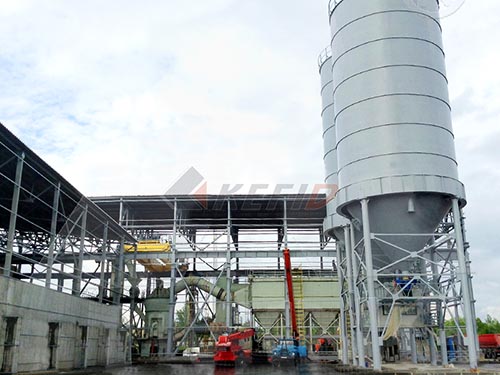

1. ABERTURA ACIONADA POR PAINPOINT
Managing slag from your steel, ferroalloy, or nonferrous metal production is a persistent operational bottleneck with tangible costs. Você está enfrentando esses desafios?
High Disposal Costs & Liability: Landfilling slag is increasingly expensive and carries longterm environmental liability. Every ton processed onsite represents direct savings in hauling fees and tipping charges.
Inefficient Material Recovery: Valuable metallic content trapped within slag represents lost revenue. Inefficient liberation leads to metal units being discarded, impacting your plant’s overall yield and profitability.
Unreliable Processing Equipment: Frequent clogging, excessive wear from abrasive material, and unplanned downtime halt your entire slag handling circuit, creating production delays and maintenance headaches.
Produto final inconsistente: An unreliable crusher produces poorly graded aggregate with inconsistent particle size, reducing the market value of your saleable product and limiting its application in construction or cement blending.
Alta operacional & Riscos de segurança: Manual breaking, dust generation, and equipment failures pose significant safety risks to personnel and increase operational costs related to mitigation and compliance.
A questão central para os gerentes de fábrica é esta: how can you transform this byproduct from a cost center into a controlled, profitable stream while ensuring continuous, safe plant operation?
2. VISÃO GERAL DO PRODUTO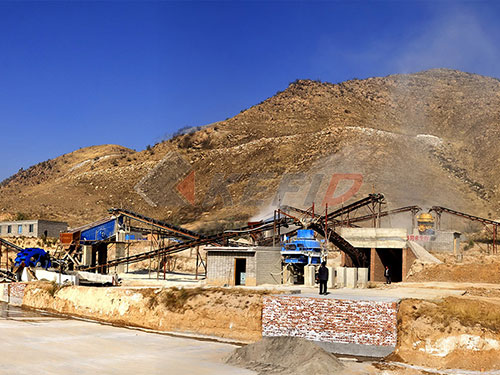
A commercial slag crusher plant is a stationary or semimobile processing system engineered specifically for the rigorous reduction of metallurgical slag. It is not a standard quarry crusher; it is built to handle highly abrasive, sometimes sticky materials with embedded metallic components.
The typical operational workflow involves:
1. Primary Receiving & Pré-triagem: Slag is fed via loader or conveyor into the plant. An initial grizzly or scalping screen removes fine material (020milímetros) bypassing unnecessary crushing.
2. Britagem Primária & Libertação: Oversize material enters a robust primary crusher (typically a jaw or impact type) to break down large slabs and liberate metallic pieces.
3. Metal Recovery: Crushed material passes over a magnetic separator (drum or overhead belt) to extract ferrous scrap for return to the furnace or sale.
4. Britagem Secundária/Terciária: The remaining mineral fraction is routed through secondary (cone ou impacto) crushers to achieve the precise product sizing required for aggregate sales.
5. Triagem Final & Estoque: Material is screened into specified fractions (por exemplo, 05milímetros, 510milímetros, 1020milímetros) and conveyed to stockpiles for dispatch.
Escopo de aplicação: Ideal for integrated steel mills, minimills, fundições, copper smelters, and ferroalloy plants generating aircooled blast furnace (BF) escória, basic oxygen furnace (BOF) escória, or electric arc furnace (EAF) escória.
Limitações: Not designed for granulated (wet) slag without prior drying systems. Maximum feed size and hardness are defined by the primary crusher model selected.
3. RECURSOS PRINCIPAIS
Triturador Primário Pesado | Base Técnica: Reinforced manganese steel jaws/impact bars with high inertia kinematics | Benefício Operacional: Consistently processes large, irregular slag slabs without stalling; withstands extreme abrasion | Impacto do ROI: Reduces primary crusher liner replacement frequency by up to 40%, lowering parts inventory cost and maintenance labor.
Integrated Magnetic Separation System | Base Técnica: Highintensity permanent or electromagnetic circuits placed at optimal transfer points | Benefício Operacional: Automatically recovers liberated ferrous metal continuously during processing | Impacto do ROI: Recovers an additional 25% of metal units from slag, directly boosting revenue from scrap sales or furnace charge savings.
AbrasionResistant Conveying Circuit | Base Técnica: AR400 steel liners in hoppers, impact beds under feed points, and vulcanized ceramic pulley lagging | Benefício Operacional: Dramatically extends belt and component life in highwear zones, minimizing spillage | Impacto do ROI: Cuts conveyor maintenance costs by an estimated 30% annually and reduces unscheduled stoppages.

Centralized Dust Suppression | Base Técnica: Nozzle arrays at each transfer point tied to a PLCcontrolled pump system with moisture sensors | Benefício Operacional: Effectively controls silica dust at source without overwetting material | Impacto do ROI: Ensures compliance with workplace exposure limits, reduces housekeeping costs, and protects downstream equipment.
Controle Baseado em PLC & Monitoring System | Base Técnica: Industrial programmable logic controller with HMI touchscreen displaying motor loads, operating statuses, e alarmes de falha | Benefício Operacional: Allows singleoperator control of the entire circuit; enables quick diagnosis of issues like blockages or motor faults | Impacto do ROI: Optimizes power consumption per ton crushed and reduces mean time to repair (MTTR) by providing clear diagnostic data.
Modular SkidMounted Design | Base Técnica: Plant sections preassembled on structural steel skids with integrated walkways and ladders | Benefício Operacional: Significantly reduces civil works and onsite assembly time; facilitates future relocation if needed | Impacto do ROI: Cuts installation time by up to 60%, allowing your return on investment cycle to begin sooner.
4. VANTAGENS COMPETITIVAS
| Métrica de desempenho | Solução padrão da indústria | Commercial Slag Crusher Plant Solution | Vantagem (% Melhoria) |
| : | : | : | : |
| Metallic Recovery Rate (%)| ~8590% using basic downstream magnets| >97% via optimized multistage magnetic separation| +7% para +12% more metal recovered |
| Liner Life Primary Crusher (Horário de funcionamento)| ~500800 hours in severe duty| 1,100 1,500 hours with specialized alloys/designs| +50% para +80% vida útil mais longa |
| System Uptime Availability (%)| ~8085%, factoring in cleanup & wear part changes| >92%, enabled by quickwear part access & controle de poeira| +7% para +12% more productive availability |
| Geração de Multas (5mm fraction)| Typically higher due to overcrushing in nonspecialized units| Controlled through chamber optimization & screen bypass circuits| Reduction of 1015% in unwanted fines generation |
| Installed Power Requirement (kW per 100 tph)| Varia muito; often inefficient circuit design| Optimized motor selection & material flow reduces parasitic load| Até 15% lower specific energy consumption |
5. ESPECIFICAÇÕES TÉCNICAS
Faixa de capacidade: Configurável de 50 Tonnes Per Hour (TPH) acabar 400 TPH based on feed gradation and target product size.
Requisitos de energia: A potência total instalada normalmente varia de 150 kW (for smaller plants) acabar 800 kW (for largescale systems), supplied at 400V/50Hz or other industrial standards.
Especificações de materiais: Primary wear components constructed from modified manganese steel (14%18% Mn), AR400 abrasionresistant plate for liners; structural frames use heavyduty S355JR steel.
Dimensões Físicas: A standard skidmounted plant for ~150 TPH output occupies approximately 25m (eu) x 8m x 6m .
Faixa operacional ambiental: Designed for ambient temperatures from 20°C . Dust suppression system prevents operation below freezing unless heated water supply is provided.
6. CENÁRIOS DE APLICAÇÃO
Integrated Steel Mill – Blast Furnace Slag Processing
Desafio: A major mill faced escalating landfill costs for BF slag containing recoverable iron caps. Their existing system suffered from frequent jamming and poor metal recovery.
Solução: Implementation of a turnkey commercial slag crusher plant featuring a deepchamber jaw crusher for slab reduction followed by two stages of magnetic separation.
Resultados: Metallic recovery increased from an estimated ~82% . The consistent aggregate produced was sold as railway ballast .
Electric Arc Furnace MiniMill
Desafio: An EAFbased producer needed highervalue aggregate products but their existing hammer mill generated excessive fines (~40%) .
Solução: Installation of an impact crusherbased plant configured with a prescreen .
Resultados: Fines generation was reduced . The improved product mix commanded .
Copper Smelter – Reverberatory Furnace Slag
Desafio: Processing very abrasive copper slag was causing catastrophic wear on conveyor belts .
Solução: A commercial crushing circuit was specified with full ceramiclined chutes .
Resultados: Conveyor belt life extended from less than six months . Plant availability increased due .
7. CONSIDERAÇÕES COMERCIAIS
Commercial pricing follows three primary tiers:
1\. Basic Processing Plant ($250k$500k): Includes primary crushing screening magnetic separation essential conveyors minimal dust control Suitable
2\. HighEfficiency Turnkey Plant ($500k$1M+): Includes all features listed above plus advanced PLC automation multiple product screening lanes comprehensive dust suppression skidded modules
3\. Custom Retrofit Systems ($Varies): Focuses on upgrading specific sections of an existing line such as installing new magnetic separators replacing old conveyors adding secondary crushing modules
Recursos opcionais:
• Onboard diesel generator sets
• Advanced metal detectors
• Automated greasing systems
• Remote monitoring via telematics
Pacotes de serviços:
• Preventive Maintenance Contracts
• Guaranteed Wear Part Kits per ton crushed
• Onsite operator training programs
Opções de financiamento:
Capital expenditure can be structured through equipment leasing plans operating leases project financing solutions tailored
8\. Perguntas frequentes
Q1 Is this equipment compatible with our existing frontend loaders?
A Yes commercial plants are designed around industrystandard feed equipment Feed hopper dimensions apron feeder widths are engineered
Q2 What level of operational disruption should we expect during installation?
A For skidmounted plants field assembly typically requires two weeks Minimal civil work involves preparing level compacted gravel pads Electrical hookup depends
Q3 How does this solution impact our overall cost per ton of processed slag?
A Field data shows that while capital investment increases compared total operating cost per ton—factoring disposal fees recovered metal revenue—typically sees reduction within first year This calculation varies based local tipping fees scrap prices
Q4 Can you guarantee final product specifications?
A We guarantee that the machinery will perform according agreed technical specifications Final product gradation however also depends inherent characteristics incoming feed moisture content Our process engineers will conduct sample testing provide performance projections based your specific material
Q5 What are typical payment terms?
A Standard terms involve progress payment schedule tied major milestones such as contract signing completion fabrication shipment arrival site commissioning final acceptance Retainers may apply custom engineering projects