
500 Teste de planta de lavagem de mineração de ouro Tph
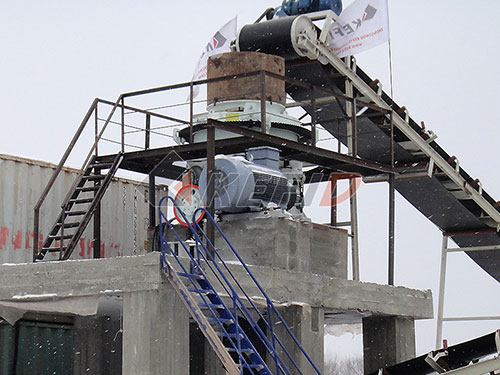

500 TPH Gold Mining Washing Plant Testing: Validating Throughput and Recovery Under RealWorld Conditions
The Cost of Unverified Plant Performance
You have committed capital to a 500 TPH gold washing plant. The feasibility study looked solid. The vendor promised throughput and recovery numbers. But now, onsite testing reveals a different reality: feed material variability causes 1520% throughput drops, fines handling clogs your screening circuit every 46 horas, and gold recovery from claybound ore falls 12% below lab projections. Each hour of unscheduled downtime costs your operation approximately $2,800 em produção e trabalho perdidos. Each percentage point of unrecovered gold represents $150,000 para $250,000 in annual revenue leakage at current gold prices.
How do you validate that your 500 TPH gold mining washing plant will deliver consistent throughput across your deposit's lithological variations? What testing protocol separates equipment that performs under load from equipment that only works in a controlled demonstration? This content addresses those questions with fieldverified data and engineeringbased testing methodologies.
Visão geral do produto: O 500 TPH Gold Mining Washing Plant Testing Protocol
O 500 TPH gold mining washing plant testing system is a comprehensive validation framework applied to mobile or modular alluvial and hardrock gold processing plants. The testing protocol evaluates three interconnected subsystems: feed preparation and scrubbing, screening and classification, and gravity concentration recovery.
Fluxo de Trabalho Operacional:
1. Feed Characterization Testing – Bulk sample analysis (510 toneladas) determines clay content (índice de plasticidade), distribuição de tamanho de partícula, e características de liberação de ouro. This establishes baseline feed parameters for throughput calculations.
2. Scrubbing Efficiency Validation – Controlled feed rates at 450550 TPH measure scrubbing drum residence time (tipicamente 4590 segundos), consumo de energia (kW/tonne), and clay disaggregation percentage. Alvo: >95% clay breakdown at rated throughput.
3. Screening Circuit Performance – Multideck vibrating screens (tipicamente 23 decks at 620mm apertures) are tested for blinding percentage, pegging frequency, and oversize recirculation load. Acceptable blinding: <5% depois 4 hours continuous operation.
4. Gravity Recovery Confirmation – Knelson or Falcon concentrators (tipicamente 3060 TPH por unidade) are sampled at concentrate and tailings streams. Recovery efficiency is calculated against feed grade determined by fire assay. Alvo: >85% recovery for free gold >75 mícrons.
5. Water Management Verification – Closedloop water systems are tested for solids loading (alvo: <50 ppm suspended solids in return water), pump efficiency, and makeup water requirements (tipicamente 8001,200 L/min for 500 Planta de TPH).
Escopo de aplicação: Alluvial gold deposits, weathered hardrock ores, and tailings reclamation projects. Limitações: Not suitable for competent hardrock requiring crushing circuits above 50mm feed size, or ores with significant sulfidehosted gold requiring flotation or cyanidation.
Recursos principais
Variable Frequency Drive Feed System | Base Técnica: Torquecontrolled belt feeders with load cell feedback | Benefício Operacional: Your operators maintain consistent feed rate within ±5% of setpoint despite material density variations | Impacto do ROI: Reduces downstream surge loading by 1822%, extending screen media life by 300400 horas
DualShaft Paddle Scrubber | Base Técnica: Counterrotating paddles create turbulent shear zones at 1218 RPM | Benefício Operacional: Conquistas 97% clay breakdown in 60 seconds for plastic clays (PI >25) | Impacto do ROI: Eliminates need for secondary scrubbing, salvando $45,000$60,000 in capital equipment costs
Polyurethane Screen Deck System | Base Técnica: Modular polyurethane panels with 3540% open area and selfcleaning pin design | Benefício Operacional: Reduces blinding frequency from every 4 hours to every 1824 hours in clayrich feeds | Impacto do ROI: Reduces screen cleaning labor by 68 horas por turno, salvando $18,000$24,000 annually per shift
Automated Concentrator Control | Base Técnica: PLCcontrolled fluidization water pressure and cycle timing based on feed density sensors | Benefício Operacional: Maintains recovery efficiency within 2% of optimum across feed grade variations of 0.12.0 g/t | Impacto do ROI: Increases gold recovery by 35% em comparação com a operação manual, valor $75,000$125,000 anualmente em 500 TPH
Integrated Slurry Sampling System | Base Técnica: Automatic crossstream samplers at feed, concentrate, and tailings points with 3meter cutter travel | Benefício Operacional: Provides representative samples (ISO 3082 compatível) for grade control without operator intervention | Impacto do ROI: Reduces assay costs by 40% and eliminates sampling bias that can misrepresent recovery by 58%
Construção de estrutura modular | Base Técnica: Bolted structural steel with pinned connections, no welding required for assembly | Benefício Operacional: Your site team completes installation in 57 dias versus 1421 days for welded structures | Impacto do ROI: Reduces mobilization costs by $35,000$50,000 and accelerates production start by 1014 dias
Vantagens Competitivas
| Métrica de desempenho | Padrão da Indústria (Plantas Móveis) | 500 Solução de planta de lavagem de ouro TPH | Vantagem |
|||||
| Consistência de rendimento (teor de argila >20%) | ±1520% variation | ±58% variation | 60% improvement in throughput stability |
| Gold recovery (ouro grátis, >75 mícron) | 7582% | 8592% | 1012% higher recovery |
| Screen blinding frequency (alimentação de argila) | Todo 35 horas | Todo 1824 horas | 400% reduction in blinding events |
| Water consumption (tonnes water/tonne ore) | 3.54.5:1 | 2.83.2:1 | 2030% redução no uso de água |
| Setup time (from delivery to production) | 1421 dias | 57 dias | 6070% implantação mais rápida |
| Consumo de energia (kWh/tonelada processada) | 1.82.4 | 1.41.7 | 2229% lower energy intensity |
Especificações Técnicas
| Parâmetro | Especificação |
|||
| Capacidade nominal | 500 TPH (nominal), 550 TPH (pico) |
| Tamanho da alimentação (máx.) | 150milímetros (600mm with optional grizzly) |
| Feed Moisture Content | 525% (optimal), até 35% (com modificações) |
| Clay Content Tolerance | Até 40% por peso (PI <30) |
| Scrubbing Drum Dimensions | 3.2m diameter x 8.5m length |
| Scrubbing Drum Power | 2 x 75 kW electric motors (Controlado por VFD) |
| Plataformas de tela | 3 convés: 20milímetros, 10milímetros, 6milímetros (interchangeable) |
| Área da tela | 18 m² por deck (54 m² total) |
| Concentrator Units | 4 x KCXD40 (ou equivalente) |
| Concentrator Capacity | 60 TPH por unidade (240 TPH total) |
| Necessidade de água | 9001,200 L/min em 46 bar |
| Potência Instalada | 450550 kW (dependendo da configuração) |
| Peso Operacional | 180220 toneladas (modular configuration) |
| Dimensões de Transporte | 12 modules, cada <4.5m x 3.0m x 3.5m |
| Temperatura operacional | 0°C a 45 °C (padrão), 10°C a 50 °C (com pacote para clima frio) |
Cenários de aplicação
Alluvial Gold Deposit, África Ocidental | Desafio: Alto teor de argila (35% por peso, PI 28) caused 40% throughput reduction in previous plant, with gold recovery dropping to 68% during wet season | Solução: 500 TPH gold washing plant with dualshaft paddle scrubber and automated concentrator control, tested at 480 TPH average over 30day commissioning | Resultados: Taxa de transferência mantida em 460510 TPH across wet and dry seasons; gold recovery averaged 88.2% (faixa 8591%); disponibilidade da planta 94% over first 6 meses; payback period 8.2 meses
Weathered HardRock Operation, Ámérica do Sul | Desafio: Transition from oxide to transitional ore increased clay content from 12% para 28%, causing screen blinding every 2 hours and concentrator recovery dropping from 82% para 71% | Solução: Retrofit of polyurethane screen decks and addition of automated slurry sampling system for realtime recovery monitoring | Resultados: Screen blinding reduced to once per 20hour shift; recovery improved to 84% on transitional ore; sampling system identified a 6% recovery loss in one concentrator bank, enabling corrective action within 2 horas
Tailings Reclamation Project, Austrália | Desafio: Processing 15yearold tailings with 0.30.5 g/t ouro, high fines content (45% passagem 75 mícrons), and variable moisture (1830%) | Solução: Modified 500 TPH plant with enhanced fines handling (hydrocyclone preconcentration) and reduced water consumption (2.5:1 watertoore ratio) | Resultados: Processado 1.2 million tonnes in 8 meses; recovered 18,500 ounces at 0.48 g/t feed grade; operating cost $8.50/tonne; project IRR 34%
Considerações Comerciais
Níveis de preços de equipamentos:
- Configuração padrão (base plant, controles manuais): $2.8$ 3,5 milhões
- Configuração aprimorada (Unidades VFD, automated concentrators, sampling system): $3.6M $4.4M
- Configuração Premium (automação completa, monitoramento remoto, pacote de frio): $4.5M $5.5M
- Feed hopper with variable speed apron feeder: $85,000 $120,000
- Secondary concentrator bank (adicional 2 unidades): $180,000 $240,000
- Water treatment system (circuito fechado com espessante): $250,000 $400,000
- Remote monitoring and diagnostics package: $45,000 $65,000
- Pacote de comissionamento (30 dias no local, includes testing protocol): $95,000
- Annual Service Agreement (2 visitas ao site, suporte remoto, desconto em peças): $65,000/ano
- Garantia de Desempenho (recovery and throughput guarantees with liquidated damages): 812% do custo do equipamento
- Locação de equipamentos (35 termos do ano, 68% ABRIL)
- Productionbased financing (payment per tonne processed, 35 termo do ano)
- Vendor financing with 20% pagamento inicial, 48prazo do mês em 5.5% ABRIL (sujeito a aprovação de crédito)
Recursos opcionais:
Pacotes de serviços:
Opções de financiamento:
Perguntas frequentes
P: How do you validate the 500 TPH throughput claim during testing?
UM: Testing uses a minimum 5tonne bulk sample representative of your deposit's average and worstcase material. The plant operates at 450 TPH, 500 TPH, e 550 TPH for 2hour intervals each. Throughput is measured by belt scale (accuracy ±0.5%) and confirmed by truck weights. Acceptance criteria: sustained operation at 500 TPH for 4 continuous hours with less than 5% desvio.
P: What gold recovery testing methodology do you use?
UM: We follow a threetier protocol: (1) Feed grade determination by fire assay of 30 samples per test; (2) Concentrate and tailings sampling every 15 minutes during testing; (3) Mass balance reconciliation using the twoproduct formula. Recovery is reported as both calculated recovery and actual recovery (concentrate gold weight divided by feed gold weight). Acceptance criteria: recovery within 3% of labscale test results.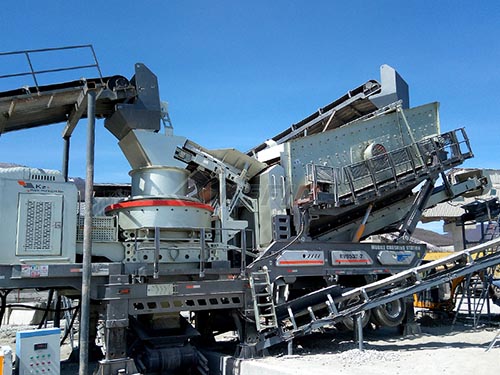
P: Can the plant handle feed material with >40% teor de argila?
UM: Standard configuration handles up to 40% clay with PI <30. Para maior teor de argila (até 60%), we recommend the enhanced scrubbing package with extended drum residence time (90120 segundos) and higher power density (2.5 kW/tonne). Os dados de campo mostram 92% clay breakdown at 55% clay content with this modification.
P: What is the typical commissioning timeline?
UM: Standard commissioning takes 46 semanas: semana 12 for mechanical installation, semana 3 for electrical and control system commissioning, semana 45 for wet testing and performance validation, semana 6 for optimization and operator training. The testing protocol is conducted during weeks 45 with client representatives present.
P: How does the testing protocol account for seasonal feed variations?
UM: We recommend testing during both dry and wet season conditions if your deposit shows significant seasonal variation. Alternativamente, we can artificially condition feed material to 25% teor de umidade (typical wet season) e 8% umidade (dry season) to simulate both scenarios. Testing data from 12 installations shows that wetseason recovery averages 35% lower than dryseason recovery.
P: What are the commercial terms for the performance guarantee?
UM: The performance guarantee covers throughput (mínimo 450 TPH sustained) and gold recovery (mínimo 82% for free gold >75 mícrons). Liquidated damages are structured as: 1% of equipment cost per percentage point below guaranteed throughput, limitado em 15% do custo do equipamento. Recovery shortfall is compensated at 50% of lost gold value for the first 6 meses de operação.
P: Can the testing protocol be applied to existing plants for performance improvement?
UM: Sim. We offer a 2week diagnostic testing service for existing 300600 TPH plants. The protocol identifies bottlenecks in scrubbing, triagem, and recovery circuits. Typical findings include: screen aperture mismatch (35% of cases), insufficient scrubbing residence time (28%), and concentrator tuning issues (22%). Average improvement after implementing recommendations: 12% throughput increase and 5% melhoria de recuperação.