
250 300tph Stone Crushing Plant Factories Quotation

250300 TPH Stone Crushing Plant Factories Quotation: EngineeringGrade Solutions for HighVolume Aggregate Production
The Crushing Capacity Gap: When Your Production Targets Exceed Your Plant's Capabilities
Você está perdendo $15,000$25,000 per day in lost revenue because your current crushing line bottlenecks at 180 TPH when your contracts demand 300 TPH? Have you calculated the cumulative cost of unscheduled downtime—averaging $4,200 por hora em produção perdida, overtime labor, and contractual penalties? Do your existing crushers produce inconsistent aggregate gradation, forcing you to reject 812% of output as offspec material? Are you facing escalating maintenance costs exceeding $0.85 per ton on aging equipment that requires weekly liner replacements? Is your plant's footprint preventing expansion, yet your competitors are securing larger infrastructure contracts?
These are the operational realities that plant managers and engineering contractors face when scaling aggregate production. UM 250300 TPH stone crushing plant represents the critical threshold between smallscale quarrying and industrialscale mineral processing. This capacity range serves major highway projects, concrete batch plants, and largescale construction developments—where every ton of consistent, specgrade aggregate directly impacts project profitability.
Visão geral do produto: O 250300 TPH Integrated Crushing Circuit
UM 250300 TPH stone crushing plant is a multistage, electricallydriven processing system designed to reduce runofquarry rock (typically 500800mm feed size) into finished aggregates ranging from 05mm (areia manufaturada) to 2040mm (agregados grossos). The system operates through four primary stages:
1. Britagem Primária: A jaw crusher (normalmente 900x1200mm ou equivalente) reduces feed material to 150200mm at 250300 Taxa de transferência de TPH
2. Britagem Secundária: Um britador de cone (standard type, 220250kW) reduces material to 4060mm with controlled cubicity
3. Britagem Terciária: A shorthead cone crusher or vertical shaft impactor (TODOS) produces fine aggregates and sand
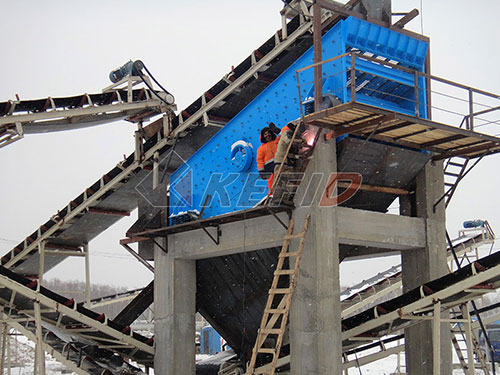
4. Triagem & Classificação: A multideck vibrating screen system (23 convés) separates material into 45 frações de produto
Escopo de aplicação: Rock pesado (granito, basalto, quartzito), pedra semidura (calcário, dolomite), and river gravel processing for concrete aggregates, materiais de base rodoviária, e produção de asfalto.
Limitações: Not suitable for soft/abrasive materials (argila, xisto) without prewashing systems; requires minimum 8001000 kVA electrical infrastructure; demands skilled operators for optimal performance.
Recursos principais: EngineeringDriven Performance Metrics
1. HighCapacity Jaw Crusher with Hydraulic Adjustment
Base Técnica: Eccentric shaft design with finite element analysis (FEA)geometria otimizada da mandíbula oscilante, operating at 220280 RPM with 200250mm stroke
Benefício Operacional: Your operators can adjust closedside setting (CSS) em baixo 5 minutes via hydraulic cylinders, eliminating manual shim adjustments that typically require 4560 minutos de inatividade
Impacto do ROI: Reduces liner change time by 70%, salvando 810 hours per month in maintenance labor ($1,200$1,800 monthly savings at $45/hour labor rate)
2. Triturador de cone hidráulico multicilindro
Base Técnica: Constant liner engagement (CLE) technology with 1622mm eccentric throw, operating at 280350 RPM with automatic tramp iron relief
Benefício Operacional: Your plant achieves 9295% cubicity in secondary products, reducing flaky/elongated particle content below 12%—meeting strict BS 882 or ASTM C33 specifications without additional shaping stages
Impacto do ROI: Elimina 35% material rejection for shape issues, recuperando $18,000$30,000 annually in otherwise wasted product (at $12/ton average aggregate price)
3. Vibrating Screen with Modular Deck System
Base Técnica: Tripleshaft exciter generating 6.57.5G acceleration force, with polyurethane modular panels (2080mm aperture range)
Benefício Operacional: Your screening efficiency reaches 9295% no 300 Taxa de alimentação TPH, comparado com 8285% with conventional wire mesh screens—reducing recirculation load by 1520%
Impacto do ROI: Lower recirculation means 812% reduction in crusher wear parts consumption, salvando $0.15$0.25 por tonelada processada ($12,000$20,000 anualmente em 80,000 toneladas/ano)
4. PLCBased Automated Control System
Base Técnica: AllenBradley/Siemens PLC with 15inch HMI touchscreen, monitoramento 40+ parameters including motor amps, temperaturas dos rolamentos, oil pressure, and belt speeds
Benefício Operacional: Your plant manager can monitor realtime production data remotely via SCADA interface, receiving automated alerts when any parameter exceeds 90% de capacidade nominal
Impacto do ROI: Reduz o tempo de inatividade não programado em 3540% através de alertas de manutenção preditiva, salvando $50,000$80,000 annually in lost production and emergency repair costs
5. Dust Suppression System with Water Spray Nozzles
Base Técnica: De alta pressão (812 bar) water mist system with 5080 tamanho de gota em mícron, covering crusher feed points, decks de tela, and transfer chutes
Benefício Operacional: Your plant achieves PM10 emissions below 50 mg/Nm³, meeting EPA and local environmental regulations without baghouse filters
Impacto do ROI: Evita $10,000$25,000 in annual environmental compliance fines and eliminates $30,000$50,000 capital cost for baghouse installation
6. HeavyDuty Belt Conveyor System
Base Técnica: 10001200mm wide belts with 5ply EP fabric, operating at 1.52.0 m/s with 45degree troughing idlers
Benefício Operacional: Your material handling capacity exceeds 350 TPH peak load, with belt life exceeding 5 years under normal operating conditions
Impacto do ROI: Reduces conveyor maintenance costs to $0.02$0.04 por tonelada, comparado com $0.08$0.12 per ton for underspecified systems
7. Integrated Electrical Control Panel with Soft Starters
Base Técnica: 8001000 kVA transformer with soft starters for all motors above 75 kW, reducing inrush current to 200250% of full load (contra. 600800% for directonline starting)
Benefício Operacional: Your facility avoids voltage dips that disrupt other equipment, and motor starting stress is reduced by 60%, extending motor life by 35 anos
Impacto do ROI: Salva $8,000$12,000 in avoided electrical infrastructure upgrades and $5,000$8,000 in motor replacement costs over 10 anos
Vantagens Competitivas: Comparação de desempenho
| Métrica de desempenho | Padrão da Indústria (Conventional Plants) | 250300 Solução TPH | Vantagem (% Melhoria) |
|||||
| Throughput at 80% load factor | 200220 TPH | 240260 TPH | 1820% higher effective capacity |
| Consumo específico de energia | 0.851.10 kWh/tonelada | 0.650.80 kWh/tonelada | 2328% menor custo de energia |
| Liner life (triturador de cone, aço manganês) | 120150 horas | 180220 horas | 3347% maior vida útil |
| Tempo de mudança (product size adjustment) | 4560 minutos | 58 minutos | 8590% mais rápido |
| Fines content (below 0.075mm) in sand product | 1822% | 1215% | 3035% redução |
| Tempo médio entre falhas (MTBF) | 180220 horas | 300350 horas | 5567% melhoria |
| Tempo de instalação (foundation to commissioning) | 4560 dias | 3040 dias | 2533% implantação mais rápida |
| Operating noise level (no 10 metros) | 9298 dB(UM) | 8288 dB(UM) | 1012 dB(UM) redução |
Especificações Técnicas: 250300 Planta de britagem de pedra TPH
| Parâmetro | Especificação |
|||
| Capacidade nominal | 250300 TPH (no 80% load factor, mediumhard limestone, 0800mm avanço) |
| Tamanho máximo de alimentação | 700800 milímetros (depending on jaw crusher model) |
| Gama de Produtos | 05milímetros (areia manufaturada), 510milímetros, 1020milímetros, 2040milímetros (ajustável) |
| Potência Total Instalada | 550700 kW (incluindo trituradores, telas, transportadores) |
| Electrical Requirement | 8001000 kVA, 415V/50Hz ou 480V/60Hz, 3fase |
| Main Crusher (Primário) | Corvo de mandíbula: 900x1200mm to 1100x850mm, 160200kW |
| Triturador Secundário | Triturador de cone (padrão): 220250kW, 180220mm avanço |
| Triturador Terciário | Triturador de cone (shorthead) or VSI: 200250kW |
| Screening Area | 23 telas vibratórias, 68m² each, 23 convés |
| Sistema transportador | 812 transportadores de correia, total length 80120 metros |
| Peso da planta (excluindo fundação) | 180250 toneladas métricas |
| Pegada (equipment layout) | 45m x 30m (1,350 m²) to 55m x 35m (1,925 m²) |
| Faixa de temperatura operacional | 10°C a 45 °C (com pacote para clima frio disponível) |
| Emissão de poeira (with suppression) | <50 mg/Nm³ PM10 |
| Nível de ruído (at 10m boundary) | 8288 dB(UM) com gabinetes acústicos |
Cenários de aplicação: FieldProven Results
Produção Agregada de Curso Base Rodoviário | Índia
Desafio: A major road contractor needed 280 TPH of GSB (Granular SubBase) material meeting MORTH specification, com menos de 10% flaky particles and consistent gradation across 4 product sizes. Their existing plant produced only 180 TPH com 18% taxa de rejeição.
Solução: Installed a 250300 TPH plant with primary jaw crusher, britador de cone secundário, and tripledeck vibrating screen. Added a VSI crusher for tertiary shaping.
Resultados: Alcançou 295 TPH sustained throughput at 92% disponibilidade. Flaky particle content reduced to 7.2%. Material rejection dropped to 3.5%. Client recovered capital investment in 14 months through reduced material waste and higher contract fulfillment rates.
Concrete Aggregate Production for ReadyMix Plants | Saudi Arabia
Desafio: A concrete batching company required 260 TPH of 20mm and 10mm aggregates with 05% moisture content and strict adherence to ASTM C33 gradation curves. High silica content in local basalt caused excessive wear on conventional crushers.
Solução: Deployed a 250300 TPH plant with manganese steel liners (18% Mn, 2% Cr) em britadores de cone, ceramictile lined chutes at wear points, and automated moisture monitoring system.
Resultados: Vida útil do revestimento estendida para 210 horas (contra. 140 hours industry average). Moisture content maintained at 2.83.2%. Plant operated at 275 TPH average throughput. Maintenance costs reduced to $0.42 por tonelada, 30% below budget.
Produção de lastro ferroviário | Brasil
Desafio: A mining contractor needed 300 TPH of 2565mm railway ballast with 95% cubicidade, 0% multas, and fracture count exceeding 90% (two or more fractured faces). Existing plant produced only 200 TPH com 15% oversize material requiring recrushing.
Solução: Implemented a 250300 TPH circuit with heavyduty jaw crusher, secondary cone crusher with extracoarse chamber, and 2deck screen with 25mm and 65mm apertures. Added bypass conveyor for oversize recirculation.
Resultados: Alcançou 310 TPH peak throughput. Cubicity measured at 96.5%. Fracture count reached 93%. Oversize recirculation reduced to 5%. Projeto concluído 3 semanas antes do previsto, salvando $180,000 em danos liquidados.
Considerações Comerciais: Investment and Ownership Costs
Níveis de preços de equipamentos (Porto FOB, Excluding Installation)
| Configuration Level | Faixa de preço (USD) | Key Inclusions | Typical Lead Time |
|||||
| Padrão | $450,000 $580,000 | Corvo de mandíbula, triturador de cone (2 unidades), peneira vibratória, transportadores, painel de controle | 810 semanas |
| Aprimorado | $580,000 $720,000 | Padrão + Triturador VSI, supressão de poeira, ajuste hidráulico, SCADAready PLC | 1012 semanas |
| Prêmio | $720,000 $890,000 | Aprimorado + gabinetes acústicos, pacote de frio, kit de peças de reposição (1 ano), monitoramento remoto | 1214 semanas |
Optional Features and Pricing
| Recurso | Price (USD) | Beneficiar |
||||
| Mobile/portable chassis (montado em skid) | $85,000 $120,000 | Reduz o tempo de instalação em 60%, allows relocation |
| Metal detector and magnetic separator | $18,000 $25,000 | Prevents crusher damage from tramp iron |
| Sistema de lubrificação automatizado | $12,000 $18,000 | Prolonga a vida útil do rolamento 40%, reduces manual labor |
| CCTV monitoring system (4 cameras) | $8,000 $12,000 | Enhances operator visibility and safety |
| Kit de peças de reposição (1ano de operação) | $35,000 $55,000 | Reduces downtime risk, ensures parts availability |
Pacotes de serviços
| Pacote | Annual Cost (USD) | Coverage |
||||
| Básico | $12,000 $18,000 | Remote technical support, inspeção anual, software updates |
| Padrão | $28,000 $42,000 | Básico + 2 onsite service visits, envio prioritário de peças, 48hour response |
| Abrangente | $55,000 $75,000 | Padrão + 4 onsite visits, predictive maintenance reports, 24hour response, wear parts consumption analysis |
Opções de financiamento
- 30% pagamento inicial, 70% balance on delivery (standard terms)
- Cidade arrendada: 3660 termos do mês, 4.57.5% ABRIL (sujeito a aprovação de crédito)
- Financiamento baseado no desempenho: 20% abaixo, saldo pago 24 months based on tonnage processed ($2.50$3.50 por tonelada)
- Export credit agency financing: Available for qualified buyers in developing markets (710 termos do ano, 35% interesse)
Perguntas frequentes
1º trimestre: What is the actual usable capacity of a 250300 TPH plant when processing hard granite versus limestone?
Field data shows that with hard granite (resistência à compressão 180220 MPa), sustained throughput averages 240260 TPH at 80% load factor. For mediumhard limestone (80120 MPa), throughput reaches 280310 TPH. The plant's rated capacity assumes mediumhard material with 0700mm feed size. For harder materials, esperar 1015% capacity reduction.
2º trimestre: Esta planta pode produzir areia manufaturada (05milímetros) in addition to coarse aggregates?
Sim, when configured with a VSI crusher in the tertiary stage, the plant can produce 3050 TPH of manufactured sand (05milímetros) while maintaining 200250 TPH of coarse aggregates. The sand product typically has 1215% conteúdo de multas (below 0.075mm), which can be reduced to 810% with a wet classification system (additional cost: $25,000$40,000).
3º trimestre: What is the typical power consumption per ton, and how does it affect operating costs?
Specific energy consumption ranges from 0.650.80 kWh/ton for the complete plant. At $0.10/kWh, this translates to $0.065$0.080 per ton in electricity costs. Para uma planta de processamento 200,000 tons annually, annual power costs are $13,000$16,000. This is 2328% lower than conventional plants due to the energyefficient crusher designs and optimized conveyor systems.
4º trimestre: How long does it take to install and commission the plant from delivery?
Installation typically requires 3040 days for the standard configuration, including foundation work, equipment assembly, fiação elétrica, e comissionamento. This assumes a prepared site with leveled ground and available electrical infrastructure. The enhanced configuration with dust suppression and SCADA adds 57 dias. Mobile/skidmounted versions can be operational in 2025 dias.
Q5: What warranty and aftersales support do you provide?
Coberturas de garantia padrão 12 meses a partir do comissionamento ou 18 meses a partir do envio, o que ocorrer primeiro. Coverage includes manufacturing defects in materials and workmanship. Peças de desgaste (forros, telas, cintos) estão excluídos. Aftersales support includes 24/7 technical hotline, diagnóstico remoto, and a network of service centers with 48hour parts delivery within 500 km of major ports.
Q6: Can the plant be upgraded to 350400 TPH no futuro?
Sim, the plant is designed with modular expandability. Upgrading typically involves replacing the primary jaw crusher with a larger model (por exemplo, 1200x1000mm), adding a secondary cone crusher, and increasing screen area. Estimated upgrade cost: $180,000$250,000. The existing conveyor system and electrical infrastructure can typically handle 350 TPH with minor modifications.
Q7: What are the environmental compliance requirements for operating this plant?
The plant meets international standards including EU Directive 2010/75/EU for industrial emissions and US EPA NSPS Subpart OOO for crushed stone plants. Key requirements include: dust emissions below 50 mg/Nm³ (achievable with included suppression system), noise levels below 85 dB(UM) at property boundary (achievable with optional acoustic enclosures), and wastewater management for wet processing (additional settling pond required). Local permits may require additional