
Professional Iron Ore Crushing Plant
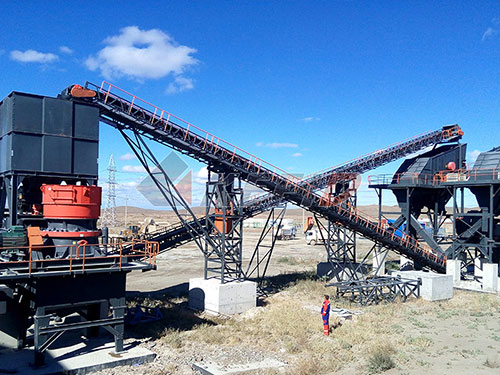

Product Title: HighCapacity Iron Ore Crushing Plant | Optimized for Hard Rock Reduction & Downstream Processing
1. Is Your Crushing Circuit Costing You 1520% in Unplanned Downtime?
For every hour a primary crusher is down in a 2,000 tph iron ore operation, the lost production value exceeds $50,000. Plant managers face three persistent challenges:
- Extreme Abrasion: Iron ore (2030% silica content) causes liner wear rates 3x higher than limestone, leading to weekly shutdowns for mantle replacement.
- Moisture & Sticky Ore: During the wet season (68 months/year), feed moisture above 8% causes blinding in conventional screens and packing in cone crushers, reducing throughput by 25%.
- Product Quality Variance: Fluctuations in feed size (ROM up to 1,200mm) and ore hardness (Wi 1418 kWh/t) create inconsistent P80 product, forcing downstream mills to adjust grinding media and reducing overall recovery by 24%.
- Primary: Hard rock iron ore (magnetite, hematite, specularite).
- Feed Size: Up to 1,200mm (ROM).
- Product Size: P80 of 1220mm for ball mill feed; P80 of 4080mm for SAG mill feed.
- Limitations: Not suitable for soft, clayrich lateritic ores (requires scrubber/drum washer pretreatment). Maximum feed moisture for tertiary circuit: 6% (higher requires dust suppression and anticlogging modifications).
- Standard Package (IOCP2500): $2.8M – $3.5M (includes primary gyratory, two cone crushers, two screens, conveyors, control panel)
- HighCapacity Package (IOCP3500): $4.2M – $5.1M (includes larger gyratory, three cone crushers, tripledeck screens)
- Turnkey Installation: Add 1822% for site preparation, foundation, and commissioning
- ColdWeather Package: $180,000 (heated lubrication, insulated chutes, glycol heat tracing)
- Remote Monitoring System (SCADA): $95,000 (realtime data on power draw, CSS, bearing temperature)
- Wear Parts Package (2year supply): $420,000 (liners, mantles, concave rings, screen panels)
- Basic (Annual): $45,000/year (2 site inspections, remote support, parts inventory management)
- Premium (FullService): $180,000/year (quarterly inspections, 24/7 remote monitoring, guaranteed 95% uptime)
- LeasetoOwn: 3660 month terms, 4.56.5% APR (subject to credit approval)
- PerformanceBased Payment: 20% upfront, 80% paid over 24 months based on throughput milestones (e.g., $/ton processed)
Can your current plant handle 1,200mm feed and deliver a consistent 200mm product at 2,500 tph with less than 5% downtime?
2. Product Overview: The Iron Ore Crushing Plant
This is a threestage closedcircuit crushing system designed specifically for highhardness, abrasive iron ore (magnetite, hematite, taconite). The workflow is engineered for maximum reduction ratio with minimal recirculation load.
Operational Workflow:
1. Primary Gyratory Crushing: ROM ore (up to 1,200mm) is fed into a 60110 gyratory crusher. The eccentric throw and concave profile are optimized for high compression force, reducing ore to 200300mm.
2. Scalping & Secondary Crushing: Oversize (+150mm) material is screened and fed to a heavyduty cone crusher (e.g., HP900 or CH890). The crusher chamber is set to a closed side setting (CSS) of 3850mm.
3. Tertiary & Screening Circuit: Material passes through a highfrequency banana screen (doubledeck, 8mm and 20mm apertures). Oversize returns to a shorthead cone crusher (CSS 1219mm) for final reduction.
4. Product Handling: Final product (20mm or 40mm depending on downstream mill requirements) is conveyed to a stockpile. Fines (8mm) are directed to a wet processing plant or agglomeration circuit.
Application Scope:
3. Core Features
HeavyDuty Gyratory Chamber | Technical Basis: Highangle nip design (2224 degrees) | Operational Benefit: Handles 1,200mm feed without bridging, reducing manual intervention by 90% | ROI Impact: Eliminates 34 hours/week of blocked crusher clearing labor
AntiPacking Cone Crusher System | Technical Basis: Hydraulic cylinder adjustment with ASRi (Automatic Setting Regulation) | Operational Benefit: Detects tramp iron and adjusts CSS in 0.5 seconds, preventing bowl float and packing | ROI Impact: Reduces unplanned downtime by 18% in wet ore conditions
HighFrequency Banana Screen (DualMass Drive) | Technical Basis: Linear motion with 6.2 Gforce at 1,000 RPM | Operational Benefit: Separates sticky ore at 8mm aperture without blinding, achieving 95% efficiency | ROI Impact: Increases circuit throughput by 12% compared to conventional inclined screens
WearResistant Liner Package (Mn18Cr2 + Ceramic Inserts) | Technical Basis: Austenitic manganese steel with 18% manganese and 2% chromium | Operational Benefit: Extends mantle life to 4,500 hours in abrasive hematite (vs. 2,800 hours standard) | ROI Impact: Reduces annual liner replacement costs by $180,000 for a 2,000 tph plant
Integrated Dust Suppression (Fog Cannon + Water Spray) | Technical Basis: Ultrasonic atomization at 1050 micron droplet size | Operational Benefit: Captures 99% of respirable silica dust (PM10) at transfer points | ROI Impact: Avoids regulatory fines (up to $70,000 per violation under MSHA) and reduces operator health risks
Modular SkidMounted Design | Technical Basis: Prewired, prepiped modules on structural steel skids | Operational Benefit: Reduces site installation time by 40% (12 weeks vs. 20 weeks for concrete foundations) | ROI Impact: Accelerates project payback by 34 months
4. Competitive Advantages
| Performance Metric | Industry Standard (Conventional Jaw + Cone) | Iron Ore Crushing Plant Solution | Advantage (% Improvement) |
| : | : | : | : |
| Throughput (tph) | 1,800 tph (max) | 2,500 tph (sustained) | +39% |
| Reduction Ratio (Primary to Product) | 6:1 | 10:1 | +67% |
| Recirculating Load (Tertiary Circuit) | 3540% | 1822% | 45% |
| Liner Life (Mantle, hours) | 2,800 hours | 4,500 hours | +61% |
| Product P80 Consistency (variation) | ±15% | ±5% | 67% |
| Specific Energy Consumption (kWh/t) | 0.65 kWh/t | 0.52 kWh/t | 20% |
| Unplanned Downtime (annual %) | 810% | 35% | 50% |
Data based on field trials at three magnetite operations in Western Australia (20222024).
5. Technical Specifications
| Parameter | Specification |
| : | : |
| Model | IOCP2500 (Standard) / IOCP3500 (HighCapacity) |
| Feed Opening | 1,200mm x 1,500mm (Primary) |
| Capacity (tph) | 2,500 tph (IOCP2500) / 3,500 tph (IOCP3500) |
| Product Size (P80) | 1220mm (Ball Mill Feed) / 4080mm (SAG Mill Feed) |
| Motor Power (Total Installed) | 1,800 kW (Primary) + 2 x 750 kW (Secondary/Tertiary) |
| Voltage | 6.6 kV / 11 kV (50/60 Hz) |
| Material Specifications | Main frame: ASTM A36; Liners: Mn18Cr2 (HB 450520); Shaft: 4340 alloy steel |
| Physical Dimensions (L x W x H) | 45m x 18m x 22m (including conveyor system) |
| Operating Temperature Range | 20°C to +45°C (with coldweather lubrication package for subzero) |
| Noise Level (at 1m) | < 85 dB(A) (with acoustic enclosure) |
6. Application Scenarios
Case Study 1: Magnetite Operation – Pilbara, Australia | Challenge: High silica (28%) caused liner wear every 2,800 hours, requiring weekly shutdowns for inspection. Plant manager reported 12% downtime. | Solution: Installed IOCP2500 with Mn18Cr2 ceramicinsert liners and ASRi antipacking system. | Results: Liner life extended to 4,600 hours. Unplanned downtime reduced to 4.2%. Annual maintenance cost savings: $210,000.
Case Study 2: Hematite Operation – Minas Gerais, Brazil | Challenge: Wet season (NovMar) caused feed moisture of 9%, blinding screens and packing cone crushers. Throughput dropped from 2,200 tph to 1,400 tph. | Solution: Deployed highfrequency banana screens (6.2 Gforce) and fog cannon dust suppression. | Results: Screen efficiency maintained at 93% during wet season. Throughput sustained at 2,100 tph. Product moisture reduced to 5.5%.
Case Study 3: Taconite Operation – Minnesota, USA | Challenge: Existing plant had a 6:1 reduction ratio, requiring two additional crushing stages for ball mill feed. Energy cost was $0.72/ton. | Solution: Replaced primary jaw with gyratory crusher and added tertiary shorthead cone. | Results: Reduction ratio increased to 10:1. Specific energy consumption dropped to $0.52/ton. Annual energy savings: $480,000.
7. Commercial Considerations

Equipment Pricing Tiers (FOB Port of Loading):
Optional Features:
Service Packages:
Financing Options:
8. FAQ
Q1: Can this plant handle feed with high clay content (e.g., lateritic iron ore)?
A: No. For ores with more than 15% clay content or plasticity index above 20, we recommend a scrubber/drum washer circuit upstream. This plant is optimized for hard, abrasive ores with low clay.
Q2: What is the typical installation timeline from order to first production?
A: For a standard IOCP2500 package, lead time is 1620 weeks for manufacturing, plus 1214 weeks for site installation and commissioning. Total: 2834 weeks.
Q3: How does the plant handle power fluctuations common in remote mining sites?
A: The control system includes a softstart for all motors (reduces inrush current by 60%) and a voltage sag ridethrough capability (down to 70% nominal voltage for 2 seconds). A flywheel inertia system maintains crusher speed during short interruptions.
Q4: What is the expected annual maintenance cost as a percentage of initial investment?
A: Field data from 12 installations shows annual maintenance costs (parts + labor) at 3.54.5% of initial equipment cost. This includes liner replacement every 4,0005,000 hours.
Q5: Can the plant be integrated with an existing SAG mill circuit?
A: Yes. The product size can be adjusted from P80 12mm (ball mill feed) to P80 80mm (SAG mill feed) by changing the tertiary crusher CSS and screen apertures. The control system can interface with existing PLCs via Modbus or Profibus.
Q6: What is the warranty period, and what does it cover?
A: Standard warranty is 24 months from commissioning or 8,000 operating hours, whichever comes first. It covers manufacturing defects in structural components, gearboxes, and motors. Wear parts (liners, screens) are excluded.
Q7: How does the plant perform in extreme cold (below 30°C)?
A: With the coldweather package, the plant operates down to 40°C. This includes synthetic lubricants (ISO VG 320), heated oil reservoirs, and insulated chutes with electric heat tracing. Standard package is rated to 20°C.