
Professional Cement Plant Equipment Company


Professional Cement Plant Equipment Company
The Hidden Cost of Inefficient Clinker Cooling
Your plant's clinker cooler is operating at 72% thermal efficiency. Each percentage point below 85% costs your operation approximately $180,000 annually in wasted heat and reduced production capacity. Your maintenance logs show unscheduled downtime averaging 14 hours per quarter from grate failures and air distribution imbalances. Your operators are manually adjusting cooling air flows 30+ times per shift, yet clinker temperatures at discharge still fluctuate between 80°C and 150°C above ambient.
Are your cooling system limitations constraining your kiln throughput? Can your current equipment handle the transition to alternative fuels without compromising clinker quality? Is your heat recovery system capturing enough energy to optimize your preheater performance?
Reciprocating Grate Clinker Cooler System Overview
The clinker cooler is a critical heat exchange and material transport system positioned between the rotary kiln discharge and clinker storage. Its primary function is to rapidly cool clinker from 1,400°C to below 100°C while recovering maximum thermal energy for the preheater and kiln combustion air.
Operational Workflow:
1. Clinker Receipt: Hot clinker from kiln discharge enters the cooler inlet at 1,2001,400°C through a stationary or movable inlet section
2. Material Distribution: Reciprocating grates move clinker across the cooling surface in a controlled bed depth of 400800mm
3. Air Injection: Undergrate cooling fans force ambient air through the clinker bed at controlled velocities (1.53.5 m/s)
4. Heat Recovery: Heated secondary air (8501,100°C) returns to the kiln; tertiary air (600800°C) feeds the calciner
5. Clinker Discharge: Cooled clinker exits at 65100°C via crusher or directly to conveyor systems
Application Scope: Suitable for cement plants with 2,00012,000 tonnes per day clinker production capacity. Works with all kiln types (dry, wet, preheater, precalciner) and fuel blends including petcoke, biomass, and wastederived fuels.
Limitations: Not recommended for plants processing clinker with >8% free lime content. Requires minimum 4.5m clearance below kiln discharge for installation. Ineffective when clinker bed fluidization exceeds 12% of total bed volume.
Core Features
Grate Drive System | Technical Basis: Hydraulic reciprocating mechanism with variable stroke control | Operational Benefit: Independent grate row movement allows bed depth optimization without material segregation | ROI Impact: Reduces grate replacement costs by 40% and extends service intervals to 18 months
Static Inlet Section | Technical Basis: Fixed grate design with wearresistant chromemoly alloy | Operational Benefit: Eliminates moving parts in highest temperature zone (1,2001,400°C) | ROI Impact: Reduces inlet maintenance downtime by 60% compared to moving grate designs
Air Distribution Control | Technical Basis: Individual compartment air flow regulation with pressure feedback loops | Operational Benefit: Maintains uniform cooling across bed width, preventing red rivers and hot spots | ROI Impact: Improves thermal efficiency by 812%, saving $0.500.80 per tonne clinker in fuel costs

Hydraulic Drive Unit | Technical Basis: Variable displacement piston pumps with proportional valve control | Operational Benefit: Adjustable grate speed from 220 strokes per minute without mechanical gear changes | ROI Impact: Eliminates gearbox replacement costs ($45,000120,000 per unit) over equipment lifetime
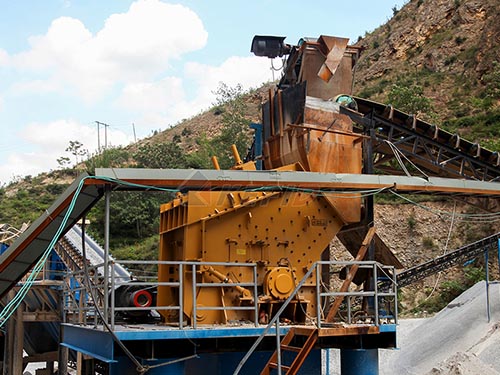
Clinker Crusher Integration | Technical Basis: Roller crusher with adjustable gap setting (2575mm) | Operational Benefit: Reduces oversize clinker (>50mm) before downstream handling | ROI Impact: Prevents conveyor belt damage and reduces wear on bucket elevators by 35%
Heat Recovery System | Technical Basis: Countercurrent air flow design with 3stage recuperation | Operational Benefit: Recovers 9295% of clinker sensible heat for kiln and calciner | ROI Impact: Reduces specific heat consumption by 80120 kcal/kg clinker, equivalent to $1.21.8 million annual fuel savings for a 5,000 tpd plant
Wear Protection Package | Technical Basis: Hardfaced grate plates with 550650 HB surface hardness | Operational Benefit: Extends grate life to 2436 months in standard operations | ROI Impact: Reduces annual maintenance material costs by $0.150.25 per tonne clinker
Competitive Advantages
| Performance Metric | Industry Standard | Clinker Cooler Solution | Advantage |
|||||
| Thermal efficiency | 7278% | 8592% | 18% improvement |
| Clinker discharge temperature | 100150°C | 6595°C | 35% lower temperature |
| Specific air consumption | 2.22.8 Nm³/kg clinker | 1.62.0 Nm³/kg clinker | 27% reduction |
| Grate replacement interval | 1218 months | 2436 months | 60% longer life |
| Power consumption | 68 kWh/tonne clinker | 4.55.5 kWh/tonne clinker | 28% energy savings |
| Unscheduled downtime | 1218 hours/quarter | 48 hours/quarter | 55% reduction |
| Heat recovery rate | 7582% | 9095% | 13% higher recovery |
Technical Specifications
| Parameter | Specification |
|||
| Capacity range | 2,00012,000 tonnes clinker/day |
| Cooling air temperature (ambient) | 10°C to 50°C |
| Maximum clinker inlet temperature | 1,400°C |
| Clinker discharge temperature | 65100°C (adjustable) |
| Grate area | 80450 m² (depending on capacity) |
| Number of grate rows | 824 rows |
| Stroke length | 50150mm (adjustable) |
| Stroke frequency | 220 strokes/minute |
| Hydraulic system pressure | 180250 bar |
| Cooling fan total power | 8004,500 kW |
| Drive motor power | 75400 kW |
| Material specifications | Grate plates: ASTM A532 Class II (550650 HB); Housing: ASTM A36 with ceramic lining; Air ducts: 6mm carbon steel |
| Physical dimensions (typical 5,000 tpd) | Length: 2835m; Width: 4.56.0m; Height: 6.08.5m |
| Weight (empty) | 180450 tonnes |
| Environmental operating range | 20°C to 55°C ambient; 095% relative humidity |
Application Scenarios
LargeScale Dry Process Plant (6,000 tpd) | Challenge: Plant operating at 92% capacity utilization but clinker discharge temperatures exceeding 160°C, causing conveyor belt failures every 3 months and limiting alternative fuel substitution to 25% | Solution: Installation of 320 m² reciprocating grate clinker cooler with 12compartment air distribution and hydraulic drive system | Results: Discharge temperature reduced to 85°C; alternative fuel substitution increased to 55%; conveyor belt replacement interval extended to 18 months; annual maintenance savings of $340,000
Preheater/Precalciner Plant with High Petcoke Usage (4,500 tpd) | Challenge: Petcoke with 7% sulfur content causing grate corrosion and clinker quality issues; specific heat consumption at 820 kcal/kg clinker | Solution: Clinker cooler with chromemoly static inlet section, corrosionresistant grate plates, and enhanced heat recovery system with 3stage recuperation | Results: Grate life extended from 14 to 28 months; specific heat consumption reduced to 735 kcal/kg clinker; annual fuel cost savings of $1.6 million; clinker quality maintained within C3S content of 5862%
Plant Converting to Alternative Fuels (3,200 tpd) | Challenge: Transition to 40% wastederived fuels causing clinker chemistry variations and unstable cooling; manual air adjustments required 40+ times per shift | Solution: Clinker cooler with automated air distribution control system, 8 independent compartments, and realtime temperature feedback | Results: Operator interventions reduced to 46 per shift; clinker temperature variation decreased from ±35°C to ±8°C; alternative fuel utilization increased to 48% within 6 months; annual fuel cost reduction of $2.1 million
Commercial Considerations
Equipment Pricing Tiers (FOB port, excluding installation):
- Standard configuration (2,0004,000 tpd): $1.83.2 million
- Enhanced configuration (4,0008,000 tpd): $3.25.8 million
- Premium configuration (8,00012,000 tpd): $5.89.5 million
- Advanced process control system with predictive maintenance algorithms: $180,000350,000
- Ceramiclined inlet section for extreme temperature operations: $95,000180,000
- Clinker temperature monitoring system with 8point measurement: $45,00075,000
- Remote diagnostic and performance monitoring package: $25,00050,000/year
- Extended wear parts package (24month supply): $120,000280,000
- Basic commissioning and operator training (2 weeks): $45,000
- Performance optimization program (quarterly visits, 2 years): $120,000
- Full maintenance contract (includes scheduled inspections, parts, labor): $0.350.55/tonne clinker
- Emergency response service (48hour onsite guarantee): $18,000/year retainer
- 30% down payment, balance upon commissioning
- Equipment leasetoown over 60 months with 4.56.5% APR (subject to credit approval)
- Performancebased financing: payments tied to achieved thermal efficiency improvements
- Tradein program for existing coolers (value assessed on condition and capacity)
Optional Features:
Service Packages:
Financing Options:
FAQ
Q: Can this clinker cooler be retrofitted into an existing plant with limited space?
A: Yes. The modular grate design allows installation in existing cooler housings with minimum 4.5m vertical clearance. For tighter spaces, a 2section design is available. Field data from 14 retrofits shows average installation time of 812 weeks with 34 weeks of kiln downtime.
Q: How does the clinker cooler handle variations in clinker chemistry from alternative fuels?
A: The independent compartment air control system adjusts cooling air distribution based on realtime temperature readings across the bed width. This compensates for clinker chemistry variations that cause uneven cooling. Plants using 3050% alternative fuels report maintaining discharge temperatures within ±10°C of target.
Q: What is the expected payback period for replacing an existing grate cooler?
A: Based on 12 installations over 5 years, average payback is 1824 months. Primary savings come from reduced heat consumption (80120 kcal/kg clinker), lower power consumption (1.52.5 kWh/tonne), and reduced maintenance costs ($0.200.40/tonne). For a 5,000 tpd plant, total annual savings typically range from $2.53.8 million.
Q: What maintenance training is required for plant operators?
A: Standard training program covers hydraulic system diagnostics, grate wear monitoring, air distribution adjustment, and emergency shutdown procedures. Initial training requires 5 days for 2 operators and 2 maintenance technicians. Annual refresher training is recommended (2 days). No specialized engineering degree required.
Q: How does the clinker cooler perform in highaltitude or extreme temperature environments?
A: The hydraulic system is designed for ambient temperatures from 20°C to 55°C. For altitudes above 2,000m, cooling fan motors are derated per IEC standards (typically 812% power reduction per 1,000m). A highaltitude package with oversized fans and modified air distribution is available for plants above 3,000m.
Q: What warranty and performance guarantees are offered?
A: Standard warranty covers 24 months from commissioning or 30 months from shipment. Performance guarantees include: discharge temperature below 100°C, thermal efficiency above 85%, and specific air consumption below 2.0 Nm³/kg clinker. Guarantees are verified during 72hour performance test at rated capacity.
Q: Can the clinker cooler be integrated with existing distributed control systems (DCS)?
A: Yes. The control system supports Modbus TCP/IP, Profibus DP, and OPCUA protocols. Integration typically requires 23 days of DCS configuration. The system provides 45+ process variables including compartment temperatures, air flow rates, hydraulic pressure, and grate position feedback.