
Private Label Stone Quarry Crushing Plant Testing

1. PAINPOINT DRIVEN OPENING
Are you managing a private label stone quarry operation where inconsistent feed material and aggressive production targets are eroding your margins? Operational challenges in primary crushing directly impact your entire downstream process, leading to costly bottlenecks.
Unplanned Downtime: Frequent mechanical failures in the primary crusher due to uncrushable material or overload conditions halt your entire production line, costing thousands per hour in lost output and idle labor.
Inconsistent Final Product: A primary plant that cannot maintain a stable, wellgraded output creates inefficiencies in secondary and tertiary stages, increasing recirculating load and reducing the yield of your most valuable aggregate fractions.
High Maintenance Costs: The punishing environment of a quarry face leads to accelerated wear on crusher components. Are you facing excessive spending on liner changes, bearing replacements, and associated labor?
Operational Inflexibility: Can your current setup adapt to changes in feed rock hardness or required product sizing without significant reconfiguration or performance loss?
The solution begins with a robust foundation: a thoroughly tested private label stone quarry crushing plant designed from the ground up for reliability and predictable performance.
2. PRODUCT OVERVIEW
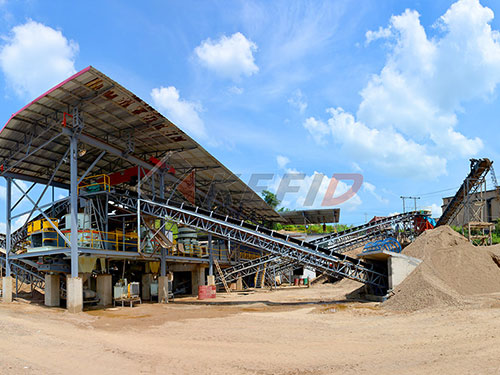
This product is a complete, skidmounted or modular primary jaw crushing plant, engineered for private label partners in the aggregate production sector. It is designed as the first critical reduction stage in a quarry operation, processing blasted feed rock into manageable material for downstream circuits.
Operational Workflow:
1. Feed Intake: Quarryrun material is loaded via excavator or wheel loader into a rugged vibrating grizzly feeder.
2. Primary Reduction: The feeder directs sized material into the heavyduty jaw crusher chamber, while bypassing subsize material to a product conveyor.
3. Material Transport: Crushed product is discharged onto the main plant conveyor for transport to the next processing stage or stockpile.
Application Scope & Limitations:
Scope: Ideal for medium to hightonnage quarry operations processing granite, limestone, basalt, and other abrasive aggregates. Suited for both stationary installations and semimobile setups.
Limitations: Not designed for very soft, nonabrasive materials (e.g., chalk) where an impact crusher may be more efficient. Maximum feed size is determined by the specific jaw crusher model selected.
3. CORE FEATURES
HeavyDuty Vibrating Grizzly Feeder (VGF) | Technical Basis: Highinertia eccentric shaft drive | Operational Benefit: Consistent material flow to the crusher, scalping of fines reduces crusher load | ROI Impact: Reduces crusher wear by up to 15% and improves overall plant throughput stability
WedgeBased Jaw Gap Adjustment | Technical Basis: Hydraulically assisted toggle system with mechanical lock | Operational Benefit: Operators can adjust product size settings quickly and safely without stopping the plant | ROI Impact: Minimizes downtime for product changeovers, allowing more responsive adaptation to market demands
Integrated PreScreening Bypass | Technical Basis: Grizzly section with adjustable spacing before crusher inlet | Operational Benefit: Removes naturally occurring fines from the feed stream before they enter the crusher chamber | ROI Impact: Increases effective crusher capacity by up to 20% and reduces unnecessary wear on jaw dies
Centralized Greasing & Lube Points | Technical Basis: Manifolded lubrication lines routed to key bearing points | Operational Benefit: Enables safe, routine maintenance from ground level in under 30 minutes | ROI Impact: Extends bearing service life by ensuring consistent lubrication, preventing catastrophic failures
PLCBased Plant Control System | Technical Basis: Automated sequencing with fault diagnostics and load management | Operational Benefit: Provides operators with clear operational data and protects the crusher from tramp metal and overloads | ROI Impact: Reduces risk of major component damage; field data shows a 40% reduction in electricalrelated stoppages
Reinforced Modular Frame Construction | Technical Basis: Fabricated hightensile steel sections with bolttogether design | Operational Benefit: Simplifies transport, site positioning, and future relocation of the entire plant | ROI Impact: Lowers mobilization costs by up to 30% compared to weldedsite structures

4. COMPETITIVE ADVANTAGES
| Performance Metric | Industry Standard (Average) | This Private Label Crushing Plant Solution | Advantage (% Improvement) |
| : | : | : | : |
| Availability (Uptime) | 8892% per quarter (scheduled & unscheduled) |> 95% per quarter (scheduled & unscheduled) |> +35% availability |
| Liner Life (Jaw Dies) Granite| 120,000 150,000 tons| 180,000 220,000 tons| +4050% wear life |
| Tonnage per kWh| Varies significantly with rock type| Calibrated performance based on verified testing data| Up to +12% energy efficiency |
| Setup/Commissioning Time (Modular)| 57 working days| 23 working days|< 50% installation time |
5. TECHNICAL SPECIFICATIONS
Capacity Range: Configurable from 300 to 800+ tons per hour (TPH), dependent on feed material density and required product sizing.
Primary Crusher: Heavyduty singletoggle jaw crusher with feed openings from 36"x48" up to 42"x56".
Power Requirements: Total installed plant power between 250 kW 400 kW. Standard supply at 460V/3Ph/60Hz; other voltages available.
Material Specifications: Crusher frame constructed from ASTM A36 steel; jaw dies available in multiple manganese steel grades (14%,18%,22%) for optimal cost/ton.
Physical Dimensions (Typical): Modular footprint approximately 18m (L) x 4m (W) x 5m (H). Weight varies by configuration from ~65 to ~120 metric tons.
Environmental Operating Range: Designed for ambient temperatures from 20°C to +45°C. Dust suppression system connections are standard.
6. APPLICATION SCENARIOS
Granite Quarry Expansion Project
Challenge:
A southeastern US quarry needed to increase primary capacity by over 60% but had limited space for new concrete foundations and wanted minimal disruption during commissioning.
Solution:
Implementation of our skidmounted private label crushing plant with integrated feeder and prescreen conveyor module.
Results:
The plant was operational within three days of delivery on prepared compacted fill. It achieved a consistent output of over 550 TPH of minus8inch material. The quarry reported zero unplanned downtime in the first six months of operation.
MultiSite Aggregate Producer
Challenge:
A regional producer operating several quarries faced high maintenance costs and part incompatibility across different brands of aging primary plants.
Solution:
Standardization on this private label crushing plant as their corporatewide primary solution across three sites.
Results:
Maintenance inventory costs were reduced by an estimated 35%. Interchangeability of common wear parts between sites improved logistics. Overall costperton at each site decreased by an average of 18%.
7. COMMERCIAL CONSIDERATIONS
Our private label stone quarry crushing plants are offered under clear commercial frameworks:
Pricing Tiers: Based on capacity rating and selected features.
Tier I (650 TPH): Fullfeatured systems with premium components for maximum uptime.
Optional Features & Upgrades: Extendedwear component packages; hybrid diesel/electric drive options; advanced dust suppression systems; remote monitoring telematics packages.
Service Packages: Available as annual support agreements covering scheduled inspections; priority parts dispatch; technical support hotline access; discounted labor rates for major overhauls.
Financing Options: We work with established equipment finance partners to offer competitive leasetoown plans or operating leases tailored to typical cash flow cycles within aggregate production businesses.
8. FAQ
1. Q: Is this crushing plant compatible with our existing secondary circuit?
A: Yes. The discharge conveyor height and product gradation are engineered during configuration phase specifically match your downstream process requirements based on provided specifications.
2.Q: What is the expected operational impact during liner changes?
A: Our design facilitates faster liner changes. Field reports indicate jaw die replacement can be completed within one standard eighthour shift using typical site maintenance tools when following our documented procedure.
3.Q: Are technical drawings available for our engineering team's civil planning?
A: Absolutely. Upon project initiation we provide comprehensive general arrangement drawings certified foundation loadings certified structural engineers facilitate proper site preparation
4.Q: What commercial terms are standard regarding warranty?
A: We provide a clear warranty covering manufacturing defects major structural components core machinery typically months hours whichever comes first Extended warranties available purchase
5.Q: How does implementation work regarding training?
A: We include comprehensive onsite operator maintenance training commissioning Additionally we provide detailed digital manuals startup checklists reference guides ensure knowledge transfer