
Private Label Stone Crusher Plant Suppliers


1. PAINPOINT DRIVEN OPENING
Managing a crushing operation presents persistent challenges that directly impact your bottom line. Are you experiencing inconsistent final product gradation, leading to rejected loads and lost revenue? Are you facing excessive wear part costs and unplanned downtime due to premature component failure in abrasive conditions? Is your plant's overall throughput limited by frequent clogging, manual clearing, or inefficient material flow? These issues translate to measurable costs: hours of lost production per month, 2030% higher than expected wear part expenditures, and potential safety risks during maintenance interventions. The core question for plant managers is this: how can you achieve reliable, predictable crushing performance with lower costperton and maximized uptime?
2. PRODUCT OVERVIEW
A Private Label Stone Crusher Plant is a complete, preengineered crushing and screening circuit manufactured under your specified brand name. It integrates primary, secondary, and sometimes tertiary crushing stages with material handling and screening equipment into a cohesive system.
Operational Workflow:
1. Primary Reduction: Runofquarry material is fed into a robust primary jaw crusher for initial size reduction.
2. Sorting & Secondary Crushing: Prescreened material is routed; oversize is directed to a secondary cone or impact crusher for further refinement.
3. Final Sizing & Stockpiling: Crushed aggregate passes through final screening decks to separate it into precise product fractions (e.g., ¾" chip, 57 stone, crusher run), which are then conveyed to designated stockpiles.
Application Scope: Ideal for aggregate producers, large construction projects requiring onsite material processing, and contractors establishing fixed or semifixed quarry operations. It is designed for processing natural stone (granite, limestone, basalt) and recycled concrete/asphalt.
Key Limitations: Stationary and semistationary plants require foundational work and are not mobile like trackmounted units. Optimal performance depends on correct plant configuration for the feed material's abrasiveness and hardness.
3. CORE FEATURES
HeavyDuty Primary Crusher Frame | Technical Basis: Finite Element Analysis (FEA) optimized stress distribution | Operational Benefit: Withstands peak load shocks from uncrushable material, preventing frame fatigue cracks | ROI Impact: Eliminates catastrophic structural failure, extending plant service life by decades
PLCBased Automated Control System | Technical Basis: Centralized programmable logic controller with touchscreen HMI | Operational Benefit: Monitors amp draw, crusher pressure, and conveyor speeds for realtime optimization and fault diagnosis | ROI Impact: Reduces operator error, allows oneperson operation from the control room, improving throughput consistency
Modular Component Design | Technical Basis: Standardized bolttogether sections for major assemblies | Operational Benefit: Enables faster replacement of wear modules (e.g., feed hopper skirts, chute liners) versus welded repairs | ROI Impact: Cuts planned maintenance downtime by up to 40% and reduces dependency on specialized field welders
Tier 4 Final / EU Stage V Compliant Power Unit | Technical Basis: Modern diesel or electric drive systems meeting global emissions standards | Operational Benefit: Ensures regulatory compliance for stationary engines without sacrificing power output | ROI Impact: Avoids potential fines and site shutdowns in regulated regions, futureproofing your investment
Integrated Dust Suppression System | Technical Basis: Strategically placed spray nozzles with solenoid valves tied to crusher activation | Operational Benefit: Significantly reduces airborne particulate at primary transfer points | ROI Impact: Mitigates health/safety risks, minimizes community complaints, and helps maintain environmental permit compliance
HighAbrasion Resistant Steel Liners | Technical Basis: AR400/500 steel plates in critical wear zones (feeders, skirting, chutes) | Operational Benefit: Provides 23x longer service life compared to mild steel in highimpact areas | ROI Impact: Lowers longterm material costs for plant infrastructure maintenance
4. COMPETITIVE ADVANTAGES
| Performance Metric | Industry Standard (Typical OEM Plant) | Private Label Crusher Plant Solution | Advantage (% Improvement) |
| : | : | : | : |
| Wear Part Changeout Time (Cone Crusher)| 812 hours manual labor| 68 hours with hydraulic assist & tooling| ~30% faster |
| Power Consumption per Ton Crushed| Baseline 100%| Optimized chamber design & efficient drive belts reduces draw| 58% improvement |
| Plant Setup / Commissioning Time| 1014 days after delivery| Preassembled modules & singlesource wiring reduce field work| ~25% faster (710 days) |
| Component Interchangeability| Often modelyear specific| Standardized bearings, seals, motors across crushing stages| 15% reduction in spare parts inventory cost |
5. TECHNICAL SPECIFICATIONS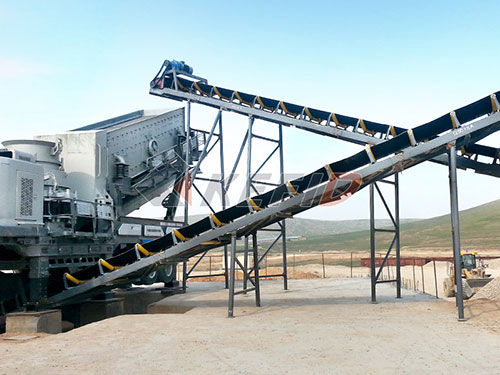
Capacity Range: Configurable from 150 to 600+ tons per hour (TPH), depending on feed material hardness and final product mix.
Primary Crusher Options: Jaw crusher sizes from 36" x 48" up to 56" x 72", with CSS adjustments from 4" to 12".
Secondary/Tertiary Crusher Options: Cone crushers with head diameters from 4.5' to 7.5', or horizontal shaft impactors.
Power Requirements: Total installed power typically ranges from 500 HP to over 1,200 HP. Available in full electric motor drive or dieselelectric hybrid configurations.
Structural Material: Main frame fabricated from heavyduty wideflange beams; wear surfaces lined with minimum AR400 steel.
Physical Dimensions (Typical Layout): Footprint of approximately 120' L x 80' W x 65' H for a complete threestage plant.
Environmental Operating Range: Designed for ambient temperatures from 20°C to +50°C (4°F to +122°F). Dust suppression systems rated for operation in conditions up to 85% relative humidity.
6. APPLICATION SCENARIOS
Granite Quarry Expansion Project
Challenge: An existing quarry needed to increase production of state DOTspec road base (1½" down) but was bottlenecked by an aging secondary circuit causing inconsistent gradation.
Solution: Implementation of a new private label plant featuring a highperformance cone crusher as the secondary stage with an automated setting regulation system.
Results: Postinstallation field data showed a 22% reduction in offspec product. Throughput increased by 18%, achieving the target of +450 TPH while maintaining strict gradation bands.
Recycled Concrete Aggregate (RCA) Processing Facility
Challenge: A demolition contractor entering the RCA market faced extreme wear on plant components from embedded rebar and abrasive concrete, leading to weekly downtime.
Solution: A rugged private label jawandimpactor plant was specified with extraheavyduty skirting; magnetic separators on all discharge conveyors; and quickchange wear liners throughout the material path.
Results: Wear life on liner components increased by 60%. Magnetic separation removed +95% of ferrous contaminants automatically. Plant availability exceeded 92%, making the RCA operation commercially viable.
7. COMMERCIAL CONSIDERATIONS
Our private label stone crusher plants are offered in clear pricing tiers based on capacity and complexity:
1. Base Tier (150250 TPH): Includes primary jaw crusher; secondary cone crusher; basic screening unit; steel structure; walkways; ladders; mechanical installation drawings.
2.
3.Performance Tier (250450 TPH):
All Base Tier items plus:
PLC automation with motor management;
Integrated dust suppression package;
Optional onboard power generation;
Extended warranty on major components.
4.Premium Tier (450600+ TPH):
All Performance Tier items plus:
Tertiary crushing stage;
Advanced process control software;
Full set of commissioning spares;
Dedicated project manager & onsite technical support during startup.
Optional features include telescopic stacker conveyors; wash screens; acoustic enclosures; and advanced fire suppression systems.
We offer comprehensive service packages ranging from annual inspection contracts to fullturnkey operation & maintenance agreements.Financing options include capital lease agreements tailored for heavy equipment acquisition.
FAQ

Q1:What level of customization is possible within a private label program?
A1:The program offers significant customization within proven engineering frameworks.You can specify brandspecific color schemes,livery,and control panel layouts.Crucially,your team selects key component brands(crushers,screens,motors)and we engineer the integration.We do not compromise core structural or safety designs but tailor the applicationspecific flow sheet,material specifications,and ancillary equipment precisely around your chosen components.
Q2:What is the typical lead time from order placement until commissioning?
A2.For standard configurations within our Performance Tier,the typical lead time ranges between five months.This includes detailed engineering,fabrication,painting,and predelivery testing.Larger Premium Tier plants may require six months.Complex customizations will affect this timeline,and we provide detailed project schedules upon initial quotation.
Q3:What are the ongoing operational costs we should budget for?
A3.The primary operational costs are wear parts(liners,mantles,screen cloths),energy consumption,and routine maintenance labor.Field data indicates that wellconfigured plants operating within specification achieve a costperton where consumables account for approximately .Energy varies by local rates.Regular lubrication system maintenance is critical.We provide detailed expected consumption models based on your feed material analysis during the quoting process.
Q4:What training is provided for our operations team?
A4.Each project includes comprehensive training covering daily startup/shutdown procedures,routine inspection checklists,basic troubleshooting via the PLC interface,and safe lockout/tagout practices.Training occurs both at our facility during predelivery testing(FAT)and at your site during commissioning.We also provide complete digital operations manuals specific to your configured plant.
Q5:What happens if we need technical support after commissioning?
A5.We offer tiered technical support.A dedicated phone/email line provides immediate access.A shared parts list ensures component traceability.For urgent issues requiring physical presence,a network of qualified field service technicians can be dispatched under agreedupon service level agreements(SLAs).Remote diagnostics via secure modem connection are available as an option