
Private Label Sand Gravel Mining Customization

1. PAINPOINT DRIVEN OPENING
Managing a private label sand and gravel operation demands consistent quality, brand integrity, and cost control. Common challenges include:
Inconsistent Product Specification: Variability in particle size distribution and cleanliness from runofcourt material directly impacts your brand’s reputation and can lead to rejected loads.
High Rejection & Reprocessing Rates: Inefficient washing, screening, and classification result in offspec material, forcing costly rehandling and processing that erodes margins.
Excessive Fines Loss & Water Usage: Outdated systems fail to capture valuable fine aggregates or recycle process water efficiently, wasting both revenuegenerating product and a critical resource.
Operational Inflexibility: Fixed plants struggle to adapt to changing feedstock or market demands for different aggregate blends, limiting your ability to fulfill custom orders.
Are you facing escalating costs from reprocessing and waste? Is maintaining the strict quality standards required for your private label products becoming a constant operational battle?
2. PRODUCT OVERVIEW: PRIVATE LABEL SAND & GRAVEL MINING CUSTOMIZATION
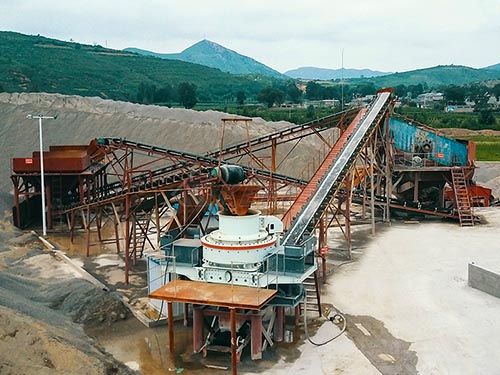
This service provides a turnkey engineering solution for designing, modifying, or upgrading your aggregate processing plant to produce consistent, specificationgrade materials under your private label. The operational workflow is engineered for precision:
1. Feedstock Analysis & Process Auditing: A thorough review of your pit geology and current plant performance establishes a baseline.
2. Custom Circuit Design: Engineering of material handling, crushing, screening, washing, and classification circuits tailored to your target specifications.
3. Focused Equipment Integration: Selection and implementation of key machinery—such as log washers, dewatering screens, cyclones, or attrition cells—to address specific contamination or grading issues.
4. Process Control & Automation: Installation of systems for consistent monitoring and adjustment of critical parameters like feed rate, water flow, and screen mesh selection.
5. Quality Assurance Protocol Development: Establishing onsite testing routines and control points to ensure ongoing compliance.
This solution is applicable for aggregate producers supplying readymix concrete, asphalt plants, construction projects, or retail bagging operations. It is not a onesizefitsall equipment package but a targeted engineering service with limitations defined by the existing site layout and feedstock characteristics.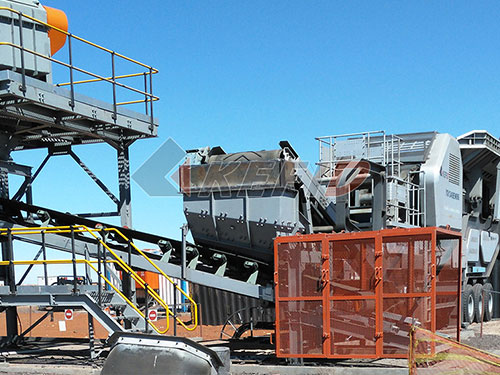
3. CORE FEATURES
Advanced Classification Systems | Technical Basis: Highfrequency screening & hydrocyclone separation | Operational Benefit: Precise cutpoint control for producing multiple inspec sand products (e.g., concrete sand, masonry sand) from the same feed | ROI Impact: Reduces offspec product by up to 15%, converting waste into saleable inventory.
ClosedLoop Water Management | Technical Basis: Clarifier tanks & filter press integration | Operational Benefit: Recovers up to 95% of process water for reuse and converts slurry ponds into handleable cake | ROI Impact: Cuts freshwater consumption costs by over 80% and eliminates costly pond dredging.
Modular Contaminant Removal | Technical Basis: Dedicated scrubbing and attritioning stages | Operational Benefit: Effectively breaks down clay balls, removes lignite, or cleans crusher dust to meet strict cleanliness specs (e.g., ASTM C33) | ROI Impact: Minimizes load rejections from customers by ensuring consistent product quality.
Adaptive Feed Control | Technical Basis: Variablefrequency drives (VFDs) on feeders integrated with live screen camera analysis | Operational Benefit: Automatically regulates feed rate based on material size distribution to prevent crusher or screen overload | ROI Impact: Increases overall plant throughput stability by an average of 12% while reducing equipment stress.
RealTime Gradation Monitoring | Technical Basis: Automated sampling units with particle size analysis feedback loops | Operational Benefit: Provides operators with immediate data on product gradation curves instead of delayed lab results | ROI Impact: Enables proactive adjustments, reducing batch failures by an estimated 20%.
4. COMPETITIVE ADVANTAGES
| Performance Metric | Industry Standard Solution | Private Label Customization Solution | Advantage (% improvement) |
| : | : | : | : |
| Product Consistency (Gradation) | Manual sampling & adjustment; ±5% variance from spec target. | Automated control loops with realtime feedback; ±1.5% variance from spec target. | 70% improvement in specification adherence |
| Fines Recovery Efficiency (from slurry)| Static settling ponds; <50% recovery of marketable fines (90% recovery of marketable fines.| >80% increase in product yield |
| Process Water Makeup Demand| Openloop system; high fresh water consumption per ton processed.| Closedloop clarification; >90% water recycle rate.| Up to 90% reduction in freshwater cost & environmental permitting burden |
| Plant Reconfiguration Time| Fixed plant layout; days to weeks for major product changeovers.| Modular circuit design with quickdisconnect points; hours to <2 days.| Up to 85% reduction in downtime during product switches |
5. TECHNICAL SPECIFICATIONS
Design Capacity Range: Custom engineered for operations from 50 TPH to 600+ TPH throughput.
Power Requirements: System dependent; designs prioritize highefficiency motors with VFDs across major loads (251500 HP applications). Total plant power analysis provided.
Material Specifications: Equipment constructed with AR400 abrasionresistant steel at highwear points (chutes, screen decks), stainless steel for corrosionprone wash areas.
Key Component Specifications:
Screening Surfaces: Polyurethane or rubber modular panels for extended life in washing applications.
Pumping Systems: Heavyduty slurry pumps with adjustable impeller clearance for maintained efficiency.
Classification Cyclones: Ceramiclined assemblies with adjustable apex valves for precise cutpoint control.
Environmental Operating Range: Engineered components rated for operation from 25°C to +50°C ambient temperature. Dust suppression and noise abatement designs comply with MSHA/OSHA standards.
6. APPLICATION SCENARIOS
ReadyMix Concrete Supplier Partnership | Challenge: A regional readymix company required a dedicated source of consistently graded ASTM C33 concrete sand under their own brand but faced variable quality from local pits. Their existing wash plant had poor fines control.| Solution: Implementation of a customized hydraulic classification system featuring a bank of cyclones and a dewatering screen on the sand circuit within their existing flow sheet.| Results: Achieved consistent fineness modulus control within a ±0.1 range. Reduced customer complaints related to sand quality by over 95%. Enabled the launch of their branded aggregate line.
Alluvial Gravel Pit Expansion| Challenge:A pit operator expanding into private label landscape products needed to remove pervasive clay coatings from gravels without excessive degradation or high water use.| Solution:A customized circuit integrating a lowspeed attrition scrubber followed by a novel counterflow rinsing screen designed specifically for their material.| Results:Aggregate cleanliness met visual specification standards with less than 0.5% residue after washing while reducing material loss below 3%. Water usage per ton was cut by 40%.
7. COMMERCIAL CONSIDERATIONS
Private label customization is scoped as a capital project with defined deliverables.
Pricing Tiers:
Consultation & Audit Tier: Comprehensive site assessment and process recommendation report.
Focused Retrofit Tier: Engineering design,supply,and installation of one key subsystem (e.g., fines recovery circuit).
Full Plant Integration Tier: Turnkey design,supply,and commissioning of multiple integrated circuits.
Optional Features: Onsite operator training packages,baseline spare parts kits,and remote monitoring/telematics subscriptions are available.
Service Packages: Extended warranties are offered alongside scheduled maintenance plans tailored specifically to the new equipment installed during customization.
Financing Options: Project financing can be structured through partner institutions.Typical structures include equipment leasing programs or term loans aligned with the project's expected payback period based on documented efficiency gains.
8.FAQ
Q1:What is the first step in determining if my operation needs this level of customization?
The process begins with an onsite process audit.We analyze current feedstock,material test reports,and plant performance data against your target specifications.This gap analysis forms the basis for any recommendation.
Q2.How disruptive is the implementation phase?
A wellplanned retrofit minimizes downtime.We engineer modular components where possible.Site work typically occurs during scheduled maintenance shutdowns.Field data shows most focused retrofits require between fiveand ten daysof full production stoppage
Q3.Can these upgrades be integrated with my existing machinery?
Yes.The core principle is enhancing your current asset base.We design interfacesfor seamless integrationwith existing crushers,screens,and conveyors.Oldercontrol panelsare often upgradedas part ofthe project
Q4.What kindof returnon investment(ROI)periodis typical?
ROI variesby scope.For projects focusedon reducingreprocessingwasteand increasingyieldpayback periodsbetween18and36monthsare commonly documentedbasedon increasedproduct salesandreducedoperatingcosts
Q5.Do you provide ongoing supportfor qualitycontrol protocols?
Yes.Engineering supportincludes establishingroutine samplingpointsand proceduresWe can also train yourqualitycontrolpersonnelon newtestingmethodologiesrequiredforyour refinedproducts