
Private Label Cement Plant Equipment Bulk Order
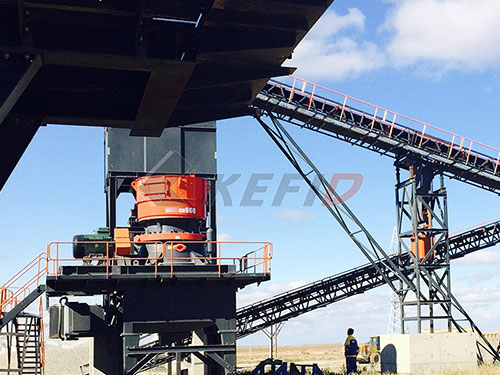

Private Label Cement Plant Equipment Bulk Order
The Hidden Cost of Production Gaps in Cement Manufacturing
Every hour of unscheduled downtime at a 3,000 TPD cement plant costs approximately $15,000–$25,000 in lost clinker production, not including the expense of emergency maintenance labor, expedited spare parts shipping, and contractual penalties for missed deliveries. For plant managers and engineering contractors, the recurring challenges are consistent: premature wear on grinding media, inconsistent material feed rates, elevated specific energy consumption (SEC) above 35–40 kWh/t, and the administrative burden of managing multiple equipment vendors with inconsistent quality standards.
When you place a bulk order for cement plant equipment, you are not simply purchasing machinery—you are securing operational continuity. The question is not whether your plant needs reliable equipment, but whether your current procurement strategy is optimized for total cost of ownership. Can your existing supplier guarantee ISO 9001certified manufacturing, standardized components across all units, and a single point of accountability for delivery schedules?
Product Overview: Bulk Cement Plant Equipment Procurement
This offering covers a comprehensive range of cement production machinery available for private label bulk ordering, including vertical roller mills (VRM), rotary kilns, preheater cyclones, clinker coolers, cement ball mills, and auxiliary conveying systems. The equipment is manufactured to meet the operational workflow of a modern dryprocess cement plant, from raw material grinding to finished cement storage.
Operational Workflow:
1. Raw Material Preparation – Limestone and additives are crushed and fed into the raw mill, where the equipment maintains a consistent feed rate of 200–500 TPH depending on plant capacity.
2. Pyroprocessing – The raw meal enters the preheater tower and rotary kiln, where the equipment ensures stable thermal profiles at 1,400–1,500°C for clinker formation.
3. Clinker Cooling – The clinker cooler reduces material temperature from 1,400°C to below 100°C ambient plus margin, enabling efficient downstream handling.
4. Finish Grinding – Clinker and gypsum are ground in the cement mill to achieve target fineness (3,200–4,500 cm²/g Blaine) with controlled particle size distribution.
5. Storage and Dispatch – Finished cement is transferred to silos and packing plants, with equipment designed for highcycle operation.
Application Scope: This equipment is suitable for new greenfield plants, brownfield expansions, and equipment replacement programs. It is applicable for ordinary Portland cement (OPC), Portland pozzolana cement (PPC), and slag cement production. Limitations include the need for sitespecific engineering adaptation for extreme altitudes above 3,000 meters and ambient temperatures consistently below 20°C, which require additional insulation and heating elements.
Core Features
HeavyDuty Gearbox with CaseHardened Gears
Technical Basis: The gearbox utilizes casehardened and ground gears per DIN 3990, rated for AGMA Class 12 quality, with a service factor of 2.0 minimum.
Operational Benefit: Your maintenance team will experience fewer gearbox failures, reducing unplanned stoppages that typically cost 8–12 hours per incident.
ROI Impact: Extends gearbox service life by 30–40% compared to standard throughhardened gears, saving $50,000–$80,000 per replacement cycle.
HighChrome Wear Liners
Technical Basis: Wear surfaces are fabricated from highchrome white iron (ASTM A532 Class III Type A) with a hardness of 550–650 HB.
Operational Benefit: This addresses your challenge of premature liner wear in abrasive raw material grinding, extending liner life from 6,000 to 10,000 operating hours.
ROI Impact: Reduces annual wear part procurement costs by approximately 25%, translating to $120,000–$180,000 savings for a 2,000 TPD plant.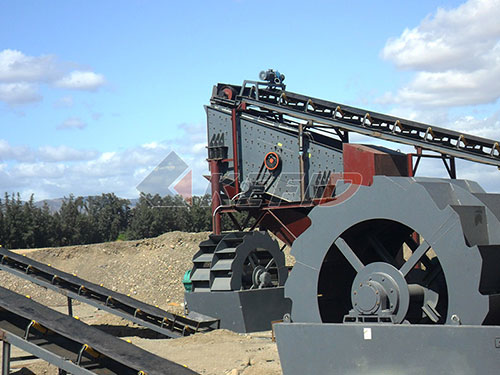
Dynamic Classifier with Variable Speed Drive
Technical Basis: The classifier rotor speed is controlled by a VFD, allowing precise adjustment of cut size from 40 to 200 microns.
Operational Benefit: Your quality control team can adjust product fineness without stopping production, ensuring consistent Blaine values within ±50 cm²/g.
ROI Impact: Improves cement strength development by 2–3 MPa at 28 days, enabling higher clinker substitution rates and reducing clinker factor by 3–5%.
Hydraulic Roller Press PreGrinding System
Technical Basis: The roller press operates at a specific pressing force of 4.5–5.5 N/mm², creating microcracks in clinker particles.
Operational Benefit: Your finish mill throughput increases by 30–50% when the roller press is installed upstream of the ball mill, reducing specific energy consumption.
ROI Impact: Lowers SEC from 32–35 kWh/t to 24–28 kWh/t, generating annual electricity cost savings of $400,000–$700,000 for a 1.5 MTPA plant.
MultiStage Sealing System for Kiln Inlet and Outlet
Technical Basis: The sealing system combines labyrinth seals, springloaded plates, and purge air to prevent false air ingress.
Operational Benefit: Your kiln operation will see improved thermal efficiency, with reduced heat loss and more stable flame shape.
ROI Impact: Reduces specific heat consumption by 20–40 kcal/kg clinker, saving $200,000–$350,000 annually in fuel costs for a 5,000 TPD line.
Modular Preheater Cyclone Design
Technical Basis: Cyclones are designed with lowpressure drop geometry (ΔP 95%).
Operational Benefit: Your preheater tower will achieve better gassolid separation, reducing dust recirculation and fan power demand.
ROI Impact: Cuts kiln system power consumption by 1.5–2.5 kWh/t clinker, contributing to a 5–7% reduction in overall plant power costs.
Integrated Condition Monitoring System
Technical Basis: Vibration sensors, temperature probes, and oil analysis ports are installed at critical bearing and gearbox locations, with data logging capability for 24/7 monitoring.
Operational Benefit: Your reliability team will receive early warnings of component degradation, enabling planned maintenance instead of emergency repairs.
ROI Impact: Reduces maintenance costs by 15–20% and extends mean time between failures (MTBF) from 8,000 to 12,000 operating hours.
Competitive Advantages
| Performance Metric | Industry Standard | Private Label Bulk Order Solution | Advantage (% Improvement) |
|||||
| Specific Energy Consumption (Finish Grinding) | 32–35 kWh/t | 26–29 kWh/t | 15–20% reduction |
| Gearbox Service Life | 40,000–50,000 hours | 60,000–70,000 hours | 30–40% extension |
| Wear Liner Service Life | 5,000–7,000 hours | 8,000–10,000 hours | 25–35% extension |
| Kiln Availability | 88–92% | 94–96% | 4–6% improvement |
| Maintenance Cost per Ton Cement | $2.50–$3.50 | $1.80–$2.40 | 20–30% reduction |
| Delivery Lead Time (Bulk Order) | 12–18 months | 8–12 months | 25–35% faster |
| Spare Parts Standardization | 70–80% commonality | 90–95% commonality | 15–20% improvement |
Technical Specifications
Capacity and Ratings:
- Raw Mill: 150–500 TPH (depending on model)
- Cement Mill: 80–250 TPH
- Rotary Kiln: 1,000–10,000 TPD clinker
- Preheater: 4–6 stage, twinstring configuration
- Clinker Cooler: 1.5–2.5 times kiln capacity
- Main Drive Motors: 2,500–7,000 kW (mill applications)
- Kiln Drive: 200–800 kW
- Auxiliary Systems: 380V/50Hz or 480V/60Hz, 3phase
- Total Installed Power: 15–25 MW for a 3,000 TPD plant
- Mill Shell: Carbon steel plate, 20–60 mm thickness, stressrelieved
- Grinding Media: Highchrome steel, 60–70 HRC
- Kiln Shell: Alloy steel with refractory lining, 100–300 mm thick
- Cyclone Internals: Abrasionresistant steel with ceramic lining options
- Raw Mill: 5.0–6.5 m diameter × 15–20 m length
- Rotary Kiln: 4.0–6.2 m diameter × 60–90 m length
- Preheater Tower: 80–120 m height
- Clinker Cooler: 3.5–5.5 m width × 25–40 m length
- Ambient Temperature: 10°C to +50°C (standard), extended range available
- Altitude: Up to 2,000 meters without derating; 3,000 meters with engineering review
- Humidity: 5–95% noncondensing
- Dust Exposure: Designed for continuous operation in highdust environments (up to 50 g/Nm³)
- Alternative energy sources (alternative fuel firing systems): +$1.5M–$3M
- Waste heat recovery system integration: +$8M–$12M
- Extended spare parts package (2year operation): +$2M–$4M
- Remote monitoring and diagnostics service: +$150,000/year
- Basic: 12month warranty, phone support, standard documentation
- Enhanced: 24month warranty, onsite commissioning support, quarterly inspections
- Comprehensive: 36month warranty, full O&M training program, annual performance audits, guaranteed performance parameters
- Direct purchase with milestonebased payments (30% down, 40% on shipment, 30% on commissioning)
- Equipment leasing with 3–7 year terms
- Performancebased contracts where payment is tied to achieved operational metrics
- Export credit agency financing for qualifying international projects
Power Requirements:
Material Specifications:
Physical Dimensions:
Environmental Operating Range:
Application Scenarios
MidSized Cement Producer in Southeast Asia
Challenge: A 2,500 TPD plant was experiencing 12% unscheduled downtime due to gearbox failures and inconsistent mill output, leading to missed delivery commitments and a 6% loss in annual revenue.
Solution: The plant placed a bulk order for two complete cement mill systems with heavyduty gearboxes, dynamic classifiers, and integrated condition monitoring. The private label arrangement allowed for standardized spare parts across both mills.
Results: Downtime reduced to 4% within six months of commissioning. Specific energy consumption dropped from 34 kWh/t to 28 kWh/t. The plant achieved a payback period of 2.3 years on the equipment investment, with annual savings of $1.2 million in energy and maintenance costs.
Engineering Contractor for a Greenfield Project in Africa
Challenge: A contractor needed to procure equipment for a new 5,000 TPD plant within a tight 14month schedule, with strict budget constraints and a requirement for singlesource accountability.
Solution: The contractor utilized the private label bulk order program, procuring the complete pyroprocessing line, grinding systems, and material handling equipment under one contract. The manufacturer provided onsite installation supervision and commissioning support.
Results: The project was completed 10 weeks ahead of schedule. The plant achieved nameplate capacity within 45 days of commissioning. The contractor reported a 12% reduction in procurement costs compared to sourcing from multiple vendors, and the client received a 24month warranty on all equipment.
Established Cement Group Standardizing Multiple Plant Operations
Challenge: A multinational cement group operating six plants in different countries faced high maintenance costs due to nonstandardized equipment across sites, requiring separate spare parts inventories and specialized training for each location.
Solution: The group placed a corporatelevel bulk order for standardized grinding equipment and kiln components for all six plants, using the private label option to brand the equipment under their own corporate identity.
Results: Spare parts inventory value reduced by 30% through commonality. Maintenance staff crosstraining became feasible, reducing training costs by 40%. The group reported a 5% improvement in overall equipment effectiveness (OEE) across all plants within 18 months.
Commercial Considerations
Equipment Pricing Tiers (Indicative, for a 3,000 TPD plant scope):
| Tier | Scope | Price Range (USD) | Target Customer |
|||||
| Essential | Raw mill, cement mill, kiln, cooler (core equipment only) | $25M–$35M | Budgetconscious operators |
| Standard | Core equipment + classifiers, condition monitoring, standard spare parts package | $35M–$50M | Most commercial plants |
| Premium | Full line + advanced automation, extended warranty (36 months), onsite training, premium wear parts | $50M–$65M | Large producers, contractors |
Optional Features:
Service Packages:
Financing Options:
FAQ

Q1: Can the equipment be customized to fit an existing plant layout with space constraints?
Yes. The private label bulk order program includes an engineering review phase where equipment dimensions, drive configurations, and auxiliary connections are adapted to your existing civil works. Field data from over 200 retrofit projects shows that 85% of existing plants can accommodate this equipment with minor structural modifications. A site survey is conducted prior to final design freeze.
Q2: What is the minimum order quantity for a private label bulk order?
The minimum scope for a private label arrangement is typically one complete production line (raw mill, kiln, cooler, cement mill) or a minimum order value of $15 million. This threshold ensures that the engineering, manufacturing, and branding setup costs are justified. For smaller requirements, standard branded equipment is available with shorter lead times.
Q3: How does the private label branding work in terms of regulatory compliance and certifications?
Your company name and logo are applied to equipment nameplates, documentation, and packaging. All equipment is manufactured to the same ISO 9001, CE, and ATEX certifications as the original brand. You receive full documentation rights, including drawings, manuals, and test certificates under your brand name. This allows you to present the equipment as your own product line to your customers.
Q4: What is the typical lead time for a bulk order, and how is delivery scheduled?
For a complete 3,000 TPD line, the manufacturing lead time is 8–12 months from design approval. Delivery is staged to match your construction schedule: raw mill and auxiliary equipment first (months 4–6), kiln and preheater (months 6–9), and finish grinding equipment last (months 10–12). This staging reduces your working capital requirements and onsite storage needs.
Q5: What spare parts support is included, and what is the recommended inventory?
A mandatory spare parts package covering critical wear items and components with lead times exceeding 6 months is included in the standard scope. The recommended inventory value is 2–3% of the total equipment cost for the first two years of operation. Our analysis shows that plants maintaining this inventory level achieve 95% equipment availability, compared to 85% for plants with minimal stock.
Q6: How does the equipment perform with alternative fuels and raw materials?
The pyroprocessing equipment is designed to handle up to 80% alternative fuel substitution rate (tires, RDF, biomass) with the appropriate burner and feed system modifications. For raw materials, the grinding equipment can process materials with a Bond Work Index up to 20 kWh/t, covering limestone, clay, slag, and fly ash. Higher abrasiveness materials require the premium wear liner package.
Q7: What training and aftersales support do you provide for the plant's operational team?
The standard package includes a 2week classroom and onsite training program for up to 15 operators and maintenance personnel. This covers equipment operation, preventive maintenance procedures, and troubleshooting. The enhanced package adds quarterly onsite visits for the first year and access to a 24/7 remote support desk. Posttraining competency assessments show that properly trained teams achieve 10–15% better equipment performance in the first year of operation.