
Premium Stone Crusher Machine Manufacturer
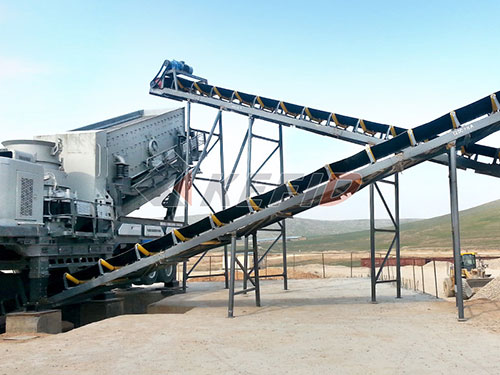

Premium Stone Crusher Machine Manufacturer
Operational Challenges in Aggregate Production
Aggregate producers and quarry operators face mounting pressure to maintain output while controlling costs. The crushing circuit is typically where these pressures converge. Consider the challenges your operation may be facing:
- Unplanned downtime costs: A single hydraulic system failure on a primary jaw crusher can halt production for 8–14 hours. At an average plant throughput of 250 TPH and a finished aggregate value of $12–$18 per ton, that translates to $24,000–$63,000 in lost production per incident — before accounting for repair labor and expedited parts shipping.
- Inconsistent product gradation: When CSS (closed side setting) drifts due to worn liners or inadequate tramp iron protection, you produce outofspec material. Rejected loads, recrushing, and customer chargebacks erode margins that are already thin.
- Excessive wear part consumption: Manganese liners that fail prematurely — sometimes within 600–800 hours instead of the expected 1,200+ — increase your cost per ton by 15–25% and require frequent maintenance windows.
- Energy inefficiency: Crushing accounts for 40–60% of a plant's total electrical draw. Motors operating below optimal load factor or crushers with poorly matched chamber geometry waste kWh per ton produced.
- Throughput bottlenecks: When the primary crusher can't keep pace with loader cycle times, or the secondary circuit is undersized relative to the screen deck, your entire plant operates below design capacity.
- Suitable for: Limestone, granite, basalt, river gravel, dolomite, sandstone, iron ore, copper ore, construction and demolition waste, and most nonmetallic minerals with compressive strength up to 320 MPa.
- Limitations: Not suitable for highly plastic clays, materials with excessive moisture content (>8–10% surface moisture without prescreening), or fibrous materials that resist compressive fracture. Sticky feed requires specialized chamber designs or pretreatment.
- Standard Configuration: Primary or secondary crusher with manual CSS adjustment, basic lubrication, and standard wear liners. Suitable for operations with stable feed characteristics and singleproduct requirements. Price range: $85,000–$220,000 depending on model and capacity.
- Professional Configuration: Hydraulic CSS, tramp iron protection, centralized lubrication, VFDready motor, and PLC control. Suitable for multiproduct operations and variable feed conditions. Price range: $150,000–$380,000.
- Premium Configuration: Full hydraulic control, remote diagnostics, condition monitoring, acoustic enclosure, automated lubrication with sensors, and extended wear liner package. Suitable for highcapacity operations and contract crushing. Price range: $250,000–$650,000+.
- Permanent or electromagnetic separator for tramp iron removal
- Dust suppression system (water spray or dry fog)
- Acoustic enclosure for noise reduction to ≤82 dB
- Variable frequency drive for energy optimization
- Remote monitoring and data logging package
- Extended warranty on major components (3–5 years)
- Custom chamber geometry for specific feed materials
- Preventive Maintenance: Scheduled inspections, liner wear measurement, lubrication analysis, and adjustment. Quarterly or semiannual intervals. Pricing: $8,000–$18,000 per year depending on model and location.
- FullService Contract: Includes all preventive maintenance, wear parts at negotiated pricing, emergency callout within 24 hours, and guaranteed uptime commitment. Pricing: 3–5% of equipment value annually.
- Training Package: Onsite operator and maintenance training, including control system programming, troubleshooting, and safety procedures. Pricing: $3,500–$7,500 per session.
- Equipment leasing with 24–60 month terms
- Renttoown programs for contract crushers
- Bank financing facilitation with partner lenders
- Tradein credit for existing crushing equipment
These are engineering problems with engineering solutions. The sections below outline how a properly specified premium stone crusher — matched to your feed material, throughput targets, and product specifications — addresses each of these cost centers directly.
Product Overview: Premium Stone Crusher Machine
A premium stone crusher machine is a heavyduty comminution unit engineered for primary, secondary, or tertiary reduction of rock, ore, and mineral aggregates. Unlike generalpurpose crushers, premiumclass units are designed around specific feed characteristics — compressive strength, abrasiveness (LA abrasion value, Mohs hardness), moisture content, and feed size distribution — to deliver consistent output with predictable wear life.
Operational Workflow:
1. Feed intake: Material enters via vibrating grizzly feeder or direct dump hopper. Feed size is controlled to within 80–85% of the crusher's maximum feed opening to prevent bridging and ensure proper nipping.
2. Primary reduction: Jaw or gyratory action applies compressive force to fracture material along natural planes of weakness. Stroke length and eccentric speed are tuned to the application.
3. Secondary/tertiary reduction: Cone or impact crushers further reduce material to specification, with chamber geometry selected for the target product curve (e.g., 20mm minus, 40mm minus, manufactured sand).
4. Discharge and sizing: Output passes to screens for classification. Oversize returns to the crusher circuit; onspec material reports to stockpile or downstream processing.
5. Wear monitoring and adjustment: Hydraulic CSS adjustment, liner wear sensors, and vibration monitoring allow operators to maintain target gradation without manual shim changes.
Application Scope:
Core Features
Hydraulic CSS Adjustment | Technical Basis: Dual hydraulic cylinders with position feedback and overload relief | Operational Benefit: Operators can adjust closed side setting in under 5 minutes from the control panel, without manual shimming or shutdown for liner rotation | ROI Impact: Reduces changeover time by 85–90% versus shimadjusted crushers; enables sameday product switches to meet multiple specification orders
HighManganese Chamber Geometry | Technical Basis: Optimized nip angle (typically 19–22° for cone crushers), chamber depth, and eccentric throw matched to feed gradation | Operational Benefit: Consistent product curve with reduced flakiness index; lower recirculating load on screens | ROI Impact: Field data from aggregate operations shows 20–30% reduction in recirculating load, translating to lower screen wear and reduced energy consumption per ton
Tramp Iron Protection System | Technical Basis: Hydraulic accumulator or springloaded release mechanism that opens the discharge gap when uncrushable material enters the chamber | Operational Benefit: Prevents catastrophic frame or shaft damage from excavator teeth, drill bits, or rebar | ROI Impact: Avoids repair costs of $40,000–$120,000 per incident and 2–5 days of downtime; pays for itself after preventing a single tramp iron event
Centralized Lubrication with Condition Monitoring | Technical Basis: Automatic grease or oil circulation system with pressure, temperature, and particle count sensors | Operational Benefit: Maintains proper lubrication film on eccentric shaft and bearings without manual intervention; alerts operators to contamination before bearing failure | ROI Impact: Extends bearing life by 30–40%; reduces unplanned lubricationrelated downtime to near zero
Variable Frequency Drive (VFD) Compatibility | Technical Basis: Motor and control system designed for variable speed operation, allowing adjustment of crusher RPM to match feed conditions | Operational Benefit: Operators can slow the crusher when feed is easier to crush (saving energy) or increase speed when maximum throughput is needed | ROI Impact: Energy savings of 10–18% depending on duty cycle; improved chamber utilization when feed gradation varies
Wear Liner Profile Optimization | Technical Basis: Liners designed with variable thickness — thicker in highwear zones (feed opening, discharge zone) and thinner in midchamber where wear is lower | Operational Benefit: Uniform liner wear extends replacement intervals; consistent chamber geometry maintains product gradation throughout liner life | ROI Impact: Increases liner life by 25–35% compared to uniformthickness liners; reduces cost per ton of wear parts by $0.03–$0.07
Remote Diagnostics and Data Logging | Technical Basis: PLCbased control system with cellular or Ethernet connectivity; logs operating hours, load factor, CSS position, oil temperature, and vibration signatures | Operational Benefit: Maintenance teams can trend data to predict liner changes, bearing issues, and motor problems before they cause failure | ROI Impact: Reduces reactive maintenance by 40–60%; enables planned maintenance windows that avoid production interruptions
Competitive Advantages
| Performance Metric | Industry Standard | Premium Stone Crusher Solution | Advantage (% Improvement) |
|||||
| Throughput (TPH) — cone crusher, 200mm feed | 180–220 TPH | 240–280 TPH | +20–27% |
| Wear liner life (hours) — manganese | 800–1,000 hours | 1,100–1,400 hours | +30–40% |
| CSS adjustment time | 45–90 minutes (shim) | 3–5 minutes (hydraulic) | 85–94% |
| Energy consumption (kWh/ton) | 1.8–2.2 kWh/ton | 1.4–1.7 kWh/ton | 18–22% |
| Unplanned downtime (hours/year) | 120–180 hours | 40–70 hours | 55–65% |
| Product flakiness index (%) | 18–25% | 10–15% | 35–45% |
| Recirculating load (%) | 25–35% | 15–22% | 30–40% |
| Noise level at 1m (dB) | 95–105 dB | 82–88 dB | 12–18% |
Note: Comparisons based on field data from aggregate operations processing mediumhard limestone and granite. Actual results vary with feed characteristics, operating parameters, and maintenance practices.
Technical Specifications
| Parameter | Specification |
|||
| Capacity Range | 50–1,200 TPH (depending on model and application) |
| Maximum Feed Size | 1,200mm (primary jaw); 300mm (secondary cone); 80mm (tertiary VSI) |
| Compressive Strength (max) | 320 MPa |
| Motor Power | 75–400 kW (depending on model) |
| Power Supply | 380–480V, 50/60 Hz, 3phase |
| CSS Range | 10–200mm (hydraulically adjustable) |
| Throughput (typical) | 150–800 TPH at 25mm CSS (mediumhard rock) |
| Weight | 12,000–85,000 kg (modeldependent) |
| Dimensions (L×W×H) | 3,200×2,400×3,600mm (compact) to 6,500×4,200×5,800mm (heavyduty) |
| Operating Temperature Range | 20°C to +50°C |
| Altitude Rating | Up to 2,000m without derating |
| Dust Suppression | Integrated water spray nozzles; optional dry fog system |
| Noise Level | ≤85 dB at 1m (with acoustic enclosure) |
| Lubrication | Automatic centralized grease or oil circulation |
| Control System | PLC with touchscreen HMI; optional SCADA integration |
Application Scenarios
Aggregate Quarry — Primary Crushing Circuit
Challenge: A 400 TPH granite quarry was experiencing frequent primary jaw crusher downtime due to tramp iron from blasting operations. Each incident averaged 6 hours of lost production, costing approximately $28,000 in lost output plus $8,000–$15,000 in repair parts. Annual downtime from tramp iron alone exceeded 80 hours.
Solution: Installed a premium jaw crusher with hydraulic overload relief and a permanent magnet separator on the feed conveyor. The hydraulic system releases tramp iron in under 2 seconds without frame damage, and the magnet removes ferrous material before it enters the chamber.
Results: Tramp ironrelated downtime reduced from 80+ hours/year to under 6 hours/year. Annual savings: approximately $340,000 in avoided downtime and repair costs. Payback period on the crusher upgrade: 11 months.
Construction & Demolition Waste Recycling
Challenge: A C&D recycling facility was processing mixed demolition debris with high rebar content. Their existing impact crusher required frequent rotor repairs and produced inconsistent output due to varying feed composition. Throughput averaged 120 TPH against a design capacity of 200 TPH.
Solution: Replaced the impact crusher with a premium cone crusher equipped with a large eccentric throw and tramp iron protection. Added a prescreen to remove fines and a magnetic separator to extract rebar before crushing.
Results: Throughput increased to 185 TPH (54% improvement). Rotor and blow bar replacement costs eliminated. Product gradation consistency improved, allowing the facility to sell a highervalue recycled aggregate product. Annual operating cost reduction: $127,000.
Manufactured Sand Production — Tertiary Circuit
Challenge: A concrete sand producer needed to increase manufactured sand output while meeting ASTM C33 gradation requirements. Their existing VSI was producing excessive fines (75μm) and had a high wear part consumption rate — approximately $0.18 per ton produced.
Solution: Installed a premium tertiary cone crusher with a fine chamber and hydraulic CSS control, followed by a highfrequency screen. The cone's chamber geometry was selected to maximize 0–4.75mm yield while minimizing overcrushing.
Results: Manufactured sand output increased by 32%. Fines generation reduced by 18%. Wear part cost per ton decreased to $0.11. The operation now meets ASTM C33 consistently without blending or reprocessing.
Commercial Considerations
Equipment Pricing Tiers:
Optional Features:
Service Packages:
Financing Options:
FAQ
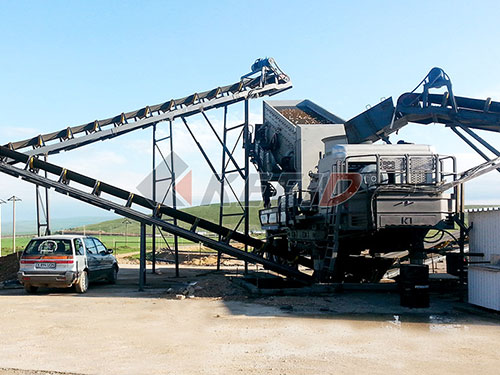
Q: What feed size can a premium stone crusher accept?
A: Maximum feed size depends on the crusher type. Primary jaw crushers typically accept up to 1,200mm; secondary cone crushers up to 300mm; tertiary crushers up to 80mm. The rule of thumb is that feed size should not exceed 80–85% of the feed opening to ensure proper nipping and prevent bridging. Your specific feed gradation should be reviewed against the crusher's feed opening and chamber geometry.
Q: How does the hydraulic CSS adjustment affect product gradation?
A: CSS directly controls the discharge opening and therefore the top size of the product. Reducing CSS produces a finer product but reduces throughput and increases wear rate. The hydraulic system allows precise adjustment — typically within ±2mm — so you can switch between product specifications (e.g., 20mm minus to 14mm minus) without manual shimming. This is particularly valuable for operations serving multiple market segments.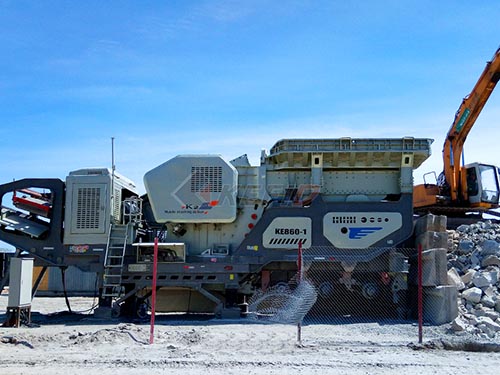
Q: What is the typical lead time for delivery and installation?
A: Standard configurations ship within 8–12 weeks from order confirmation. Premium configurations with custom chamber geometry or extended options may require 14–20 weeks. Installation and commissioning typically take 2–4 weeks depending on site conditions, foundation readiness, and electrical infrastructure. We provide onsite supervision and operator training as part of the delivery package.
Q: What maintenance is required to keep the crusher operating at peak efficiency?
A: Daily checks include lubrication levels, oil temperature, vibration, and discharge area inspection. Weekly tasks include liner wear measurement and CSS verification. Monthly maintenance includes oil sampling, filter changes, and bolt torque checks. Annual or biannual inspections involve opening the crusher for internal wear assessment and bearing inspection. The PLC system logs operating data and can alert your team to anomalies before they become failures.
Q: Can the crusher be integrated into an existing plant with minimal modification?
A: Yes. Premium crushers are designed with standard mounting interfaces, discharge chute dimensions, and motor control interfaces that allow integration into most existing plants. We provide dimensional drawings and foundation load calculations for your engineering team. Electrical integration typically requires a motor control center upgrade if the existing starter is not VFDcompatible. In most cases, mechanical and electrical integration can be completed within 1–2 weeks.
Q: What is the warranty coverage and what does it include?
A: Standard warranty covers 12 months from commissioning or 2,000 operating hours (whichever comes first) for major components including frame, eccentric shaft, and bearings. Wear parts (liners, blow bars, jaw plates) are warranted against manufacturing defects for 6 months. Extended warranty packages are available for 3–5 years with preventive maintenance contracts. Warranty does not cover damage from tramp iron, improper operation, or lack of scheduled maintenance.
Q: How do I determine the right crusher model for my operation?
A: Selection depends on four primary factors: (1) feed material characteristics — compressive strength, abrasiveness, moisture content; (2) required throughput in TPH; (3) target product gradation and specification; (4) available power supply and physical space. We recommend providing a representative feed sample for laboratory crush testing, which determines the optimal chamber geometry and predicts wear rates and power draw. This testing typically takes 5–10 business days and is provided at no cost for qualified projects.