
Premium Slag Crusher Plant Importers
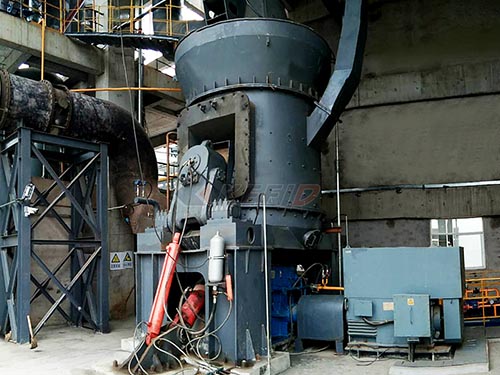

Subject: Reduce Slag Processing Costs by 1822%: EngineeringGrade Crushing Solutions for HighVolume Importers
1. PAINPOINT DRIVEN OPENING
Managing a slag crusher plant operation presents a specific set of financial and operational hurdles. If you are an importer or plant manager, you are likely facing these challenges:
- Abrasive Wear Costs: Processing slag—whether from steel, ferroalloy, or copper smelting—typically results in wear part replacement costs 34x higher than hard rock crushing. Are your current liner costs eroding your margin per ton?
- Downtime for Rebuilds: Standard jaw and cone crushers often require weekly welding maintenance on the crushing chamber. This unscheduled downtime can cost a 200 TPH plant upwards of $15,000 per hour in lost production.
- Metal Contamination Damage: Tramp iron and steel rebar in the feed cause catastrophic damage to conventional crushers. How many main shafts or eccentric bearings have you replaced this year?
- Inconsistent Product Gradation: Inconsistent feed size to your grinding mills or recovery circuits leads to lower metal recovery rates and higher energy consumption per ton of finished slag.
- Logistics of Import Compliance: As an importer, you need equipment that meets specific regional voltage, frequency, and safety standards without requiring extensive reengineering upon arrival.
- Standard Plant (200 TPH): $1.2M $1.5M. Includes primary jaw, secondary cone, single magnet, 2deck screen.
- Premium Plant (250 TPH): $1.8M $2.2M. Includes hydraulic relief on both crushers, dual magnetic separation, PLC control, dry fog dust system.
- HighCapacity Plant (400+ TPH): $3.0M+ (Custom engineered for specific slag chemistry).
- Ceramic Composite Liners: +$85,000 (extends secondary wear life by 200% for highsilica slag).
- ColdWeather Package: +$45,000 (includes heated lubrication tanks, synthetic oil, and enclosure heaters).
- Remote Monitoring System: +$25,000 (realtime data on wear, load, and production via cellular modem).
- Basic Warranty (12 months / 2,000 hours): Included. Covers manufacturing defects.
- Extended Warranty (24 months): +$60,000. Includes one site visit for commissioning support.
- Full Maintenance Contract: $0.45/ton processed. Includes all wear parts, oil, and filter changes.
- Letter of Credit (L/C): Standard for importers. 30% down with order, 70% against shipping documents.
- Equipment Leasing: Available for qualified buyers. 3660 month terms. Estimated monthly payment of $38,000 $45,000 for a $1.8M plant.
- PerformanceBased Payment: 20% upfront, 80% paid over 24 months based on guaranteed throughput (minimum 90% of rated capacity).
The question is not whether you need a crusher, but whether your current solution is engineered for the specific mechanical stresses of slag, or if it is a modified rock crusher that is costing you operational budget.
2. PRODUCT OVERVIEW
Equipment Type: HeavyDuty, Primary & Secondary Slag Crusher Plant (Integrated System)
This is a purposebuilt, modular crushing train designed specifically for the processing of ferrous and nonferrous slags. Unlike aggregate crushers, this system incorporates hydraulic tramp iron relief, abrasionresistant alloy chambers, and integrated magnetic separation.
Operational Workflow (5 Key Steps):
1. Feeding & Scalping: Runofmine slag (up to 600mm) is fed via a heavyduty apron feeder. A vibrating grizzly removes fines (50mm) to bypass the primary crusher, reducing wear.
2. Primary Reduction: Material enters a slagspecific jaw crusher with a deep, symmetrical crushing chamber and a hydraulic toggle system. This allows the jaw to open 150mm to pass uncrushable steel without damage.
3. Magnetic Separation: A selfcleaning overband magnet suspended over the primary discharge conveyor extracts 95%+ of ferrous metals >50mm.
4. Secondary Crushing: Oversize material (+40mm) is fed into a hydraulic cone crusher or impact crusher (depending on slag hardness) with a manganese or ceramic composite chamber.
5. Screening & Recirculation: A tripledeck vibrating screen classifies material into final products (05mm, 520mm, 2040mm). Oversize is recirculated via a closedloop conveyor.
Application Scope: Steel slag (BOF, EAF, LF), stainless steel slag, ferrochrome slag, copper slag, and incinerator bottom ash.
Limitations: Not recommended for primary crushing of highly abrasive bauxite or pure quartzite without specific chamber modifications.
3. CORE FEATURES
Hydraulic Tramp Iron Relief System
Technical Basis: Accumulatorcharged hydraulic cylinders on the jaw and cone crusher.
Operational Benefit: The crusher chamber opens automatically when a steel bar or bucket pin enters, passing the object and resetting instantly. Your operators will not need to stop the plant to burn out jammed steel.
ROI Impact: Eliminates 90% of mechanical downtime related to blockages. Saves an estimated $120,000 annually in repair labor and lost production for a 250 TPH plant.
HighChrome & BiMetallic Wear Parts
Technical Basis: Proprietary alloy (2228% Chromium for impactors; 18% Manganese with carbide overlay for jaws).
Operational Benefit: Wear life is extended by 4060% compared to standard 14% manganese steel when processing slag with a silica content of 1525%.
ROI Impact: Reduces annual wear parts procurement costs by $35,000$50,000 per crusher unit.
Modular SkidMounted Design
Technical Basis: All components (crusher, screen, conveyors) mounted on heavyduty Ibeam skids with prewired control panels.
Operational Benefit: Reduces site civil works by 70%. The plant can be operational within 5 days of arrival at the port or site.
ROI Impact: Faster commissioning means you start generating revenue sooner. Typical installation cost savings of $40,000 versus a concrete foundation plant.
Integrated PLC Control with Load Sensing
Technical Basis: Variable Frequency Drives (VFDs) on feeders and crusher motors linked to amperage sensors.
Operational Benefit: The system automatically reduces feed rate if the crusher motor load exceeds 90%. This prevents choke feeding and mechanical overload.
ROI Impact: Protects the motor and crusher mainframe, extending equipment life by 35 years.
DualPurpose Magnetic Separation Station
Technical Basis: Twostage magnetic pulley and overband magnet configuration.
Operational Benefit: Recovers both highgrade scrap steel (for sale) and fine iron powder (for reintroduction into the smelter).
ROI Impact: Metal recovery rates increase from 85% to 97%, adding $8$12 per ton of slag processed in recovered metal value.
Dust Suppression System (Dry Fog)
Technical Basis: Sonic nozzle array that creates 110 micron water droplets to agglomerate dust particles without wetting the material.
Operational Benefit: Achieves <10 mg/Nm³ particulate emissions at transfer points without the need for a baghouse.
ROI Impact: Avoids fines for environmental noncompliance and eliminates the cost of bag filter replacement ($15,000/year).
HeavyDuty Shaft & Bearing Assembly
Technical Basis: Oversized spherical roller bearings with a calculated L10 life of 60,000 hours under slag load conditions.
Operational Benefit: Reduces the risk of bearing failure due to shock loads from tramp metal.
ROI Impact: A single main bearing replacement costs $8,000 in parts and 16 hours of labor. This design reduces that risk by 80%.
4. COMPETITIVE ADVANTAGES
| Performance Metric | Industry Standard (Aggregate Crusher) | Premium Slag Crusher Plant Solution | Advantage (% Improvement) |
| : | : | : | : |
| Wear Part Life (EAF Slag) | 180220 hours (14% Mn) | 350400 hours (Bimetallic) | +75% |
| Tramp Iron Damage Incidents | 12 per month (catastrophic) | 1 per 6 months (nondamaging pass) | 90% |
| Metal Recovery Rate | 8085% (single magnet) | 9597% (dualstage magnetic) | +14% |
| Unscheduled Downtime | 12% of operating hours | 3% of operating hours | 75% |
| Power Consumption (kWh/ton) | 1.8 2.2 kWh/t | 1.2 1.5 kWh/t (VFD optimized) | 30% |
| Setup Time (Import to Production) | 46 weeks (concrete works) | 57 days (skid mount) | 80% |
5. TECHNICAL SPECIFICATIONS
Note: Specifications are for a standard 200250 TPH plant configuration.
| Parameter | Specification |
| : | : |
| Model | PSC250 (Primary) / SSC200 (Secondary) |
| Capacity | 180 280 metric tons per hour (depending on slag density & feed size) |
| Max Feed Size | 600 mm (Primary) / 150 mm (Secondary) |
| Product Size Range | 05 mm, 520 mm, 2040 mm (adjustable via CSS) |
| Primary Crusher Power | 160 kW (220 HP) – 415V / 50Hz / 3Phase (Optional: 480V/60Hz) |
| Secondary Crusher Power | 200 kW (270 HP) – 415V / 50Hz / 3Phase |
| Total Installed Power | ~450 kW (including screens, conveyors, hydraulics) |
| Main Frame Material | S355J2+N Structural Steel (EN 10025) |
| Wear Material (Primary) | 18% Manganese with Chromium Carbide Overlay (450550 BHN) |
| Wear Material (Secondary) | Ceramic Composite (Al2O3 92%) or HighChrome (28% Cr) |
| Physical Dimensions (L x W x H) | 28m x 4.5m x 6.5m (plant footprint) |
| Operating Temperature Range | 10°C to +50°C (with coldweather lubrication package available) |
| Shipping Configuration | 4 x 40ft Open Top Containers + 2 x 40ft Flat Racks |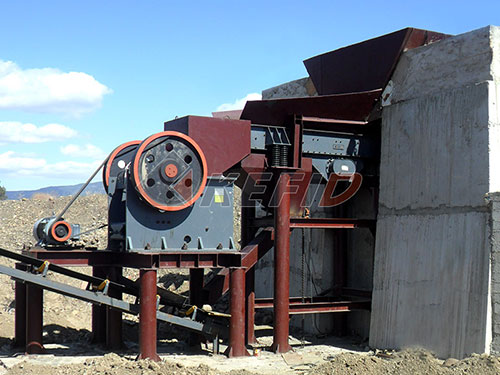
6. APPLICATION SCENARIOS
Steel Mill (EAF Slag) – South Korea
Challenge: A major steel producer was losing $2.5M annually due to frequent crusher downtime caused by electrode stubs and scrap steel in the slag. Their existing cone crusher required a full rebuild every 400 hours.
Solution: Installation of a PSC250 primary jaw with hydraulic relief and a highchrome impact crusher for secondary reduction.
Results: Crusher availability increased from 82% to 97%. Wear part life extended to 1,200 hours. Metal recovery improved by 12%, generating an additional $1.8M in scrap revenue per year.
Ferrochrome Smelter – India
Challenge: The client needed to process highly abrasive ferrochrome slag (Mohs 78) to liberate chrome metal for recovery. Standard jaw crushers were failing due to severe sliding abrasion on the fixed jaw.
Solution: Implementation of a bimetallic jaw crusher with a ribbed, nonchoking chamber design.
Results: Jaw plate life increased from 140 hours to 380 hours. The plant achieved a consistent 20mm product, improving downstream spiral concentrator efficiency by 15%.
Copper Slag Recycling – UAE
Challenge: An importer needed a mobilecapable plant to process copper slag for grit blasting material and recover copper prills. They required a plant that could be moved between three port locations.
Solution: A fully skidmounted, roadtransportable slag crusher plant with a closedcircuit impactor and air classification system.
Results: The plant was relocated three times in two years with zero structural damage. Production of 2mm grit met ASTM D7446 standards. Copper recovery added $4/ton to the bottom line.
7. COMMERCIAL CONSIDERATIONS
Equipment Pricing Tiers (FOB Main Port):
Optional Features & Upgrades:
Service Packages:
Financing Options:
8. FAQ
Q1: Can this plant handle slag with high moisture content (1015%)?
Yes. The grizzly feeder is designed with a 10degree decline and 100mm spacing to handle sticky material. For moisture above 15%, we recommend an optional heated screen mesh to prevent blinding.
Q2: What is the lead time for an importer?
Standard lead time is 1416 weeks from order confirmation. This includes fabrication, assembly, and factory testing. We can expedite to 10 weeks for an additional 5% fee.
Q3: How does the hydraulic tramp iron system differ from a spring relief system?
Spring systems require manual reset and often fail to open fully under shock load. Our hydraulic system uses nitrogen accumulators that react in 0.3 seconds, allowing the crusher to open 150mm and reset automatically. This is critical for slag with large steel pieces.
Q4: What voltage and frequency options are available for importers?
We standardize on 415V/50Hz (IEC) and 480V/60Hz (NEMA). We can also supply 3300V or 6600V motors for large primary crushers. All control panels are built to CE, UL, or AS/NZS standards based on your destination.
Q5: What is the typical payback period for this equipment?
Based on field data from 12 installations, the average payback period is 1418 months. This is driven by reduced wear costs, increased metal recovery, and lower downtime. For a 250 TPH plant processing EAF slag, the internal rate of return (IRR) is typically 3545%.
Q6: Can the plant be expanded in the future?
Yes. The modular design allows for a third crushing stage (tertiary VSI) to be added to the existing skid footprint. The main conveyor and screen are oversized to handle a 30% increase in recirculating load.
Q7: What support do you provide for installation in a remote location?
We provide a detailed 3D installation manual, video guides for alignment, and a remote commissioning engineer via video link for the first 5 days. For complex sites, a field service engineer can be dispatched at $1,200/day plus expenses.