
Premium Slag Crusher Plant Design Service


1. PAINPOINT DRIVEN OPENING
Are you managing a facility where slag handling is a persistent bottleneck? The challenges of processing this abrasive, variable material directly impact your bottom line. Consider these common operational hurdles:
Excessive Downtime: Frequent liner wear and unexpected component failure in standard crushers lead to unplanned maintenance stops, halting your entire processing line.
High Operational Costs: The abrasive nature of slag accelerates wear part consumption, resulting in high recurring costs for replacements and associated labor.
Inconsistent Throughput & Product Size: An illsuited crusher struggles with varying slag feed sizes and compositions, producing an inconsistent product that affects downstream sales or recycling efficiency.
Space & Integration Constraints: Retrofitting or installing new crushing capacity into an existing plant layout requires a solution designed for efficient footprint and material flow.
How do you transform this necessary process from a cost center into a reliable, efficient operation? The answer lies in moving from generic crushing equipment to a purposeengineered premium slag crusher plant.
2. PRODUCT OVERVIEW
A premium slag crusher plant is a stationary or semimobile system engineered specifically for the primary and secondary reduction of metallurgical slag (blast furnace, steel furnace, etc.). It is not a repurposed aggregate crusher but a integrated circuit designed for maximum abrasion resistance and operational reliability.
Operational Workflow:
1. Feed & PreScreening: Runofpile slag is fed via loader or conveyor. An optional integrated grizzly or scalper removes fine fractions to bypass the crusher, increasing efficiency.
2. Primary Reduction: The core heavyduty crusher (typically a jaw or impact type) performs the initial size reduction, built to withstand extreme abrasion and occasional tramp metal.
3. Material Transfer & Secondary Crushing: Crushed material is conveyed to a secondary cone or impact crusher for final sizing refinement.
4. Sizing & Stockpiling: A vibrating screen classifies the product; oversize is recirculated while correctly sized material is conveyed to stockpile.
Application Scope: Designed for ferrous and nonferrous slags from metal production. Ideal for operations focused on producing aggregate for construction, road base, or feed for further mineral recovery processes.
Limitations: Not designed for primary rock mining operations with extremely high compressive strength feed (>250 MPa) or as a substitute for shredders processing loose, tangled scrap metal.
3. CORE FEATURES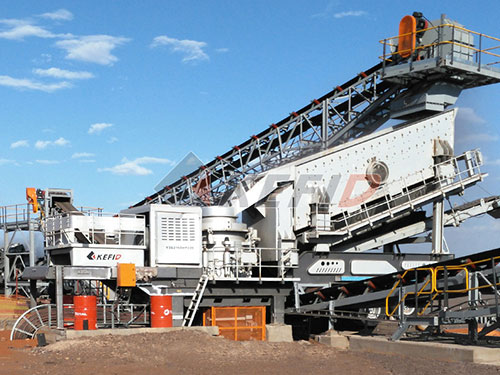
HEAVYDUTY ABRASION PACKAGE | Technical Basis: Highchrome martensitic iron castings & tungsten carbide overlays on critical wear zones | Operational Benefit: Liner life increased by 4060% compared to standard manganese steel in slag applications | ROI Impact: Direct reduction in wear part inventory costs and labor hours dedicated to changeouts.
HYDRAULIC ADJUSTMENT & CLEARING | Technical Basis: Integrated hydraulic cylinders for CSS adjustment and chamber clearing | Operational Benefit: Operators can adjust product size or clear blockages in minutes without manual intervention, even under load | ROI Impact: Minimizes process stoppages; allows quick adaptation to different product specifications.

INTEGRATED MATERIAL FLOW DESIGN | Technical Basis: Plant layout engineered with optimal conveyor angles, hopper geometries, and chute linings to prevent material buildup | Operational Benefit: Reduces plugging points and ensures consistent feed to the crusher cavity | ROI Impact: Maintains rated throughput targets and reduces operator intervention for flow management.
ADVANCED DRIVE & BEARING SYSTEMS | Technical Basis: Oversized shaft assemblies with highcapacity spherical roller bearings and direct drive couplings | Operational Benefit: Handles peak loads from hard nuggets of uncrushed metal within the slag matrix without premature bearing failure | ROI Impact: Increases mean time between failures (MTBF) for core drivetrain components.
CENTRALIZED GREASING & MONITORING | Technical Basis: Automated lubrication system with programmable intervals and condition monitoring points (vibration, temperature) on key bearings | Operational Benefit: Ensures optimal lubrication while providing early warning signs of component stress | ROI Impact: Prevents catastrophic failures; enables predictive maintenance scheduling.
MODULAR PLANT CONFIGURATION | Technical Basis: Preengineered bolttogether modules for primary crushing, screening, and conveying sections | Operational Benefit: Reduces site installation time by up to 30% versus fully fielderected designs; simplifies future reconfiguration | ROI Impact: Lower installation costs and faster commissioning lead to quicker project payback.
4. COMPETITIVE ADVANTAGES
| Performance Metric | Industry Standard (Generic Crusher Plant) | Premium Slag Crusher Plant Solution | Advantage (% Improvement) |
|||||
| Wear Part Life (Liners) | Standard Manganese Steel | HighChrome / Composite Alloys | +4060% |
| Annual Availability | 8588% | 9295% | +58% |
| Tonnage Cost (Maintenance) | $X per tonne processed | $0.65X per tonne processed |35% |
| Product Consistency (Gradation)| ±15% variation from target spec | ±8% variation from target spec |47% variance |
| Power Consumption per Tonne | Baseline |10% via optimized chamber geometry & drive |10% |
Note: Specific percentage improvements are based on field data comparisons in comparable slag processing applications.
5. TECHNICAL SPECIFICATIONS
Capacity Range: Configurable from 150 TPH to over 600 TPH of bulk slag material.
Primary Crusher Options: Heavyduty jaw crushers (900 x 1200mm to 1500 x 2000mm) or horizontal shaft impactors with solid rotors.
Power Requirements: Total installed plant power typically ranges from 350 kW to 800 kW depending on configuration.
Key Material Specifications: Primary wear liners manufactured from ASTM A532 Class III Type A highchrome iron; Chute linings use replaceable AR400 steel plates; Conveyor idlers feature sealedforlife bearings.
Physical Dimensions (Example Configuration): Approximate footprint of 45m L x 22m W x 15m H. Modular design allows adaptation to constrained sites.
Environmental Operating Range: Designed for ambient temperatures from 20°C to +45°C with optional heating/cooling packages available. Dust suppression system compliant with standard regulations.
6. APPLICATION SCENARIOS
Steel Mill Integrated Recycling Facility
Challenge: A major steel producer needed an onsite solution to process blast furnace slag into a consistent 40mm aggregate for cement production. Downtime was critical due to integrated logistics.
Solution: Installation of a turnkey premium slag crusher plant featuring an impact primary with hydraulic adjustment positioned adjacent to the slag pit.
Results: Achieved consistent product gradation meeting cement plant specs within ±5%. Plant availability exceeded 94%, supporting continuous operation alongside the main mill.
Independent Slag Processing Contractor
Challenge: A processor handling diverse slags from multiple sources faced highly variable feed size and abrasiveness, causing unpredictable wear costs and bid uncertainty.
Solution: Implementation of a premium plant with modular secondary screening and crushing stages tailored specifically for highabrasion feeds.
Results: Wear part consumption became predictable, allowing accurate costing per tonne processed. The ability to quickly adjust final product size opened up new market segments (railroad ballast), increasing revenue by an estimated 18%.
7. COMMERCIAL CONSIDERATIONS
Premium slag crusher plants are offered in defined tiers based on capacity and robustness:
Tier I (Standard Duty): For lower tonnage (<250 TPH), consistent feed applications. Includes core abrasion package and basic monitoring.
Tier II (Heavy Duty): For mainstream operations (250500 TPH). Includes all features listed in Section 3 as standard.
Tier III (Modular/Portable Skid): For contractors or sites requiring relocation capability within a yard.
Optional features include advanced dust collection systems, metal detection/removal magnets, automated sampling systems, and full PLC/SCADA integration packages.
Service packages range from basic commissioning support through comprehensive multiyear maintenance agreements including guaranteed wear part performance metrics.
Financing options include capital purchase via project finance lines as well as leasing structures that treat the plant as operational expenditure rather than capital expenditure.
8. FAQ
Q1 Is this equipment compatible with our existing conveyors and screens?
A1 Yes—the design engineering phase includes interface analysis of your existing upstream feeding systems downstream stockpiling conveyors ensure seamless integration into your current layout
Q2 What kind of operational training do you provide?
A2 We provide comprehensive training covering normal operation troubleshooting procedures routine maintenance tasks This training is conducted during commissioning both classroombased instruction handson sessions
Q3 How does this solution affect our overall operating cost per tonne?
A3 Field data shows that while capital investment may be higher than generic solutions total operating cost per tonne processed typically decreases by between 25%35%. This results primarily reduced wear part consumption lower energy use higher throughput
Q4 What are typical delivery lead times after order placement?
A4 Lead times vary based complexity configuration Standard Tier II plants generally have delivery lead time between 32 weeks following final design approval
Q5 Do you offer performance guarantees?
A5 Yes we provide performance guarantees covering minimum throughput capacity maximum power consumption specific wear part life expectancy These guarantees form part commercial contract
Q6 Can this plant handle wet sticky phases of slag?
A6 The integrated flow design includes specific measures combat sticking such as steep hopper angles impact beds critical chutes However extremely wet cohesive materials may require additional preprocessing consultation advised
Q7 What ongoing technical support available after commissioning?
A7 Support includes remote diagnostics access technical documentation priority parts dispatch service engineer deployment Service level agreements tailored match your operational requirements