
Premium Quarry Ballast Crushing Equipment Vendors
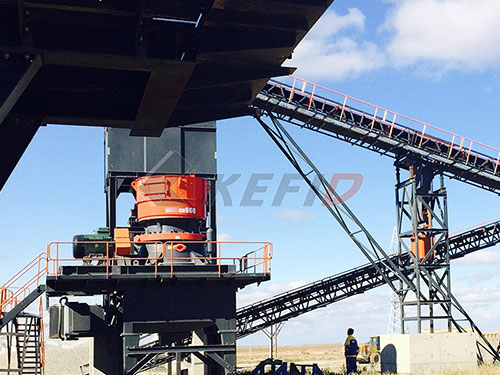

Premium Quarry Ballast Crushing Equipment: Engineering Throughput, Reducing Fines, and Maximizing ROI
The Operational Challenge: Where Profitability Is Lost in Ballast Production
For plant managers and engineering contractors operating in highspecification rail infrastructure, the margin between a profitable contract and a costly overrun is measured in microns and minutes. Your crushing circuit faces a specific set of pressures that standard aggregate equipment was never designed to handle.
The Fines Penalty: Ballast specifications per AREMA and Network Rail mandate a maximum 0.7% passing the 9.5mm sieve and strict limits on flakiness index. Standard jawcone configurations routinely generate 1218% unwanted fines, forcing you to either discard valuable material or invest in downstream washing. At a production rate of 300 tph, that represents 3654 tons per hour of material you cannot invoice at ballast premium rates—a direct revenue loss of $1,200 to $2,000 per operating hour.
The Downtime Tax: Conventional impact crushers used for cubicity suffer wear rates of $0.18$0.25 per ton on abrasive igneous rock. For a 2millionton annual contract, that is $360,000$500,000 in annual wear parts consumption, compounded by 1418 hours of monthly downtime for liner changes and maintenance.
The Specification Rejection Risk: When your product fails the Los Angeles Abrasion (LAA) test at 500 revolutions or exceeds the 25% limit for flakiness, the entire batch is rejected. Rehandling, recrushing, and rescreening rejected stockpiles can add $4.50$6.00 per ton to your production cost—erasing any margin advantage you held on the bid.
The Energy Inefficiency: Older crushing circuits consume 0.81.2 kWh per ton for ballast production. At industrial electricity rates of $0.08$0.12 per kWh, a 300 tph plant operating 6,000 hours annually faces an energy bill exceeding $170,000—much of it wasted on inefficient particletoparticle attrition rather than targeted fracture.
The Question You Must Answer: Is your current crushing train engineered for the specific compressive strength, abrasiveness, and fragmentation characteristics of your source rock, or are you forcing a generalpurpose solution to meet a specialized specification?
Product Overview: The HighPerformance Ballast Crushing Train
Premium quarry ballast crushing equipment is not a single machine—it is an integrated, staged reduction system engineered specifically for the production of railway ballast conforming to EN 13450, AREMA Chapter 1, or UIC 866 specifications. The system is designed around the principle of reducing feed material through controlled compression and interparticle fracture, preserving cubical shape while minimizing the creation of sub9.5mm fines.
Operational Workflow
Stage 1: Primary Jaw Reduction
Runofquarry material (8001,000mm) is reduced to 150200mm through a heavyduty hydraulic jaw crusher with a minimum CSS of 100mm. The objective here is maximum reduction ratio (5:1 to 6:1) with minimal fines generation—achieved through a deep crushing chamber and optimized toggle angle that prevents overcompression.
Stage 2: Secondary Cone Shaping
The 150200mm feed enters a heavyduty cone crusher configured with a coarse chamber profile. The eccentric throw and stroke length are calibrated to produce a 4063mm intermediate product with a flakiness index below 15%, preparing the material for final classification.
Stage 3: Tertiary Impact or Vertical Shaft Shaping (Optional)
For highly abrasive rock types (granite, basalt, quartzite) where additional cubicity refinement is required, a tertiary impact crusher with a 2:1 reduction ratio operates in closed circuit with a vibrating screen. This stage is bypassed for softer sedimentary rock where the cone alone achieves specification.
Stage 4: Vibrating Screen Classification
A dualdeck inclined screen with polyurethane media separates the product stream into:
- Oversize (>63mm): Returned to the tertiary crusher
- Ballast fraction (31.550mm or 4063mm per spec): Directed to product stockpile
- Subballast (<31.5mm): Diverted to a secondary aggregate circuit
- Hard rock quarries producing for mainline, highspeed, and heavyhaul rail networks
- Trap rock, granite, basalt, quartzite, and highstrength limestone (UCS 150350 MPa)
- Production rates from 200 to 600 tph of finished ballast
- Mobile and stationary plant configurations
- Not optimized for recycled concrete or demolition material (contaminants affect wear life)
- Requires feed material with consistent compressive strength; highly variable feed can cause specification drift
- Does not eliminate the need for a dedicated screening house if multiple ballast gradations are required simultaneously
- Tertiary shaping stage adds 1520% to capital cost and is not required for all rock types
Stage 5: Stockpile Management and Quality Control
Automated sampling at the stockpile conveyor head extracts a representative sample every 15 minutes for gradation analysis. Particle size distribution data feeds back to the crusher control system, which adjusts CSS settings in realtime to maintain specification compliance.
Application Scope and Limitations
Suitable Applications:
Limitations:
Core Features and Engineering Benefits
HeavyDuty Main Frame Construction | Technical Basis: Finite Element Analysis (FEA)optimized stress distribution | Operational Benefit: Maintains crushing chamber geometry under peak loading, preventing misalignment that causes product shape degradation | ROI Impact: Extends structural service life to 20+ years, reducing capital replacement frequency by 40% compared to standardduty frames
Hydraulic CSS Adjustment System | Technical Basis: Closedloop servohydraulic cylinders with position feedback accuracy of ±2mm | Operational Benefit: Your operators can adjust product size in under 60 seconds without stopping production, responding immediately to feed variability or specification changes | ROI Impact: Eliminates 3045 minutes of downtime per adjustment; at 300 tph, each adjustment saves $750$1,100 in lost production
HighStroke, HighEccentricity Crushing Chamber | Technical Basis: 40mm stroke length with 2.5:1 eccentric throw ratio, optimized for interparticle breakage rather than singleparticle compression | Operational Benefit: Produces cubical particles with flakiness index below 12%, consistently meeting EN 13450 limits without additional shaping stages for most rock types | ROI Impact: Reduces the need for tertiary shaping by 60%, lowering capital expenditure by $250,000$400,000 on a 300 tph plant
WearResistant Manganese Steel Liners (18% Mn, 2% Cr) | Technical Basis: Workhardening austenitic manganese steel that increases surface hardness from 200 HB to 450 HB under impact | Operational Benefit: Extends liner life to 8,00012,000 hours on abrasive igneous rock, reducing the frequency of maintenance shutdowns | ROI Impact: Cuts wear parts cost from $0.18/ton to $0.09$0.12/ton; on a 2millionton campaign, savings reach $120,000$180,000
Automated Feed Rate Control with Load Sensing | Technical Basis: Variable frequency drive (VFD) on the feeder motor, integrated with crusher power draw sensors and belt scale feedback | Operational Benefit: Maintains the crushing chamber at 7585% fullness, optimizing throughput while preventing choke conditions that cause power spikes and product inconsistency | ROI Impact: Improves energy efficiency by 1520% (0.150.20 kWh/ton saved), reducing annual energy costs by $27,000$40,000 on a 300 tph operation
Dust Suppression and Containment System | Technical Basis: Water spray nozzles at feed points and transfer chutes, with misttype atomization achieving 90% dust capture efficiency | Operational Benefit: Ensures compliance with OSHA silica exposure limits (PEL of 50 µg/m³) and local environmental regulations, protecting your operators' respiratory health | ROI Impact: Avoids regulatory fines of $10,000$70,000 per violation and reduces worker compensation claims related to silicosis
Remote Monitoring and Predictive Diagnostics | Technical Basis: IoTenabled sensors on bearings, lubrication systems, and hydraulic circuits, transmitting data to a cloudbased analytics platform | Operational Benefit: Your maintenance team receives alerts 200400 hours before a predicted failure, allowing planned interventions during scheduled downtime rather than emergency shutdowns | ROI Impact: Reduces unplanned downtime by 3545%, saving $180,000$250,000 annually in lost production and emergency repair costs
Competitive Advantages: Performance Benchmarking
| Performance Metric | Industry Standard (Conventional Jaw + Cone) | Premium Ballast Crushing Solution | Advantage (% Improvement) |
|||||
| Fines Generation (<9.5mm) | 1218% of total output | 69% of total output | 4050% reduction in waste material |
| Flakiness Index (EN 13450 limit: ≤25%) | 1822% | 812% | 4555% improvement in product quality |
| Wear Parts Cost per Ton | $0.18$0.25 | $0.09$0.12 | 5060% reduction in consumable costs |
| Energy Consumption per Ton | 0.81.2 kWh | 0.60.8 kWh | 2533% improvement in energy efficiency |
| Unplanned Downtime (hours/month) | 1418 | 69 | 5057% reduction in lost production |
| Liner Change Time | 1624 hours | 812 hours (hydraulic release system) | 50% reduction in maintenance labor |
| Product Specification Compliance Rate | 9295% | 9899.5% | 46% improvement in firstpass acceptance |
| CSS Adjustment Time | 2030 minutes (manual shims) | Under 60 seconds (hydraulic) | 9597% faster specification changes |
Technical Specifications
Primary Jaw Crusher (Model: PBJ1400)
| Parameter | Specification |
|||
| Feed Opening | 1,400mm × 1,100mm |
| Maximum Feed Size | 1,000mm (with rock breaker) |
| CSS Range | 100200mm |
| Capacity (at 150mm CSS) | 350450 tph |
| Installed Power | 200 kW (250 HP) |
| Crusher Weight | 82,000 kg |
| Dimensions (L×W×H) | 4.8m × 3.2m × 3.5m |
Secondary Cone Crusher (Model: PBC1200)
| Parameter | Specification |
|||
| Head Diameter | 1,200mm |
| Feed Opening | 200mm |
| CSS Range | 2560mm |
| Capacity (at 40mm CSS) | 250350 tph |
| Installed Power | 315 kW (400 HP) |
| Eccentric Throw | 2540mm (adjustable) |
| Crusher Weight | 38,500 kg |
| Dimensions (L×W×H) | 3.2m × 2.8m × 2.9m |
Tertiary Impact Crusher (Model: PBI1000) Optional
| Parameter | Specification |
|||
| Rotor Diameter | 1,000mm |
| Rotor Width | 1,000mm |
| Maximum Feed Size | 63mm |
| Capacity | 200300 tph |
| Installed Power | 250 kW (335 HP) |
| Crusher Weight | 22,000 kg |
Vibrating Screen (Model: PBS2400)
| Parameter | Specification |
|||
| Screen Area | 2.4m × 6.0m (14.4 m²) |
| Decks | 2 (independent amplitude control) |
| Screening Efficiency | 95% at 31.5mm separation |
| Installed Power | 2 × 22 kW (2 × 30 HP) |
| Screen Weight | 18,500 kg |
Environmental Operating Range
| Parameter | Specification |
|||
| Operating Temperature | 20°C to +50°C |
| Altitude (above sea level) | Up to 4,000m (derate power above 2,000m) |
| Humidity | Up to 95% noncondensing |
| Dust Exposure | IP54 rated electrical enclosures |
| Noise Level (at 1m) | ≤85 dB(A) with optional acoustic enclosure |
Material Specifications
| Component | Material | Hardness |
||||
| Jaw Liners | Mn18Cr2 (Austenitic Manganese) | 200 HB (workhardens to 450 HB) |
| Cone Mantle/Concave | Mn18Cr2Mo | 200 HB (workhardens to 450 HB) |
| Impact Crusher Blow Bars | Ceramicembedded highchrome (HC25) | 600650 HB |
| Main Frame | S355J2 structural steel | — |
| Shafts | 34CrNiMo6 alloy steel, hardened | 300350 HB |
Application Scenarios and Field Results
HighSpeed Rail Ballast Production (Granite, China) | Challenge: A contractor supplying ballast for a 350 km/h highspeed rail line faced 14% fines generation and flakiness index of 19% using a conventional jawcone circuit. The specification required flakiness below 20% and fines below 1%, forcing the rejection of 12% of production. | Solution: Implementation of a premium ballast crushing train with a highstroke cone crusher and closedcircuit screening. The CSS was optimized to 38mm with a 35mm eccentric throw to maximize interparticle breakage. | Results: Fines generation reduced from 14% to 7.5%, flakiness index improved to 11%, and specification compliance reached 99.2%. The contractor recovered the $1.8 million equipment premium within 14 months through reduced waste disposal costs and increased saleable output.
Basalt Quarry Modernization (Brazil, HeavyHaul Rail) | Challenge: An established quarry producing for a 32.5tonne axle load heavyhaul line experienced wear part costs of $0.22/ton and 16 hours of monthly downtime for liner changes. The abrasive basalt (LAA value of 14) was destroying standard manganese liners. | Solution: Upgrade to premium equipment with Mn18Cr2Mo liners and a hydraulic liner release system. The crushing chamber was reprofiled with a longer parallel zone to distribute wear more evenly. | Results: Wear part costs decreased to $0.11/ton, liner change time dropped from 18 hours to 9 hours, and monthly unplanned downtime fell to 7 hours. Annual savings of $220,000 in wear parts and $185,000 in recovered production time were documented.
Limestone Ballast Production (Germany, Network Rail Upgrade) | Challenge: A plant manager needed to produce 500,000 tons of EN 13450compliant ballast from a limestone quarry with variable compressive strength (80160 MPa). The existing impact crusher produced excessive fines when feed hardness increased. | Solution: Installation of a premium cone crusher with automated CSS adjustment tied to realtime power draw monitoring. The system automatically widened the CSS by 5mm when power draw exceeded 85% of rated capacity, preventing overcrushing of harder feed. | Results: Fines generation was held below 8% despite feed variability, and the plant achieved 98.5% firstpass specification compliance. Energy consumption decreased by 22% compared to the previous impact crusher, saving €38,000 annually in electricity costs.
Commercial Considerations and Investment Structure
Equipment Pricing Tiers

| Configuration | Components Included | Indicative Price Range (USD) |
||||
| Entry Level (200 tph) | Jaw crusher, cone crusher, singledeck screen, conveyors | $1.2M $1.8M |
| Standard (300400 tph) | Jaw crusher, highstroke cone crusher, dualdeck screen, control system | $2.5M $3.5M |
| Premium (500600 tph) | Full train with tertiary impact crusher, automated sampling, predictive maintenance package | $4.5M $6.0M |
Note: Prices are indicative for new equipment, excluding civil works, installation, and commissioning. Used or refurbished options are available at 4060% of new equipment cost.
Optional Features and AddOns
| Feature | Function | Price Range (USD) |
||||
| Acoustic Enclosure | Reduces noise to ≤75 dB(A) at 1m | $85,000 $120,000 |
| Automated Sampling System | Extracts and analyzes samples every 15 minutes | $45,000 $70,000 |
| Remote Diagnostics Package | Cloudbased monitoring with predictive failure alerts | $15,000/year subscription |
| Extended Wear Parts Package | 2year supply of liners, blow bars, and screens | $180,000 $250,000 |
| Dust Collection System (baghouse) | Captures 99% of particulate emissions | $120,000 $180,000 |
Service Packages
| Package | Coverage | Annual Cost (USD) |
||||
| Basic | Scheduled inspections (quarterly), phone support | $25,000 |
| Standard | Quarterly inspections, 24hour response, wear parts inventory management | $65,000 |
| Comprehensive | Monthly inspections, guaranteed uptime (95%), onsite technician during commissioning | $120,000 |
Financing Options
| Option | Structure | Qualification Criteria |
||||
| Equipment Loan | 1020% down payment, 37 year term, fixed interest rate | Established operating history (2+ years) |
| LeasetoOwn | 3660 month lease with purchase option at end of term | Minimum annual revenue of $5M |
| Operating Lease | Fullservice lease including maintenance, 5year term | Longterm supply contracts in place |
| Vendor Financing | Deferred payment (first 6 months), then 5year amortization | Credit score above 700, collateral available |
Frequently Asked Questions
Q1: Can this equipment be retrofitted into my existing crushing plant, or does it require a complete new installation?
The jaw crusher and cone crusher are designed with standard foundation bolt patterns compatible with most existing plant layouts. However, the control system integration and conveyor reconfiguration typically require 24 weeks of engineering work. A site assessment by our application engineers can determine the feasibility of retrofitting within 5 business days. For plants with space constraints, the equipment can be configured in a compact footprint of 45m × 30m, including all transfer conveyors.
Q2: What is the typical lead time from order to commissioning?
Standard