
Premium Quarry Ballast Crushing Equipment Manufacturers
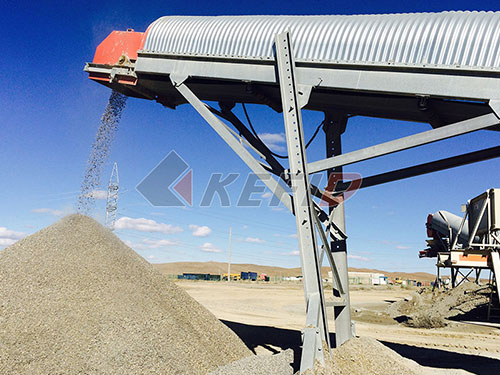

Targeted Solutions for Premium Quarry Ballast Production
Are you facing persistent bottlenecks in your ballast production line that erode profitability? The production of premium, specificationgrade railway ballast presents distinct operational challenges that standard crushing plants are not engineered to solve. Common pain points include:
Excessive Fines Generation: Up to 1520% of processed aggregate can fall below the required gradation, representing direct revenue loss and creating waste stockpile management costs.
Cubicity & Elongation Failures: Suboptimal particle shape leads to ballast that fails stringent rail network specifications (e.g., EN 13450, AREMA 24), causing product rejection and contract penalties.
Unscheduled Downtime: Frequent liner changes in secondary/tertiary stages and unplanned maintenance due to tramp metal or feed inconsistencies halt entire production lines, costing thousands per hour in lost output.
Inconsistent Gradation Control: Maintaining tight tolerances across all sieve sizes, particularly the critical 4070mm range for mainline ballast, is difficult with conventional crushing circuits, leading to blend variability.
How do you increase yield of premium product, ensure geometric specification compliance, and achieve predictable, lowintervention operation? The answer lies in a purposeengineered premium quarry ballast crushing plant.
Product Overview: HighYield Ballast Crushing Circuit

A modern premium ballast crushing solution is not a single machine, but an optimized circuit typically centered on a highperformance cone crusher configured for cubical particle shaping. The operational workflow is designed for precision:
1. Primary Scalping & Crushing: Runofquarry feed is scalped to remove natural fines before primary reduction.
2. Secondary Shaping & Reduction: The core stage where a specially configured cone crusher applies interparticle compression to break stone along natural lines, maximizing mechanical interlock and producing the required cubicity.
3. Precise Sizing & Fines Removal: Aggressive screening decks separate product into precise fractions, with efficient fines removal systems (like rinsing screens) extracting undersize material before final stockpiling.
Application Scope: This equipment is engineered for hard rock (granite, basalt, trap rock) quarries producing highvolume specification ballast. It is less suited for soft or highly abrasive sedimentary rock without specific configuration adjustments.
Core Features: Engineering for BallastSpecific ROI
Our premium quarry ballast crushing equipment integrates features that directly address production challenges.
Hydroset CSS Adjustment | Technical Basis: Hydraulic chamber clearing and closedside setting control | Operational Benefit: Allows operators to adjust crusher setting in under 60 seconds to compensate for feed variation or optimize for different product grades, without stopping the crusher. | ROI Impact: Minimizes offspec production by enabling realtime tuning; field data shows a typical 5% increase in yield of inspec material.
MultiLayer Crushing Chamber | Technical Basis: Optimized nip angles and layered crushing zones (liner profiles) | Operational Benefit: Promotes interparticle rockonrock breakage throughout the chamber rather than solely at the feed point. This produces a more consistent particle size distribution (PSD) with superior cubicity. | ROI Impact: Reduces flakiness index by up to 30% versus standard chambers, directly decreasing product rejection rates.
Automated Load & Material Control System | Technical Basis: Realtime sensors monitoring power draw, pressure, and cavity level linked to PLC logic | Operational Benefit: Automatically regulates feed rate to maintain optimal chokefed conditions, protecting the crusher from tramp metal and preventing empty cavity spin. | ROI Impact: Protects major components from damage; industry case studies report a 4050% reduction in unscheduled downtime events.
Patented Fines Bypass Chute | Technical Basis: Integrated channelling system within the chassis | Operational Benefit: Diverts sub25mm natural fines from the feed belt directly to the side conveyor before they enter the crusher chamber. This reduces unnecessary wear and prevents crusher packing. | ROI Impact: Lowers liner wear costs by ~15% and increases throughput capacity by processing only oversize material that requires breaking.
HeavyDuty AntiSpin & Release System | Technical Basis: Mechanical brake and hydraulic release mechanism on the main shaft | Operational Benefit: Prevents destructive spin of the mantle during noload conditions and automatically releases uncrushable material (tramp iron) by opening the CSS. | ROI Impact: Eliminates risk of catastrophic head shaft failure; protects an asset valued at hundreds of thousands in repair costs and weeks of downtime.
Competitive Advantages: Quantifiable Performance Gains
| Performance Metric | Industry Standard for Ballast Production | Our Premium Quarry Ballast Solution | Advantage (% Improvement) |
| : | : | : | : |
| Yield of InSpec Product (4070mm) | 6872% of total feed (after scalp) | 7882% of total feed (after scalp) | +12% Average Yield Gain |
| Particle Flakiness Index (FI) | FI >25% common after secondary stage | FI consistently <20%, often <15%| Up to 40% Shape Improvement |
| Liner Wear Life (Manganese) | ~500,000 tonnes per set in abrasive granite| ~650,000 750,000 tonnes per set| +30% Extended Wear Life |
| Operational Availability (Scheduled Runtime)| 8588% due to adjustment/maintenance stops| 9295% through automation & quickadjust systems| +7 Points Availability Increase|
| Power Consumption per Tonne| Baseline = 100%| Efficient chamber design & load control reduces draw| 8% Energy Reduction |
Technical Specifications
Model Range Capacity: Designed for circuits producing 200 800 tonnes per hour of finished ballast.
Power Unit: Crusher drive motors from 300 kW to 500 kW depending on model; complete plant electrical load defined during engineering phase.
Material Specifications: Engineered for compressive strength rock >250 MPa. Crusher mantles/bowls available in premium manganese steel or optional chrome white iron for highly abrasive applications.
Physical Dimensions (Crusher Only): Approx. footprint of 4m x 3m; total weight between 25 45 tonnes depending on model. Full plant layout is customengineered.
Environmental Operating Range: Fully enclosed lubrication system with heating/cooling units allows stable operation from 25°C to +45°C ambient temperatures.
Application Scenarios
Mainline Railway Ballast Supplier Challenge:
A national rail contractor faced consistent rejection of up to 20% of its output due to excessive elongation (>40% FI). Manual CSS adjustments were slow and imprecise.
Solution:
Implementation of a tertiarystage cone crusher with a multilayer crushing chamber and automated Hydroset system specifically for final shaping.
Results:
Flakiness index reduced to a consistent 17%. Product rejection fell below 3%. The automated adjustment allowed two product grades (mainline and secondary line ballast) to be produced within a single shift via parameter change.
HighCapacity Granite Quarry Challenge:
A large granite quarry supplying multiple infrastructure projects struggled with fines generation (>22%) in its secondary circuit, reducing premium yield and overwhelming its washing plant.
Solution:
Integration of a cone crusher equipped with an integrated fines bypass chute into a new closedcircuit layout with a highcapacity rinsing screen.
Results:
Natural fines (<22mm) bypassed increased overall circuit capacity by ~18%. Combined with improved screening efficiency, saleable product yield rose by approximately €150k annually based on local aggregate pricing.
Commercial Considerations
Equipment Pricing Tiers:
1. Core Crusher Unit: Capital investment for the primary shaping cone crusher starts in the midsixfigure range (€/$), varying significantly with size and configuration.
2. Optimized Circuit Package: Includes crusher, matched screens, conveyors, chassis,and basic control system—a turnkey solution typically represents a sevenfigure investment with demonstrable sub36month payback periods in highvolume operations.
3. Plant Modernization Retrofit: Retrofitting key components (e.g., new crusher + automation into existing structure) offers a lower capital entry point while capturing ~70% of available efficiency gains.
Optional Features:
Remote monitoring telematics package
Advanced wear part monitoring sensors
Dust suppression encapsulation
Hybrid diesel/electric drive options
Service Packages:
Proactive maintenance plans are available based on operational hours or tonneage crushed—including liner inspections,lubricant analysis,and priority parts supply—to ensure costpertonne predictability.
Financing Options:
Flexible commercial structures include capital purchase,fixedterm operating leases,and throughputbased agreements where payments correlate directly with production volume.
Frequently Asked Questions
Q1: Is this equipment compatible with our existing primary jaw crusher and screens?
Yes.A premium quarry ballast crushing solution is typically engineered as a modular secondary/tertiary stage.Plant integration studies are conducted upfront to ensure compatibility with your existing feed size,material flow,and conveyor specifications.
Q2:What is the expected impact on our overall plant energy consumption?
While adding equipment increases total plant load,the efficiency gains are significant.The optimized load control reduces peak draws,and improved throughput lowers energy cost per tonne.Field data typically shows net operational cost reduction despite increased capacity.
Q3:What training is required for our operators?
Operator interface is designed for simplicity.Training focuses on understanding new control parameters rather than complex mechanical adjustments.Most operators become proficient within one week.Comprehensive manualsand ongoing technical support are provided as standard practice within this industry segment..
Q4:What are typical lead times from order commissioning?
For standard models lead time ranges between six months depending upon current global demand levels.Custom circuit packages require additional engineering time.Detailed project schedules are provided upon initial technical review..
Q5:What guarantees support performance claims like improved cubicity yield?
Performance guarantees based upon agreed feed material characteristics sample testing results can be incorporated into commercial contracts following thorough prepurchase site audit testing procedures conducted jointly..