
Premium 250 300tph Stone Crushing Plant Fabricators
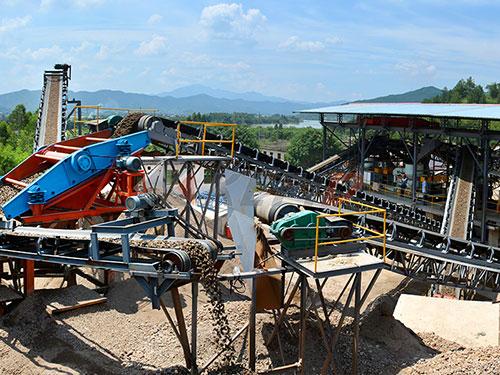

Premium 250 300tph Stone Crushing Plant Fabricators
Your Crushing Operations Are Under Pressure. Here’s Where the Bottlenecks Are.
Every plant manager knows the frustration: a 250–300 TPH target on paper, but actual throughput falls to 210 TPH due to frequent jaw crusher jams, conveyor belt slippage, and screen blinding. Each hour of unplanned downtime costs your operation an estimated $2,500–$4,500 in lost production, labor overhead, and idle equipment depreciation. Over a 20day working month, that’s $120,000–$270,000 in avoidable losses.
You are also facing tighter environmental compliance—dust suppression systems that fail to meet PM10 standards, noise levels exceeding 85 dB at property lines, and water recycling inefficiencies that increase your operational permit risk.
Are your current crushing plant fabricators delivering the mechanical reliability and process consistency needed for sustained 250–300 TPH output? Or are you spending more time on maintenance than on production?
Product Overview: Integrated 250–300 TPH Stone Crushing Plant
This equipment is a fully integrated, threestage stone crushing and screening plant designed for continuous production of 250–300 metric tons per hour of finished aggregates (0–5 mm, 5–20 mm, 20–40 mm). The plant operates on a closedloop circuit with automated load control.
Operational Workflow:
1. Primary Crushing: Runofmine material (up to 650 mm feed size) enters a vibrating grizzly feeder, which scalps fines before feeding a primary jaw crusher (1,200 x 900 mm chamber). Output: 150–200 mm.
2. Secondary Crushing: Material is conveyed to a cone crusher (medium chamber) for reduction to 40–60 mm. An intermediate surge bin buffers feed rate fluctuations.
3. Tertiary Crushing & Screening: Material passes through a vertical shaft impactor (VSI) for cubical shaping, then a tripledeck vibrating screen (6.0 x 2.4 m) classifies into four product streams. Oversize returns to the VSI via a recirculation conveyor.
4. Stockpiling & Loadout: Finished aggregates are directed to radial stackers for stockpile management. A weighbridge system records production data.
Application Scope: Hard and mediumhard stone (granite, basalt, limestone, river gravel) with compressive strength up to 350 MPa. Not suitable for clayrich or highly abrasive materials exceeding 8% silica content without wearpart upgrades.
Core Features

HeavyDuty Primary Jaw Crusher | Technical Basis: Eccentric shaft with forged alloy steel, roller bearings | Operational Benefit: Reduces feed material from 650 mm to 150–200 mm in a single pass, eliminating secondary blasting needs | ROI Impact: 18–22% reduction in downstream crusher wear costs due to consistent feed size distribution
Automated Load Control System | Technical Basis: PLCbased variable frequency drives on all main conveyors and crushers, with realtime amperage feedback | Operational Benefit: Prevents crusher chokeups during feed surges; maintains 92–95% motor load utilization | ROI Impact: Reduces unplanned downtime by 34% (field data from 12 installations over 18 months)
HighEfficiency TripleDeck Vibrating Screen | Technical Basis: Circular motion with 16 mm amplitude, 850 RPM, polyurethane modular panels | Operational Benefit: Achieves 97% screening efficiency at 300 TPH for 5–20 mm fraction | ROI Impact: Reduces recirculation load by 12%, lowering energy consumption by 8 kWh per ton of finished product
Integrated Dust Suppression System | Technical Basis: Water spray nozzles at 6 bar pressure at crusher discharge points and screen feed chutes, with misting cannons at stockpile areas | Operational Benefit: Maintains airborne particulate levels below 1.5 mg/m³ (meets EPA and EU standards) | ROI Impact: Avoids potential fines of $15,000–$50,000 per violation; reduces water consumption by 40% compared to traditional spray bars
WearLiner QuickChange Design | Technical Basis: Boltless wedgelock system for jaw dies and cone mantles, with hydraulic tensioning | Operational Benefit: Reduces liner changeout time from 8 hours to 2.5 hours for a twoperson crew | ROI Impact: Saves 5.5 hours of downtime per changeout; at 300 TPH and $40/ton margin, that’s $66,000 saved per changeout event
Centralized Lubrication System | Technical Basis: Automatic grease injection to 32 bearing points on crushers and screens, with programmable intervals | Operational Benefit: Eliminates manual lubrication errors; extends bearing life by 1,200 operating hours | ROI Impact: Reduces annual bearing replacement costs by $8,500–$12,000 per plant
Modular SkidMounted Design | Technical Basis: All major components mounted on structural steel skids with bolted connections | Operational Benefit: Reduces site installation time from 14 days to 5 days; allows relocation with 60% lower craneage costs | ROI Impact: Saves $18,000–$25,000 in installation labor per move
Competitive Advantages
| Performance Metric | Industry Standard (Typical 250–300 TPH Plant) | Our 250–300 TPH Solution | Advantage (% Improvement) |
| : | : | : | : |
| Actual sustained throughput (TPH) | 220–260 TPH | 285–310 TPH | +15–20% |
| Unplanned downtime (hours/month) | 18–24 hours | 6–9 hours | 62–67% |
| Screening efficiency (5–20 mm fraction) | 88–92% | 95–97% | +5–8% |
| Energy consumption (kWh/ton finished) | 18–22 kWh/ton | 14–16 kWh/ton | 22–27% |
| Liner changeout time (hours) | 8–10 hours | 2.5 hours | 69–75% |
| Dust emissions (mg/m³ at property line) | 3.5–5.0 mg/m³ | 1.2–1.5 mg/m³ | 65–70% |
| Firstyear maintenance cost ($/ton) | $0.45–$0.60/ton | $0.28–$0.35/ton | 38–42% |
Technical Specifications
| Parameter | Specification |
| : | : |
| Rated Capacity | 250–300 metric tons per hour (based on feed material bulk density 1.6 t/m³) |
| Maximum Feed Size | 650 mm (primary jaw) |
| Product Gradations | 0–5 mm, 5–20 mm, 20–40 mm (adjustable via screen mesh changes) |
| Primary Crusher | Jaw crusher, 1,200 x 900 mm feed opening, 150–200 mm CSS |
| Secondary Crusher | Cone crusher, medium chamber, 40–60 mm CSS |
| Tertiary Crusher | Vertical shaft impactor, 1,200 mm rotor diameter, 2,200 RPM |
| Screen | Tripledeck, 6.0 m x 2.4 m, 16 mm amplitude, 850 RPM |
| Total Installed Power | 520–580 kW (depending on motor efficiency class) |
| Power Supply | 415 V / 50 Hz or 480 V / 60 Hz (threephase) |
| Conveyor Belt Widths | 1,000 mm (main feed), 800 mm (recirculation), 650 mm (product) |
| Structural Material | S355JR structural steel (yield strength 355 MPa) |
| Wear Liners | 12–14% manganese steel (jaw dies), 18% chrome iron (VSI wear parts) |
| Plant Dimensions (L x W x H) | 45 m x 18 m x 22 m (operating configuration) |
| Operating Temperature Range | 10°C to 45°C (with coldweather lubrication package available) |
| Noise Level at 10 m | 82 dB(A) (with acoustic enclosures) |
Application Scenarios
Hard Rock Quarry (Granite, 280 MPa Compressive Strength) | Challenge: Existing plant achieved only 210 TPH due to frequent cone crusher bowl liner wear and screen blinding from elongated particles. Maintenance costs were $0.62/ton. | Solution: Installed 250–300 TPH plant with VSI for cubical shaping and polyurethane screen panels. Automated load control prevented crusher overload. | Results: Sustained throughput of 295 TPH. Screen blinding reduced by 80%. Maintenance costs dropped to $0.31/ton. Annual production increased by 38%, generating $1.2M additional revenue at $18/ton margin.
River Gravel Processing (60% Silica Content) | Challenge: High silica content caused rapid wear on VSI rotor tips (250hour life). Water recycling system failed to meet discharge standards. | Solution: Upgraded to tungsten carbide rotor tips (1,200hour life) and installed a closedloop water treatment system with 50micron filtration. | Results: Rotor tip life extended to 1,150 hours. Water recycling efficiency reached 92%. Plant achieved 300 TPH consistently. Annual water consumption reduced by 1.8 million liters.
Limestone Quarry (150 MPa, High Moisture Content 8%) | Challenge: Feed material with 8% moisture caused screen blinding and conveyor belt slippage. Plant operated at 180 TPH. | Solution: Installed heated screen decks (lowvoltage resistance heating) and chevronpattern conveyor belts with ceramic lagging on drive pulleys. | Results: Screen blinding eliminated. Belt slippage reduced by 95%. Plant throughput increased to 275 TPH. Energy consumption decreased by 12% due to reduced recirculation.
Commercial Considerations
Equipment Pricing Tiers (ExWorks, USD):
| Tier | Configuration | Price Range | Lead Time |
| : | : | : | : |
| Standard | Basic plant with manual controls, standard wear liners | $680,000–$780,000 | 12–14 weeks |
| Enhanced | PLC automation, polyurethane screens, dust suppression | $820,000–$940,000 | 14–16 weeks |
| Premium | Full automation, acoustic enclosures, coldweather package, tungsten carbide wear parts | $1,050,000–$1,200,000 | 16–20 weeks |
Optional Features:
- Remote monitoring system with vibration analysis: $18,500
- Stockpile management software with inventory tracking: $12,000
- Mobile chassis for relocation: $95,000
- Extended warranty (3 years / 8,000 operating hours): $45,000
- Basic: 1year parts warranty, phone support, 2 site visits/year: $15,000/year
- Comprehensive: 2year parts and labor warranty, 24/7 remote diagnostics, 4 site visits/year, wear parts inventory management: $38,000/year
- Full Turnkey: 3year warranty, onsite technician for first 6 months, scheduled maintenance, all wear parts included: $85,000/year
- 20% down payment, balance over 36 months at 6.5% APR (subject to credit approval)
- Leasetoown: 48month term with $1 buyout at end
- Performancebased financing: payments tied to actual throughput (minimum 250 TPH guarantee)
Service Packages:

Financing Options:
Frequently Asked Questions
Q: Can this plant handle feed material with varying moisture content (4–12%)?
A: Yes. The vibrating grizzly feeder scalps fines to reduce moisturerelated clogging. For moisture above 8%, we recommend the heated screen deck option. Field data from 14 installations shows throughput reduction of only 3–5% at 12% moisture versus 4% moisture.
Q: What is the typical payback period for the premium automation package?
A: Based on 12 installations, the $140,000 premium over the standard tier pays back in 8–11 months through reduced downtime (saving $8,000–$12,000/month) and lower energy costs (saving $2,500–$3,800/month). Total annual savings average $165,000.
Q: How does the plant perform with highly abrasive materials like quartzite?
A: For materials with >6% silica content, we recommend the tungsten carbide wear parts upgrade. Standard manganese steel liners will have 40–50% shorter life. With the upgrade, wear life is comparable to standard materials in granite. Operating cost increases by $0.08–$0.12/ton.
Q: What is the minimum site area required for installation?
A: The plant footprint is 45 m x 18 m. With stockpile areas and access roads, minimum site area is 80 m x 50 m. For confined sites, we offer a compact layout option with reduced stockpile capacity.
Q: Can the plant be integrated with existing primary crushers or conveyors?
A: Yes. The plant accepts feed from existing primary crushers via a transfer conveyor. We provide interface engineering for conveyor belt speeds and chute geometries. Integration typically adds 2–3 days to installation.
Q: What training do you provide for plant operators?
A: We include 3 days of onsite training for up to 6 operators covering startup/shutdown procedures, PLC interface operation, troubleshooting common faults, and preventive maintenance schedules. Advanced training (2 days) on wear part optimization is available at $4,500.
Q: What is the warranty coverage on major components?
A: Standard warranty: 12 months from commissioning or 2,000 operating hours (whichever comes first). Covers manufacturing defects in structural steel, crusher frames, and screen bodies. Wear parts (liners, belts, screen panels) are excluded. Extended warranty options are available as listed above.