
Oem Slag Crusher Plant Supply Chain


1. PAINPOINT DRIVEN OPENING
Managing slag is a persistent bottleneck with tangible costs. Are you facing these operational challenges?
Unplanned Downtime: Frequent clogging and abrasive wear in standard crushers lead to unscheduled maintenance stops, halting downstream processing and costing thousands per hour in lost production.
High Operational Costs: Premature failure of wear parts not only incurs high replacement expenses but also demands significant labor hours for changeouts, directly impacting your maintenance budget.
Inconsistent Throughput & Product Quality: Inadequate crushing force or improper chamber design results in uneven slag reduction, producing oversized material that recirculates, wasting energy and creating an inconsistent product for sale or further processing.
Safety & Environmental Concerns: Manual breaking of large slag skulls or handling of uncrushed material increases site risk. Dust generation during inefficient crushing can lead to compliance issues and community complaints.
Is your current solution equipped to handle the extreme abrasiveness and unpredictable feed size of metallurgical slag while maintaining profitability?
2. PRODUCT OVERVIEW: OEM Slag Crusher Plant
An OEM Slag Crusher Plant is a heavyduty, stationary or semimobile crushing system engineered specifically for the primary and secondary reduction of blast furnace (BF) slag, steel furnace slag, and other metallurgical byproducts. It transforms large, irregular slag feed into a precisely graded aggregate for use in cement production, road bases, or rail ballast.
Operational Workflow:
1. Feed & PreScreening: Runoffurnace slag is fed via loader or conveyor into a heavyduty grizzly or scalping screen to bypass fine material.
2. Primary Crushing: Oversized material enters a robust primary crusher (typically a jaw or impact type) designed for high compression strength and abrasion resistance.
3. Secondary Crushing & Screening: Crushed material is conveyed to a secondary cone or impact crusher for further size reduction, then screened to specification.
4. Stockpiling & Dispatch: Correctly sized slag aggregate is conveyed to stockpiles for curing or direct loadout.
Application Scope: Designed for integrated steel plants, standalone slag processing yards, and metal recycling facilities handling ferrous slags.
Limitations: Not suitable for primary crushing of virgin rock in hightonnage mining quarries where feed material characteristics differ significantly from slag.
3. CORE FEATURES
HeavyDuty Rotor & Chamber Design | Technical Basis: High inertia kinematics and cascading rockonrock impact | Operational Benefit: Effective reduction of large, slabby slag with minimal wear on metal components | ROI Impact: Reduces wear part consumption by up to 30% compared to direct impact methods, lowering cost per ton.
AbrasionResistant Liner System | Technical Basis: Interchangeable liners made from proprietary highchrome white iron alloys | Operational Benefit: Extends operational intervals between liner changes under continuous abrasive feed | ROI Impact: Field data shows a 4060% improvement in liner life over standard manganese steel, decreasing part costs and labor downtime.
Hydraulic Adjustment & Clearing | Technical Basis: Integrated hydraulic cylinders for crusher gap setting and tramp metal release | Operational Benefit: Allows operators to adjust product size onthefly and clear blockages in minutes without manual intervention | ROI Impact: Eliminates hours of dangerous manual clearing; maintains consistent product gradation for optimal sales value.
PLCBased Automation & Monitoring | Technical Basis: Centralized control system with load management and performance tracking | Operational Benefit: Optimizes crusher performance based on feed conditions; provides realtime alerts for maintenance events | ROI Impact: Prevents catastrophic damage from overloads; improves overall plant throughput predictability by 1520%.
Reinforced Frame & Rotor Shaft | Technical Basis: Finite Element Analysis (FEA) optimized steel structures and forged alloy shafts | Operational Benefit: Withstands high shock loads from uncrushable contaminants and large feed without structural fatigue | ROI Impact: Mitigates risk of major structural failure, protecting your longterm capital investment.
4. COMPETITIVE ADVANTAGES
| Performance Metric | Industry Standard (Generic Crusher) | OEM Slag Crusher Plant Solution | Advantage (% Improvement) |
| : | : | : | : |
| Liner Life (Abrasive Slag)| Manganese Steel Liners (Standard Grade)| Proprietary HighChrome Iron Alloy Liners| +50% Average Life Increase |
| Tramp Metal Recovery Time| Manual Barring & Disassembly (24 hours)| Hydraulic Clearing System (<10 minutes)| 90% Downtime per Event |
| Availability (Uptime)| 8590% (Scheduled + Unscheduled Stops)| 9396% (Predictive Maintenance Enabled)| +58% Annual Production Time |
| Power Consumption per Ton| Fixed Speed Drive Systems| LoadAdaptive PLC & VFD Controls| 12% Energy Usage |
5. TECHNICAL SPECIFICATIONS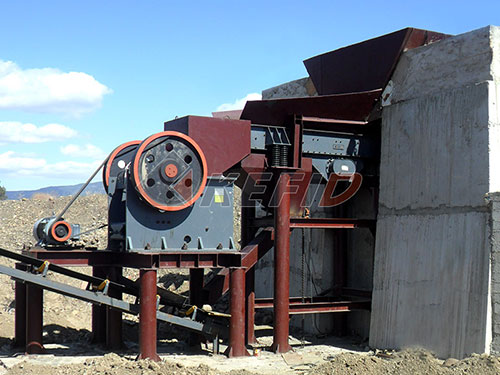
Capacity Range: Configurable from 150 to 600+ tons per hour (TPH), depending on feed size and required product gradation.
Primary Crusher Options: Heavyduty jaw crushers (feed size up to 48") or primary horizontal shaft impactors.
Power Requirements: Total installed plant power typically ranges from 300 kW to 800 kW based on configuration. Voltage options available for global industrial standards (e.g., 400V/50Hz, 480V/60Hz).
Key Material Specifications: Main frame fabrications from S355JR steel; rotor shafts from EN24/34CrNiMo6 forged steel; wear liners from ASTM A532 Class III Type A highchrome iron.
Physical Dimensions (Typical Primary Module): Length ~15m, Width ~4m, Height ~5m. Semimobile skid designs available.
Environmental Operating Range: Designed for ambient temperatures from 20°C to +45°C with appropriate lubrication systems. Dust suppression kit compliant with <10 mg/Nm³ emission standards is available.
6. APPLICATION SCENARIOS
Integrated Steel Plant – Blast Furnace Slag Processing
Challenge: A major steel producer faced excessive downtime due to weekly liner changes in their secondary slag crusher and unpredictable blockage events from tramp metal.
Solution: Implementation of a turnkey OEM Slag Crusher Plant featuring the hydraulic adjustment/clearing system and proprietary abrasionresistant liners.
Results: Liner change intervals extended from weekly to monthly cycles. Blockage clearance time reduced by over 85%. The plant achieved a quantified increase in annual throughput of approximately 18%, turning a cost center into a profitable aggregate division.
Independent Slag Processing Contractor
Challenge: A contractor processing purchased slag from multiple sources needed consistent product quality despite highly variable feed composition to meet strict rail ballast specifications.
Solution: Installation of an OEM Slag Crusher Plant with PLCbased automation allowing quick adjustment of crusher parameters based on feed source monitoring.
Results: Achieved consistent product gradation with over 95% compliance to specification across all feed sources. This consistency allowed the contractor to secure premium, longterm supply contracts with national rail authorities.
7. COMMERCIAL CONSIDERATIONS
Our OEM Slag Crusher Plants are offered in three primary tiers:
1. Base Configuration: Includes primary crushing module, basic control panel, and structural steelwork. Ideal for operations with existing secondary screening infrastructure.
2. Enhanced Configuration: Adds secondary crushing stage integrated PLC automation suite dust suppression system preinstalled walkways service platforms
3 Turnkey Modular Plant Complete primary secondary tertiary crushing screening circuits enclosed conveyors centralized dust collection advanced predictive monitoring sensors
Optional features include metal detection magnets automated lubrication systems sound attenuation enclosures
Service packages range from annual inspection plans comprehensive multiyear maintenance agreements including parts labor technical support
Financing options include capital purchase operating lease structures payperton agreements tailored support project financing through our network partners
8 FAQ
Q What are the main differences between an OEM Slag Crusher Plant standard aggregate crushing plant
A The core differences lie materials engineering design philosophy An OEM Slag Crusher Plant utilizes higher grade abrasion resistant alloys throughout its wear areas features heavier structures absorb shock loads incorporates specific designs like hydraulic clearing handle uncrushable metals commonly found slag These elements are often optional upgrades standard aggregate plants
Q How does this plant integrate with our existing material handling system
A Our plants are designed modular integration Standard conveyor interface heights belt widths provided early engineering phase We conduct detailed site audits ensure compatibility electrical supply foundations existing workflows Minimal disruption installation key design parameter
Q What is the expected operational cost per ton crushed
A While site specific industry testing demonstrates typical operational costs including power wear parts scheduled maintenance range $0 $0 per ton processed assuming proper feeding This based achieving rated capacity utilizing recommended service intervals
Q Can you provide performance guarantees
A Yes we offer guaranteed minimum throughput capacity based agreed feed specifications guaranteed maximum wear part consumption rates expressed grams per ton crushed These are formalized commercial contract
Q What is the typical delivery lead time after order placement
A Lead times vary configuration For standard plant designs lead time typically months For highly customized turnkey solutions detailed engineering may extend this months Firm schedule provided upon project commitment
Q Do you offer operator training onsite commissioning
A Comprehensive operator maintenance training conducted during commissioning phase mandatory part our delivery scope includes both classroom instruction hands equipment training Documentation includes detailed operation manuals parts lists lubrication schedules