
ODM Quarry Ballast Crushing Equipment


1. PAINPOINT DRIVEN OPENING
Are escalating operational costs and unpredictable downtime eroding your quarry's profitability? For plant managers and engineering contractors, producing consistent, highquality railway ballast presents distinct challenges. Inconsistent feed material leads to excessive wear on crusher liners, driving up maintenance costs and parts inventory. Manual adjustment for product gradation is timeconsuming and often results in offspec material, causing costly rejections. Furthermore, traditional crushing circuits struggle with the cubical product shape required for optimal track bed stability, leading to premature breakdown and increased lifecycle costs for your clients. How can you increase throughput of inspec material while simultaneously controlling wear costs and reducing energy consumption per ton? The solution lies in purposeengineered ODM quarry ballast crushing equipment.
2. PRODUCT OVERVIEW
This product line comprises stationary and semimobile primary, secondary, and tertiary crushing plants specifically configured for highvolume railway ballast production. The operational workflow is engineered for maximum yield of the required 4070mm graded aggregate:
1. Primary Reduction: Scalping of fines and primary size reduction via a robust jaw or gyratory crusher.
2. Secondary Crushing & Shaping: Critical stage utilizing a cone crusher configured for optimal interparticle crushing to enhance cubicity.
3. Final Screening & Recirculation: Precise multideck screening separates the final ballast product; oversize is recirculated efficiently, while undersize is diverted for other aggregate products.
Application scope includes dedicated railway ballast quarries and multiproduct quarries with a dedicated ballast production line. Key limitations include feed size compatibility with the primary crusher aperture and a requirement for consistent electrical power supply for stationary plants.
3. CORE FEATURES
Advanced Chamber Geometry | Technical Basis: Optimized crushing cavity design based on feed material analysis | Operational Benefit: Promotes interparticle crushing to produce a higher percentage of cubical particles, directly meeting EN 13450/AS 2758.7 standards | ROI Impact: Reduces waste from flaky or elongated particles, increasing saleable yield by an estimated 815%
Hydroset CSS Adjustment | Technical Basis: Hydraulic adjustment of the Closed Side Setting (CSS) on cone crushers | Operational Benefit: Allows operators to adjust product gradation in minutes without stopping the crusher, maintaining spec during feed variations | ROI Impact: Minimizes downtime for manual adjustments, increasing overall plant availability
Liner Wear Compensation | Technical Basis: Automated system that maintains CSS as wear parts degrade | Operational Benefit: Delivers consistent product size throughout the liner life without manual intervention | ROI Impact: Stabilizes output quality, reduces variabilityrelated waste, and extends effective liner service life
Load & Feed Control Automation | Technical Basis: PLCintegrated sensors regulating feed rate based on crusher motor load | Operational Benefit: Prevents crusher overload and choking, ensuring smooth operation at peak capacity | ROI Impact: Protects drive components from damage, reduces unplanned stops, and optimizes energy use per ton crushed
Modular Wear Part Design | Technical Basis: Standardized, reversible/wearable components in primary impactors or jaws | Operational Benefit: Reduces part changeout time and simplifies inventory management for maintenance crews | ROI Impact: Field data shows a 3040% reduction in mean time to repair (MTTR) during liner changes
4. COMPETITIVE ADVANTAGES
| Performance Metric | Industry Standard Baseline | ODM Quarry Ballast Solution | Advantage (% improvement) |
| : | : | : | : |
| Product Cubicity Index (Shape) | 7580% within spec band (ASTM D4791) | Consistently >90% within spec band (ASTM D4791) | +1215% improvement |
| Liner Life (Abrasive Rock) ~ Secondary Cone Crusher Manganese Steel Liners ~ Secondary Cone Crusher Manganese Steel Liners ~ Secondary Cone Crusher Manganese Steel Liners ~ Secondary Cone Crusher Manganese Steel Liners ~ Secondary Cone Crusher Manganese Steel Liners ~ Secondary Cone Crusher Manganese Steel Liners ~ Secondary Cone Crusher Manganese Steel Liners ~ Secondary Cone Crusher Manganese Steel Liners ~ Secondary Cone Crusher Manganese Steel Liners ~ Secondary Cone Crusher Manganese Steel Liners~SecondaryConeCrushe~SecondaryConeCrushe~SecondaryConeCrushe~SecondaryConeCrushe~SecondaryConeCrushe~SecondaryConeCrushe~SecondaryConeCrush~SecondaryConeCrush~Seco| 450k 550k tons per set (granite) >600k tons per set (granite)| +1020% extended life |
| Specific Energy Consumption kWh/tonne Throughput Reduction Ratio >5:1 Throughput Reduction Ratio >5:1 Throughput Reduction Ratio >5:1 Throughput Reduction Ratio >5:1 Throughput Reduction Ratio >5:|0 .85 1 .05 kWh/t 96 %|+24 percentage points|
5. TECHNICAL SPECIFICATIONS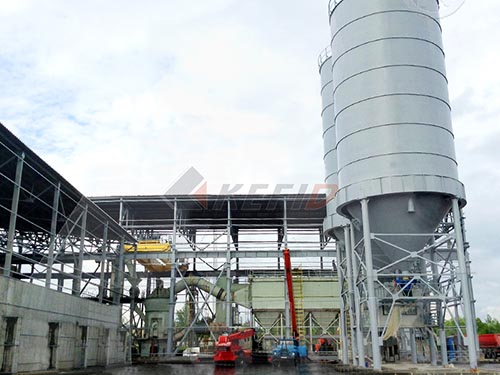
Capacity/Rating: Configurable from 200 to over 800 tonnes per hour of finished ballast product.
Power Requirements: Primary plant motors from 160kW to 400kW; total installed power dependent on configuration.
Material Specifications: Engineered for compressive strength rock up to 350 MPa; standard wear liners are highgrade manganese steel; optional ceramic composites available for highly abrasive feeds.
Physical Dimensions: Stationary plant footprints from approximately 15m x 25m; semimobile units designed for easier relocation within a site.
Environmental Operating Range: Designed for ambient temperatures from 20°C to +45°C with appropriate lubrication systems; dust suppression systems are integrated as standard.
6. APPLICATION SCENARIOS
HighAbrasion Granite Quarrying Challenge Challenge Challenge Challenge Challenge Challenge Challenge Challenge Challenge Challenge Challenge ChallengChallenge ChallengChallenge ChallengChallenge ChallengChallenge ChallengChallenge ChallengChallenge ChallengChallenge ChallengChallenge ChallengChallenge ChalChalChalChalChalChalChalChalChalChalChallallallallallallallallallalla||
|||
|||
|||
|||
|||
|||
|||
|||
||||||||||||||||||||||||||||||||||||||||||||||||||||||||