
ODM Gyratory Crusher Factories
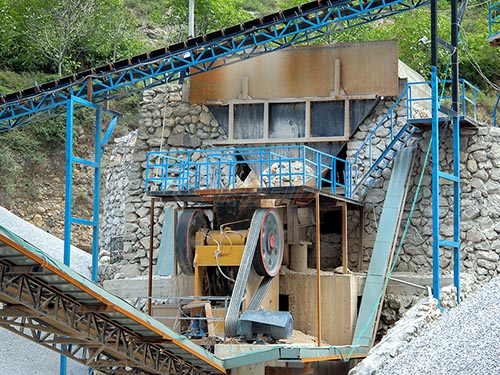

ODM Gyratory Crusher Factories: Engineering DirectSourced Primary Crushing Solutions
The Operational Challenge: When Primary Crushing Becomes Your Bottleneck
Your gyratory crusher is the first line of defense in your comminution circuit. When it underperforms, the ripple effects are immediate and costly. Industry data indicates that unscheduled primary crusher downtime can cost an operation between $10,000 and $50,000 per hour in lost throughput, depending on ore grade and downstream capacity. Beyond the direct financial hit, you face:
- Feed size variability: Handling runofmine material up to 1,500 mm requires a crushing chamber engineered for consistent performance, not occasional throughput spikes.
- Maintenance cycle unpredictability: Traditional crusher maintenance schedules often lead to either premature component replacement or catastrophic failure. Both scenarios inflate your cost per ton.
- Energy inefficiency: Older or poorly matched crushers can consume up to 1520% more power per ton of crushed material, directly impacting your site's energy budget and ESG reporting.
- Supply chain fragility: Sourcing replacement parts and technical support from distant, nonspecialized vendors introduces leadtime risks that can extend downtime from days to weeks.
- Scalability constraints: As your mine plan deepens or ore hardness increases, can your current primary crusher adapt without a complete overhaul?
- Tier 1 (Standard Configuration): Based on a proven, standardized design. Suitable for typical applications. Estimated Range: $2.5M $4.0M USD.
- Tier 2 (EngineeredtoOrder): Includes modifications to the crushing chamber, main shaft, or lubrication system for specific ore types or site constraints. Estimated Range: $4.0M $6.0M USD.
- Tier 3 (Full Customization): Involves a complete reengineering of the crusher for unique applications, such as extreme altitude or highly corrosive environments. Estimated Range: $6.0M+ USD.
- Automation Package: Advanced control system with remote monitoring and data analytics.
- Liner Optimization Program: Factory engineers analyze your wear patterns and recommend the optimal alloy and profile.
- Maintenance & Repair Contract (MARC): A fixedcost annual contract covering all scheduled maintenance, wear parts, and emergency repairs.
- Training & Commissioning: Onsite training for your operators and maintenance crews, plus factorysupervised installation and startup.
- Direct Purchase: Standard capital expenditure.
- LeasetoOwn: Structured payments over 35 years, preserving working capital.
- PerformanceBased Contracting: Payments tied to achieved throughput or availability targets, aligning the factory's incentives with your operational goals.
The question is not whether you need a gyratory crusher, but whether you are maximizing the value of your capital investment. How can you secure a machine that offers the lowest total cost of ownership, is backed by a factory with direct engineering control, and is tailored to your specific ore characteristics?
Product Overview: The ODM Gyratory Crusher Advantage
An ODM (Original Design Manufacturer) gyratory crusher represents a direct partnership between your operation and the engineering entity that designs and builds the equipment. Unlike standard offtheshelf models, an ODM solution is configured to your specific site conditions, offering a semicustomized approach without the lead time or cost of a fully bespoke design.
Operational Workflow:
1. Feed Inlet & Distribution: Runofmine material (typically 750mm to 1,500mm) is fed into the crusher's spider or top shell. The concave (fixed) and mantle (moving) geometry is optimized to accept this feed without bridging or blockages.
2. Compression Crushing: The main shaft, suspended from the top, gyrates eccentrically. This motion compresses the rock against the concave, breaking it primarily through interparticle compression and abrasion.
3. Product Discharge: The crushed material (typically 150mm to 300mm) exits through the bottom of the crushing chamber. The closed side setting (CSS) is adjustable to control product size for downstream SAG or AG mills.
4. Automated Control & Monitoring: Modern ODM units integrate with your plant's PLC system, providing realtime data on crusher load, power draw, and mantle wear, allowing for predictive maintenance and optimized throughput.
Application Scope:
ODM gyratory crushers are designed for highcapacity primary crushing in largescale mining operations (copper, iron ore, gold, etc.) and heavy aggregate quarries. They are the optimal choice when throughput requirements exceed 1,000 tons per hour and feed material is highly abrasive.
Limitations:
They are not suitable for smallscale operations or for processing sticky, claybound materials without a prescreening system. Their capital cost is higher than a jaw crusher, making them a strategic investment for longlife, hightonnage operations.
Core Features: Engineering for Total Cost of Ownership
HighCapacity Crushing Chamber | Technical Basis: Optimized concave and mantle profiles designed via discrete element modeling (DEM) | Operational Benefit: Handles larger feed sizes and increases throughput by up to 10% compared to standard chambers | ROI Impact: Reduces the need for downstream secondary crushing, lowering overall energy consumption per ton
Main Shaft & Eccentric Assembly | Technical Basis: Highgrade forged alloy steel with a large eccentric throw for maximum crushing force | Operational Benefit: Delivers consistent power to break the hardest ores, reducing cycle times and preventing stall conditions | ROI Impact: Extends the operational life of the crusher by 1520%, reducing capital replacement frequency
Hydraulic Adjustment & Overload Protection | Technical Basis: Hydraulic cylinders support the main shaft, allowing for rapid CSS adjustment and automatic tramp iron release | Operational Benefit: Your operators can change product size in minutes, not hours, and protect the crusher from noncrushable materials | ROI Impact: Eliminates costly downtime caused by mechanical shearing or component failure, saving an estimated $100,000+ per incident
Advanced Bearing & Lubrication System | Technical Basis: Highpressure oil lubrication with a dedicated cooling system and filtration to 10 microns | Operational Benefit: Maintains optimal operating temperatures and reduces frictionrelated wear on the eccentric and pinion bearings | ROI Impact: Reduces maintenance labor hours by up to 30% and extends bearing life, lowering annual maintenance budget
Integrated Automation & Monitoring | Technical Basis: Sensors for power draw, pressure, and temperature linked to a smart control system | Operational Benefit: Provides realtime operational data, enabling predictive maintenance and preventing unplanned failures | ROI Impact: Increases equipment availability by 57%, directly translating to higher annual throughput and revenue
Modular Top Shell & Spider Design | Technical Basis: Splitsection design for easy access to the crushing chamber | Operational Benefit: Facilitates faster liner changes and internal inspections, reducing maintenance downtime | ROI Impact: Cuts liner changeout time by 20%, allowing for more productive operating hours
FactoryDirect Engineering Support | Technical Basis: ODM status means the factory owns the design, not a thirdparty licensor | Operational Benefit: Direct access to the original engineering team for modifications, troubleshooting, and spare parts sourcing | ROI Impact: Eliminates the "middleman" markup on parts and ensures technical accuracy, reducing procurement lead times by 40%

Competitive Advantages: Measured Performance Gains
The following table compares the performance of a standard industry gyratory crusher against an ODMengineered solution tailored to specific site conditions.
| Performance Metric | Industry Standard | ODM Gyratory Crusher Solution | Advantage (% improvement) |
| : | : | : | : |
| Throughput (TPH) | 2,500 3,000 | 2,750 3,300 | +10% |
| Energy Consumption (kWh/t) | 0.25 0.35 | 0.21 0.29 | 15% |
| Availability (%) | 90 92% | 95 97% | +5% |
| Maintenance Cost ($/ton) | $0.08 $0.12 | $0.06 $0.09 | 25% |
| Liner Wear Life (Hours) | 8,000 10,000 | 10,000 12,000 | +20% |
| Mean Time to Repair (Hours) | 48 72 | 36 48 | 33% |
Note: Data based on field studies in copper and iron ore applications with similar feed characteristics.
Technical Specifications: The Engineering Blueprint
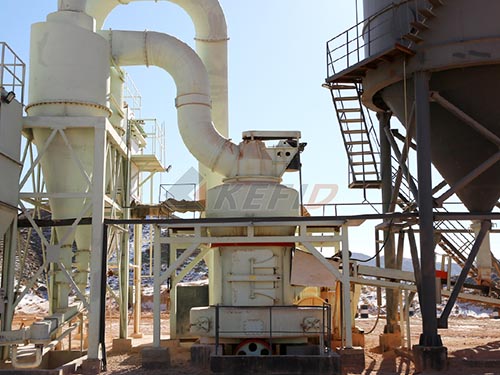
The following specifications represent a typical ODM gyratory crusher configuration for a 6089 size class, suitable for most largescale mining operations.
| Specification | Detail |
| : | : |
| Crusher Type | Primary Gyratory |
| Model Size | 6089 (1524 mm x 2260 mm) |
| Feed Opening | 1,524 mm (60 inches) |
| Maximum Feed Size | 1,250 mm (49 inches) |
| Product Discharge Setting (CSS) | 150 250 mm (6 10 inches) |
| Capacity (TPH) | 2,500 4,000 (depending on ore density and CSS) |
| Main Shaft Speed | 120 140 RPM |
| Motor Power | 600 1,000 kW (800 1,340 HP) |
| Eccentric Throw | 25 40 mm (1 1.5 inches) |
| Hydraulic Pressure (Adjustment) | 7 10 MPa |
| Lubrication Oil Flow | 300 400 L/min |
| Weight (Crusher Only) | Approx. 250 300 tons |
| Overall Dimensions (L x W x H) | 5.5m x 4.0m x 8.5m |
| Operating Temperature Range | 10°C to +45°C (with coldweather package available) |
Application Scenarios: Proven Field Performance
LargeScale Copper Mine Expansion | Challenge: The existing jaw crusher was a bottleneck, limiting plant throughput to 80,000 TPD and causing frequent blockages with harder ore. | Solution: Installation of an ODM 6089 gyratory crusher with a customdesigned crushing chamber to handle the specific ore's abrasiveness. | Results: Throughput increased to 95,000 TPD (+18.75%). Energy consumption per ton decreased by 12%. The crusher achieved 96% availability in its first year of operation, adding an estimated 15,000 tons of additional production.
Greenfield Iron Ore Project | Challenge: The project required a primary crusher with a rapid delivery timeline and a strict budget, without compromising on longterm reliability. | Solution: An ODM factory provided a standardized 5474 model but with preengineered options for a coldweather package and a specialized dust suppression system. | Results: The crusher was delivered and commissioned 4 weeks ahead of schedule. The modular design allowed for installation in 30 days, 20% faster than industry average. The client reported a 15% reduction in initial capital expenditure compared to bids from traditional OEMs.
Hard Rock Aggregate Quarry | Challenge: The quarry faced high wear rates on liners, leading to excessive maintenance costs and downtime. | Solution: The ODM factory recommended a specific manganese alloy and a modified concave profile based on their metallurgical analysis of the feed material. | Results: Liner life was extended from 6,000 hours to 8,500 hours (+41%). This reduced the annual maintenance budget by $180,000 and decreased the frequency of changeouts, adding 40 hours of production time per year.
Commercial Considerations: Structuring Your Investment
Investing in an ODM gyratory crusher is a strategic capital decision. The pricing structure is typically tiered based on customization level and service scope.
Pricing Tiers:
Optional Features & Service Packages:
Financing Options:
FAQ: Addressing Your Critical Questions
Q1: How does an ODM gyratory crusher differ from a standard OEM model?
An ODM factory designs and builds the equipment under its own brand and engineering license. This means you deal directly with the manufacturer, eliminating the premium markup of a traditional OEM brand. You gain direct access to the engineering team for modifications and support, often resulting in a 1520% lower initial cost for comparable or superior specifications.
Q2: What is the typical lead time for an ODM gyratory crusher?
For a Tier 1 standard model, lead times are typically 4050 weeks from order confirmation. Tier 2 and 3 models with custom engineering can take 6080 weeks. We recommend initiating the technical review process early to lock in your specifications and production slot.
Q3: Can the ODM crusher integrate with my existing plant control system (PLC/SCADA)?
Yes. The crusher's automation package is designed to communicate via standard protocols like Profibus, Modbus, or Ethernet/IP. Our engineers will work with your team to ensure seamless data integration, allowing you to monitor crusher performance from your central control room.
Q4: What is the availability of spare parts, and how does the factory ensure supply?
As an ODM, the factory maintains a critical spares inventory for all its models. We recommend a consignment stock agreement for highwear items like mantles and concaves, ensuring they are onsite when you need them. For major components like the main shaft, the factory can offer a guaranteed repair or replacement program to minimize downtime.
Q5: How does the factory handle performance guarantees?
Performance guarantees (throughput, power draw, and product size) are contractually defined based on your specific ore characteristics and target CSS. The factory will provide a detailed test plan and commissioning procedure to verify these metrics onsite. If the crusher fails to meet the guaranteed performance, the contract includes remedies such as financial penalties or engineering modifications at the factory's cost.
Q6: What kind of aftersales technical support can we expect?
You will be assigned a dedicated account manager and a team of application engineers. Support includes 24/7 remote troubleshooting, scheduled site visits for performance audits, and access to the factory's research and development team for continuous improvement recommendations.
Q7: Is it possible to retrofit an existing crusher with ODM components?
In some cases, yes. If you have an older crusher from another manufacturer, our engineering team can assess the feasibility of supplying replacement main shafts, top shells, or hydraulic systems that are dropin compatible. This can be a costeffective way to upgrade your existing asset's performance without a full replacement.