
Penghancur roll tunggal
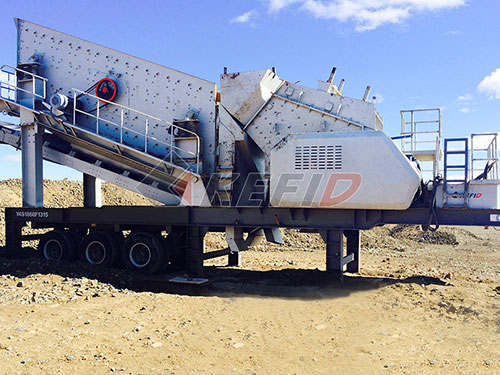

The Single Roll Crusher: A Rugged Solution for Selective Crushing in Demanding Applications
The crushing circuit is the heart of many mineral processing plants and aggregate production facilities. While jaw crushers, penghancur kon, and impactors often dominate discussions due to their prevalence and high-capacity capabilities, the Single Roll Crusher occupies a vital niche as a robust and effective solution for specific challenging materials and size reduction tasks. Its inherent simplicity, reliability in handling difficult feeds, and ability to produce controlled product sizes make it an indispensable tool in numerous industrial contexts.
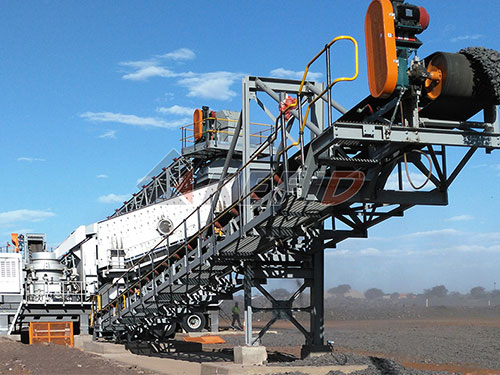
Understanding the Fundamentals: Bagaimana ia berfungsi
Pada terasnya, the single roll crusher operates on a remarkably straightforward principle: penghancuran mampatan. Unlike double roll crushers that utilize two counter-rotating rolls or jaw crushers with reciprocating motion against a fixed plate, the single roll design employs one large rotating roll working against a fixed crushing surface.
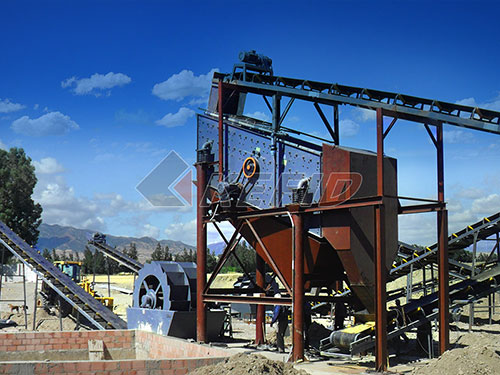
1. The Rotating Roll: This is the primary active component. It's typically a massive steel cylinder (roll body), often fitted with replaceable wear segments made of manganese steel or other abrasion-resistant alloys. The surface of these segments can be smooth (for fine crushing), corrugated (for coarse crushing), or even incorporate teeth (for very specific applications like coal). The roll rotates on heavy-duty bearings driven by an electric motor via V-belts or direct drive.
2. The Crushing Plate (Breaker Plate / Anvil Plate): Positioned opposite the rotating roll is a stationary crushing surface – the breaker plate or anvil plate. This plate is also lined with replaceable wear liners made of hardened steel alloys. Its position relative to the rotating roll defines the critical gap known as the crushing chamber.
3. The Feed Mechanism: Material enters through an opening above the crushing chamber.
4. Tindakan Menghancurkan: As material enters between the rotating roll and the stationary breaker plate:
It encounters friction from the moving roll surface.
Larger pieces are gripped by projections (jika ada) or trapped by irregularities.
The material is drawn downward into the narrowing gap between the roll and breaker plate.
Intense compressive forces act upon it as it passes through this gap (tetapan sisi tertutup, CSS).
Material fractures along natural cleavage planes due to this compression.
5. Pelepasan produk: Crushed material exits freely at the bottom of the crushing chamber once its size is reduced sufficiently